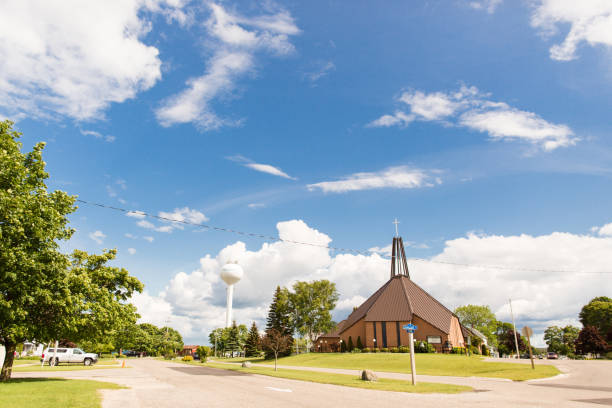
The Michigan Church Shooting has left the state and the entire nation shaken. On Sunday, September 28, tragedy unfolded at the Church of Jesus Christ of Latter-day Saints in Grand Blanc, a community located 60 miles northwest of Detroit. A lone attacker, identified as Thomas Jacob Sanford, 40, stormed the place of worship, turning a sacred space into a scene of horror.
According to local authorities, the gunman drove his vehicle into the church, opened fire with an assault-style rifle, and set the building on fire using gasoline. The assault resulted in four deaths and at least eight injuries, with several worshippers still unaccounted for as investigators continue combing through the fire-damaged building.
How the Michigan Church Shooting Unfolded
At approximately 10:25 a.m. local time, hundreds of churchgoers had gathered for the weekly worship service. Suddenly, chaos erupted when Sanford rammed his car into the building before unleashing gunfire. Witnesses described scenes of panic as families rushed to shield children and find cover.
Police Chief William Renye revealed that the shooter fired several rounds inside the church, targeting individuals indiscriminately. Within eight minutes, police had engaged Sanford in a gunfight in the church parking lot, ultimately killing him at 10:33 a.m.
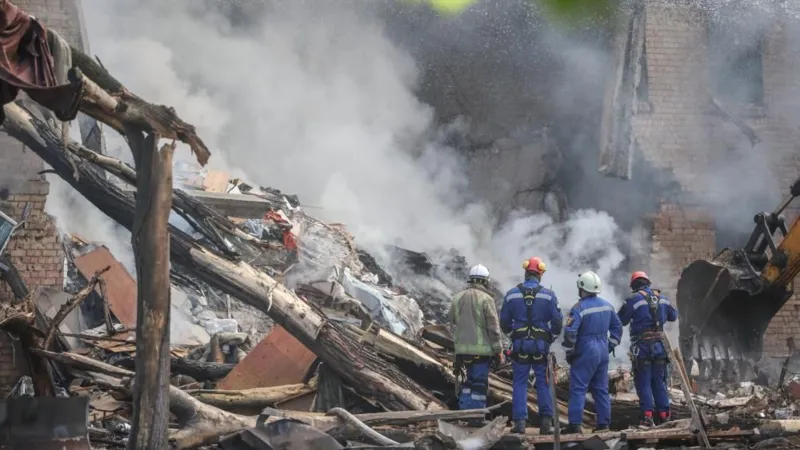
While officers managed to neutralize the threat quickly, the damage was already done. The blaze caused by the accelerant spread rapidly through the church, complicating rescue efforts and leaving investigators with the grim task of locating survivors.
Victims of the Michigan Church Shooting
Police confirmed that two victims died of gunshot wounds, while two more bodies were discovered later amid the fire damage. At least eight others remain hospitalized, with conditions ranging from serious to stable.
Authorities have not yet released the names of the victims, but community leaders confirmed that families, including young children, were inside the church at the time.
Chief Renye praised the “heroism” of parishioners who shielded children and ushered them to safety during the terrifying moments. Their bravery, he said, prevented the death toll from being even higher.
Who Was the Gunman?
The attacker, Thomas Jacob Sanford, was identified as a Marine Corps veteran from Burton, Michigan. Though law enforcement has not publicly confirmed a motive, officials described the incident as an “act of targeted violence.”
Investigators are analyzing Sanford’s phone records, personal history, and property in search of answers. Early indications suggest he acted alone, but the FBI has not ruled out broader connections.
FBI and Federal Involvement in the Michigan Church Shooting
The FBI quickly took control of the investigation, deploying more than 100 agents, including crisis response teams and bomb technicians. Acting Special Agent Reuben Coleman confirmed that additional bomb threats had been reported in Michigan shortly after the shooting, though those locations were cleared safely.
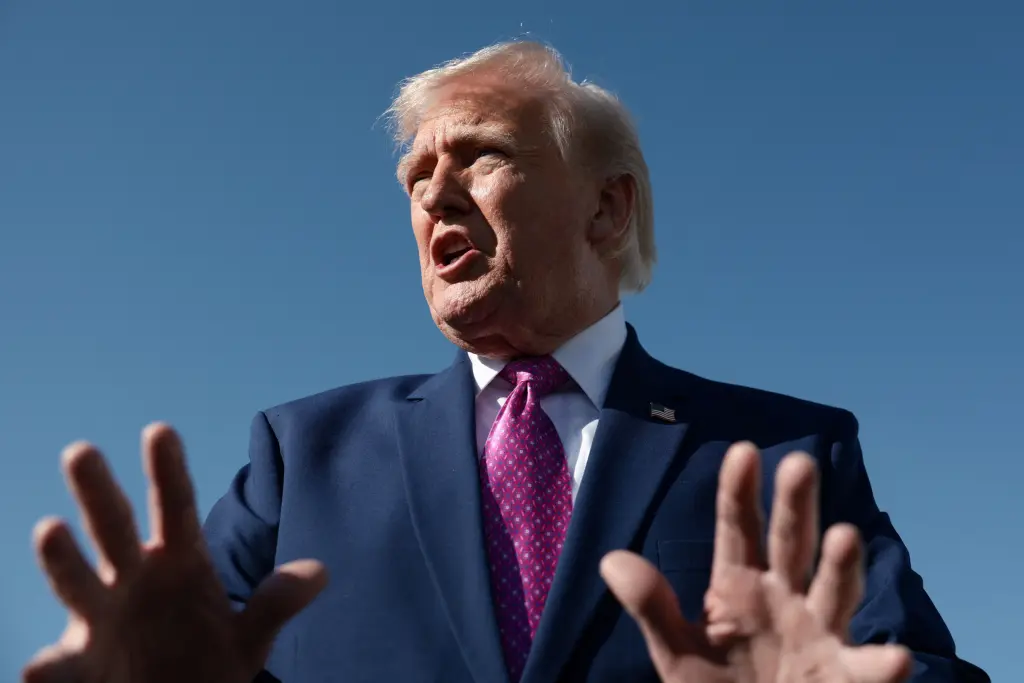
US Attorney General Pam Bondi issued a statement calling the attack “heartbreaking and chilling,” while President Donald Trump confirmed federal agencies would lead the investigation. He labeled it “another targeted attack on Christians in the United States.”

Political and Public Reactions
Michigan Governor Gretchen Whitmer strongly condemned the violence, declaring:
“Violence anywhere, especially in a place of worship, is unacceptable.”
Former Utah senator Mitt Romney, one of the most prominent Mormon political figures, called the tragedy deeply personal, noting that his “brothers and sisters and their church are targets of violence.”
Communities across the US have since held vigils, with faith leaders urging unity and resilience in the face of escalating attacks on religious institutions.
The Church of Jesus Christ of Latter-day Saints Responds
In an official statement, church leaders confirmed that “multiple individuals were injured” and expressed prayers for the victims and their families. They thanked local law enforcement and first responders for their swift action.
This is not the first time faith communities have been targeted in the United States. The Michigan Church Shooting 2025 adds to a troubling pattern of attacks on places of worship, underscoring the urgent need for increased security and proactive measures to protect congregations.
Historical Context: Attacks on US Churches
The Michigan tragedy echoes past incidents, such as the 2015 Charleston church shooting and the 2017 Sutherland Springs massacre, both of which highlighted vulnerabilities in religious communities. Experts warn that attackers often view churches as soft targets due to their open-door nature and large gatherings.
The FBI and Department of Homeland Security have repeatedly urged religious institutions to adopt stricter security measures, including active shooter preparedness, surveillance systems, and collaboration with local law enforcement.
What Happens Next?
For now, the focus remains on aiding survivors and grieving families. The loan of federal resources to investigate and prevent further attacks is expected to continue for weeks. Investigators will examine whether Sanford left behind any manifestos or digital footprints explaining his motives.
Community leaders in Michigan have announced plans for interfaith vigils and solidarity events to support the victims and reaffirm their commitment to peace.
Remembering the Michigan Church Shooting 2025
The Michigan Church Shooting 2025 is a grim reminder of the fragility of peace and safety, even in sacred spaces. With four lives lost, countless others injured, and an entire community traumatized, the tragedy has sparked national debate over gun violence, mental health, and the safety of places of worship.
As investigations continue, Michigan and the nation mourn together, holding on to resilience and faith in the hope that such violence can be prevented in the future.
Source: BBC News