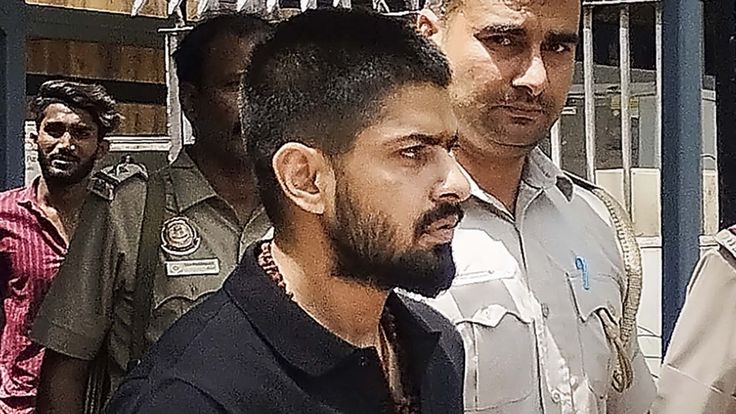
Canada lists India’s Bishnoi gang as terrorist entity in a landmark move that enables Ottawa to seize property, freeze money, and impose stronger legal measures against the gang’s activities inside the country. The decision underscores Canada’s growing concern over transnational organised crime networks and their links to diaspora communities.
Why Canada took this step
Public Safety Minister Gary Anandasangaree said the Bishnoi gang has fostered a climate of fear, violence, and intimidation in parts of Canada, especially within diaspora communities.
With the new designation:
- The government can freeze or seize money and property linked to the group.
- Law enforcement can pursue terrorism-related prosecutions for financing, recruitment, and travel.
- Canada now treats the Bishnoi gang as a terrorist organisation under its anti-terror laws.
“Specific communities have been targeted for terror, violence, and intimidation by the Bishnoi gang,” Anandasangaree said. “Listing this group of criminal terrorists gives us more powerful and effective tools to confront and put a stop to their crimes.”
Who is Lawrence Bishnoi?
The Bishnoi gang is led by Lawrence Bishnoi, a 32-year-old gangster from India who has been behind bars for over a decade but continues to direct operations.
In India, authorities accuse him of:
- Running a 700-member criminal network.
- Extorting celebrities and wealthy individuals.
- Smuggling narcotics and illegal arms.
- Orchestrating targeted assassinations from inside prison.
Despite being incarcerated, Bishnoi’s influence extends across borders, and Canadian officials allege the gang is active in areas with significant South Asian diaspora communities.
Allegations of India’s role
Last year, Canadian police claimed that Indian government agents had used Bishnoi members to carry out targeted killings and intimidation, including against supporters of the Khalistan movement.
- India strongly denied these allegations, saying Ottawa had provided “no credible evidence.”
- The issue worsened already tense relations between New Delhi and Ottawa after the killing of Sikh separatist leader Hardeep Singh Nijjar in Vancouver in 2023.
Nijjar had been designated a terrorist by India in 2020. His assassination outside a Sikh temple remains a flashpoint in Canada–India ties, with four men currently facing charges.
Political and diplomatic pressure
The Canadian government’s decision follows mounting pressure from:
- Opposition parties.
- Provincial leaders in Alberta and British Columbia.
- Community representatives who argued Ottawa needed to act to curb the gang’s influence.
Officials say the move gives Canada stronger leverage in dealing with organised crime groups that have both domestic and international ties.
Canada–India relations
Strained relations between Canada and India have been a defining feature of bilateral ties in recent years, and the Bishnoi designation is expected to test those relations further.
Both countries appointed new high commissioners earlier this year, signalling an effort to reset ties after the turbulence of 2023, when the killing of Sikh separatist leader Hardeep Singh Nijjar in British Columbia plunged relations to historic lows. Ottawa accused New Delhi of being involved in Nijjar’s murder, while India rejected the allegations outright and accused Canada of harbouring extremists. The fallout included diplomatic expulsions, trade slowdowns, and an icy pause in bilateral engagement.
Against that backdrop, Canada’s move to list the Bishnoi gang as a terrorist entity carries symbolic and practical weight. On one hand, it shows Ottawa’s willingness to confront criminal networks that threaten its domestic security, even when those networks have roots in India. On the other hand, it risks being interpreted in New Delhi as a politically motivated step at a time when both sides are only cautiously rebuilding trust.
For Canada, the decision also reflects intensifying domestic pressure. Premiers in Alberta and British Columbia had been lobbying the federal government to take tougher action, pointing to threats against diaspora communities. Sikh, Punjabi, and other South Asian Canadians have long raised concerns about being targeted by organised criminal groups allegedly linked to Indian networks. The new designation, they argue, offers legal tools to disrupt financing, protect community members, and limit recruitment.
Security experts say the move is also a signal to diaspora communities that the federal government is taking their safety seriously. “The Bishnoi gang isn’t just an Indian problem anymore — it’s a Canadian one,” said a former intelligence official familiar with Indo-Canadian security cooperation. “Listing them means Canada can now freeze bank accounts, seize properties, and prosecute people connected to their operations. That has a chilling effect on their ability to intimidate communities here.”
Still, the designation underscores how criminal networks complicate foreign policy. India has often insisted that Canada fails to act on extremists it believes threaten Indian interests, while Canada has accused India of meddling in diaspora politics and even sponsoring transnational repression. By targeting a gang with deep Indian roots, Ottawa is arguably flipping the script — suggesting that India, too, must reckon with the export of its own violent groups.
Last week, Prime Minister Mark Carney’s national security adviser Nathalie Drouin said India had committed to co-operating with Canada on security concerns and pledged to avoid transnational repression. Canadian officials described their recent meetings with Indian counterparts as “productive” and expressed cautious optimism about finding common ground.
Still, the Bishnoi designation risks re-igniting sensitive debates about India’s role in overseas violence and Canada’s responsibility to protect its diaspora communities. If Ottawa enforces the listing aggressively — freezing assets, blocking transfers, or arresting alleged associates — it could trigger new friction with New Delhi, even as the two governments attempt to stabilise their relationship.
Broader implications
By listing the Bishnoi gang as a terrorist entity, Canada has:
- Sent a clear signal to organised crime networks operating internationally.
- Strengthened its counterterrorism framework against groups accused of transnational repression.
- Reinforced its stance that diaspora communities must not be targeted with fear or intimidation.
The move also reflects a trend of democratic governments using anti-terrorism powers not only against ideological extremists but also against criminal gangs with global reach.
Source: BBC NEWS