The Original Black Mirror Show, Out of the Unknown, first aired in the 1960s and transformed how television approached science fiction. Long before Netflix’s Black Mirror became a global phenomenon, this BBC anthology series tackled deep philosophical questions about technology, human nature, and the future — themes that still resonate six decades later.
Sixty years after its debut, the show is finally being recognized as the blueprint for modern sci-fi storytelling. Airing between 1965 and 1971, Out of the Unknown brought viewers one-off, standalone dramas that treated science fiction as serious, adult entertainment — something rare for its time.
Out of the Unknown: The Beginning of Serious Sci-Fi on TV
The Original Black Mirror Show was the brainchild of Irene Shubik, a visionary BBC producer who believed science fiction could be more than escapism. At the time, British and American TV mostly portrayed sci-fi as adventure or fantasy — think Doctor Who or Thunderbirds. But Out of the Unknown broke that mold, offering thought-provoking narratives grounded in politics, technology, and psychology.
Drawing inspiration from literary greats like Ray Bradbury, John Wyndham, JG Ballard, and EM Forster, Shubik and her team adapted stories that examined the consequences of technological advancement. One of the show’s earliest episodes, No Place Like Earth, imagined colonialism on Venus — a thinly veiled critique of imperialism during a post-war era of global change.
Television historian Jon Dear noted that it was “the first time sci-fi was presented as serious and intelligent adult drama.” That legacy continues today through Black Mirror, which owes much of its creative DNA to Shubik’s pioneering work.
Predicting the Internet Age Before It Existed
One of the Original Black Mirror Show’s most visionary episodes was its adaptation of EM Forster’s “The Machine Stops.” Decades before the internet or smartphones existed, the story imagined a future where humans live isolated, communicating only through screens and depending entirely on a vast machine to survive.
This eerie prediction mirrors the screen-obsessed, tech-dependent reality of the 21st century. The episode’s haunting vision of a world where technology replaces human connection feels like an early prototype of Black Mirror’s dystopian storytelling.
Another standout episode, The Dead Past (based on an Isaac Asimov story), introduced a “time-viewing device” that allows people to replay any moment from history. What begins as an academic tool soon becomes a form of social-media-like obsession, as society collapses into voyeurism and nostalgia — foreshadowing the same psychological consequences explored in Black Mirror episodes such as The Entire History of You.
A Cast and Crew Ahead of Their Time
The Original Black Mirror Show didn’t just predict the future in its stories — it also launched the careers of future icons. Actors like Patrick Troughton, David Hemmings, and Yvonne Mitchell appeared in the series, while a young Ridley Scott (who later directed Alien and Blade Runner) worked behind the scenes as a production designer.
This extraordinary creative mix helped elevate Out of the Unknown into a high-caliber drama, blending artistic ambition with futuristic imagination.
Producer Irene Shubik later wrote in her book Play for Today: The Evolution of Television Drama that science fiction was “a way of saying something you can’t say in straightforward terms.” This sentiment perfectly aligns with Black Mirror creator Charlie Brooker’s philosophy that sci-fi acts as a mirror — bending reality to explore humanity’s darkest impulses and brightest hopes.
Cold War Paranoia and Political Commentary
The Original Black Mirror Show thrived during the tense years of the Cold War, and many episodes reflected the global anxiety of that time. The story The Counterfeit Man explored fears of infiltration and espionage, while Some Lapse of Time dealt with time travel and nuclear destruction.
In the latter, a doctor discovers his patient has come from a future ravaged by nuclear war — a grim allegory for the real-world threat of atomic annihilation. These episodes were more than entertainment; they were psychological explorations of power, paranoia, and survival.
By tackling these complex subjects, Out of the Unknown reshaped how audiences perceived television science fiction. No longer was it just about aliens and space battles — it was about humanity itself.
From Out of the Unknown to Black Mirror
When asked about the Original Black Mirror Show, Black Mirror creator Charlie Brooker admitted he had never seen Out of the Unknown, yet his influences were directly tied to its legacy. “The inspiration came from The Twilight Zone, Tales of the Unexpected, and odd BBC dramas,” Brooker said. “I’m definitely riffing on work connected to Out of the Unknown, even if I haven’t watched it.”
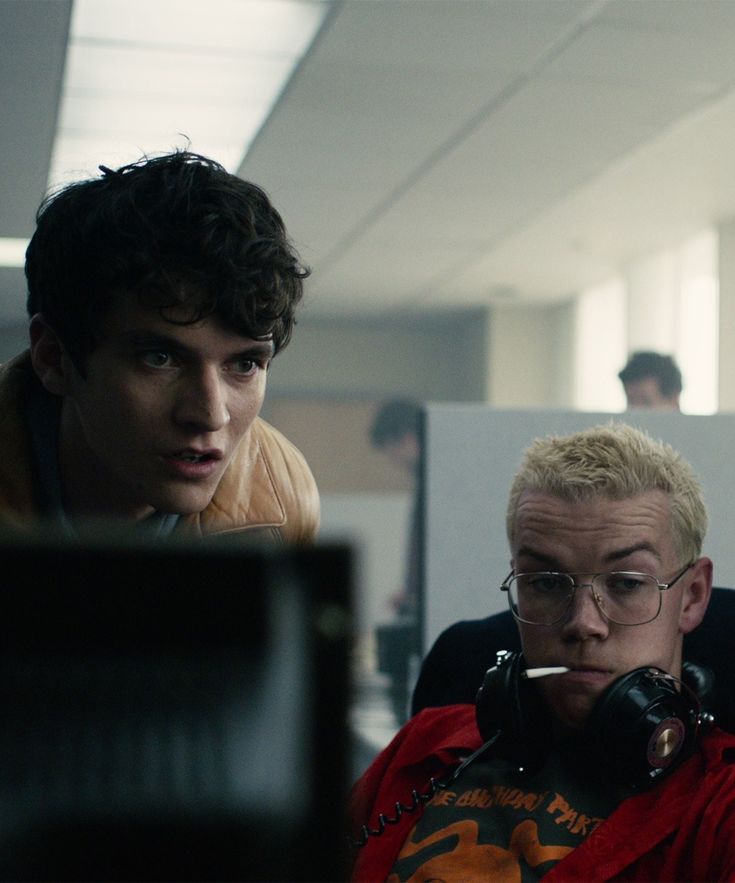
Both shows share an anthology structure — each episode tells a standalone story, offering a new setting, cast, and moral dilemma. Brooker has often said this freedom allows him to “explore ideas that wouldn’t sustain ten seasons.” Similarly, Out of the Unknown excelled in presenting bold, contained narratives that examined different facets of the human condition.
Why the Anthology Format Still Matters
The Original Black Mirror Show thrived because of its variety. As Jon Dear put it, “If you don’t like this episode, the next one will be completely different.” That unpredictability made the series a creative laboratory for ideas — a quality that Black Mirror carries on today.
While modern TV leans heavily on long-form storytelling, Out of the Unknown and Black Mirror prove that the anthology format still has the power to surprise and challenge viewers. The upcoming revival of Play for Today on Channel 5 hints at a resurgence of this storytelling style — proof that audiences still crave thought-provoking one-off dramas.
The Legacy Lives On
Six decades later, the Original Black Mirror Show remains a cornerstone of television history. Its visionary storytelling, literary roots, and exploration of human psychology laid the foundation for every smart sci-fi series that followed.
In the words of Charlie Brooker, “Science fiction is a way of talking about now and the world we live in today, but disguised as something fun.” That philosophy began with Irene Shubik and Out of the Unknown — and continues through the global success of Black Mirror.
The future of sci-fi storytelling may evolve, but one truth endures: the questions that haunted Out of the Unknown in 1965 still haunt us today. As we navigate an increasingly digital world, its stories feel less like history and more like prophecy.
Source: BBC