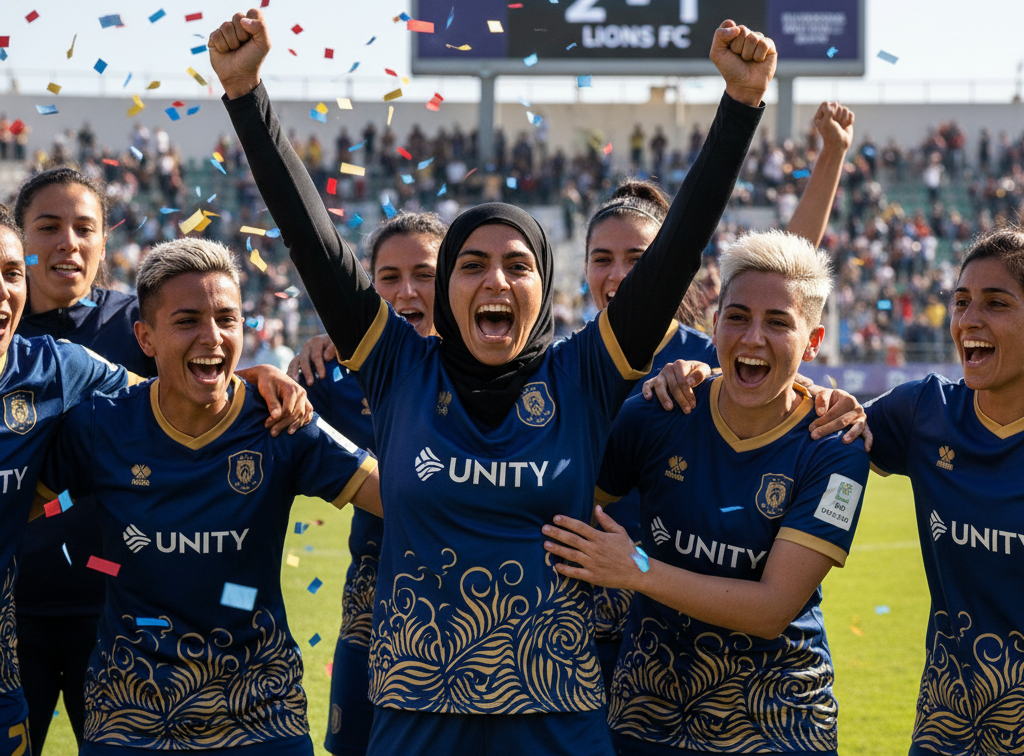
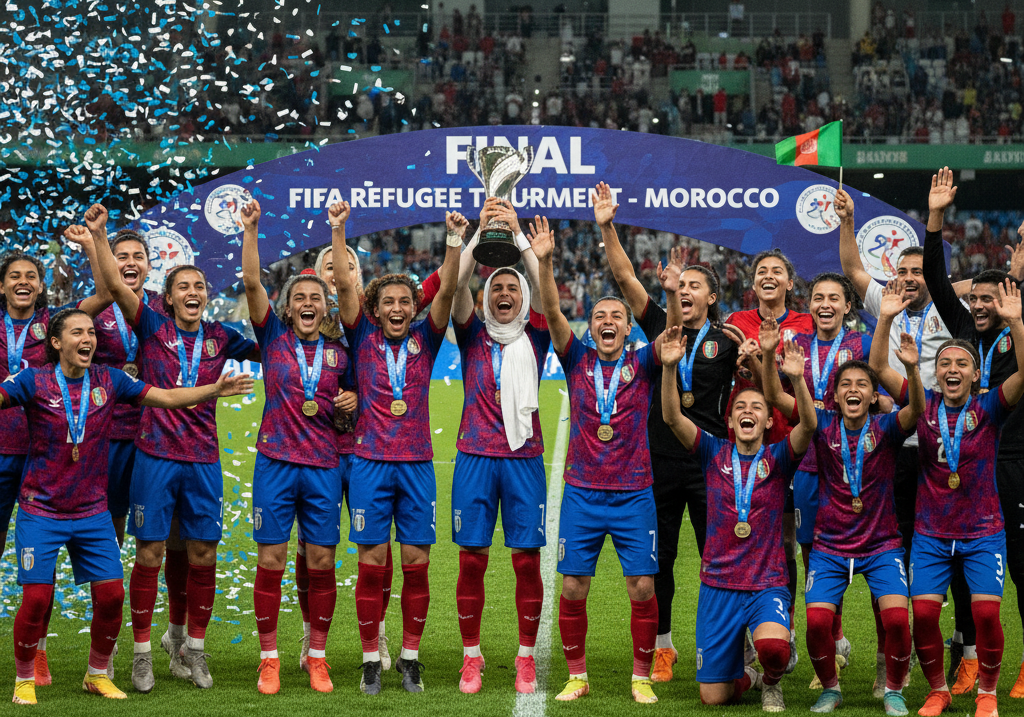
The long-awaited Afghan Women Football Return unfolded in Morocco under the bright lights of the FIFA Unites: Women’s Series 2025. Though the scoreboard read 6-1 in favor of Chad, the Afghan women’s refugee team’s participation represented a triumph far greater than any numerical result — it was a victory for resilience, courage, and the unyielding spirit of women who refused to be silenced.
Four years after being forced from the international stage, Afghanistan’s female footballers made their powerful comeback, not as victims of circumstance but as symbols of defiance and unity. Since the Taliban’s return to power in 2021, women in Afghanistan have faced a total ban on sports. The footballers, once national heroes, were stripped of their right to play, train, or even appear in public arenas. Many fled the country, fearing persecution — but even exile could not erase their dream.
Now, under the banner of Afghan Women United, these athletes are writing a new chapter in sports history. Their debut match at the FIFA Unites: Women’s Series 2025 took place on October 26, 2025, at Stade Municipal de Berrechid in Casablanca, Morocco. Coached by Scottish football professional Pauline Hamill, the squad entered the pitch with heads held high, led by captain Fatema Haidari — a figure of unwavering resolve.
“This was never just about football,” Haidari said ahead of kickoff. “It’s about identity, equality, and showing that Afghan women exist — that we can play, we can compete, and we can inspire.”
The match began with a stunning moment of joy. Afghan striker Manozh Noori, now based in Melbourne, converted a penalty to give her side an early 1-0 lead. The roar that followed from teammates and fans was unlike any other — a mixture of pride, disbelief, and long-suppressed emotion. For the first time in years, the Afghan flag — reimagined and proudly displayed on their new uniforms — waved freely in an international arena.
But Chad, a more experienced team with Olympic qualifiers under their belt, quickly regrouped and took control of the game. Their strength and coordination proved too much for the Afghan side, resulting in a final score of 6-1. Yet, as the final whistle blew, no one on Afghan Women United appeared defeated. Instead, they smiled, hugged, and celebrated — for them, being back on the pitch was the ultimate victory.
A Journey of Exile and Empowerment
Before the Taliban takeover, Afghanistan had 25 female footballers under official contract. They were national icons, seen as a beacon of progress in a country struggling for gender equality. When the Taliban regime banned women’s sports, most of these players found refuge in countries like Australia, Canada, and the United Kingdom. Some continued to play for local clubs, while others worked tirelessly to advocate for women’s rights and visibility in sports.
FIFA’s decision in May 2025 to officially recognize and sponsor the Afghan refugee team was a landmark step. The team’s name — Afghan Women United — was chosen after extensive consultations with the players and FIFA, symbolizing unity across borders and backgrounds.
Coach Pauline Hamill, speaking after the match, said, “We knew we’d face tough competition, but this tournament isn’t about results. It’s about visibility, inclusion, and pride. These players have endured things no athlete should ever face, yet here they are, playing under FIFA’s banner.”
Global Recognition and Symbolic Significance
FIFA’s inclusion of the Afghan team in the Women’s Series is not just an act of sporting goodwill but also a statement of resistance against gender oppression. It sends a message that women’s sports cannot and should not be silenced by political regimes.
The Afghan women’s return also inspired fans worldwide. Social media platforms flooded with support as hashtags like #AfghanWomenUnited, #LetThemPlay, and #FIFAforEquality trended globally. Fans, journalists, and athletes from around the world praised their courage, calling it one of the most emotionally charged moments in modern sports.
Even rival teams expressed admiration. Chad’s captain, Dallou Fatime, shared after the match: “We came to compete, but we also came to support these women. What they’re doing is bigger than football.”
Beyond the Scoreboard
The Afghan Women United team’s participation has reignited conversations about women’s rights in Afghanistan. Activists hope this platform will pressure international organizations to continue supporting women living under the Taliban regime.
Afghan captain Haidari’s words after the game echoed through the global sports community: “We may have lost the match, but we won something far greater — the right to be seen.”
The Road Ahead
The tournament continues with upcoming matches against Tunisia and Libya, offering Afghan Women United more chances to build experience and momentum. Despite the challenges, their journey symbolizes more than just competition — it represents freedom, dignity, and hope for future generations of Afghan girls dreaming of a ball at their feet.
For now, their 6-1 loss stands as one of the most powerful victories in modern football history. A defeat that defied expectations, broke barriers, and reminded the world that passion cannot be banned — and dreams cannot be silenced.
End of an Era, Dawn of Defiance
As the players walked off the field, banners waved with messages of love and strength. In that moment, the Afghan Women’s Football Return was no longer about reclaiming a lost identity — it became a movement for every woman denied her right to play, speak, or dream. Their story now stands as a testament to what happens when courage meets opportunity — when the game becomes a revolution.
Source: Al Jazeera