

Illuminati Symbolism in Pop Culture has fascinated generations, blending mystery, power, and hidden meaning into music videos, movies, and online theories. From Hollywood sets to viral TikTok edits, the idea that an elite secret society controls global events has become one of the most persistent cultural myths of the 21st century.
The Origin of the Illuminati Myth
The story begins in the late 18th century with the Bavarian Illuminati — a short-lived Enlightenment-era secret society founded in 1776 by Adam Weishaupt. Their goal was not global domination, but rather promoting reason, secularism, and freedom of thought against religious and political oppression.
However, after their dissolution in 1785, rumors grew that the group had survived underground, manipulating politics, banking, and entertainment from the shadows. By the 20th century, the Illuminati had evolved into a global myth — a stand-in for public fears about unseen power.
How Film Shaped the Illuminati Image
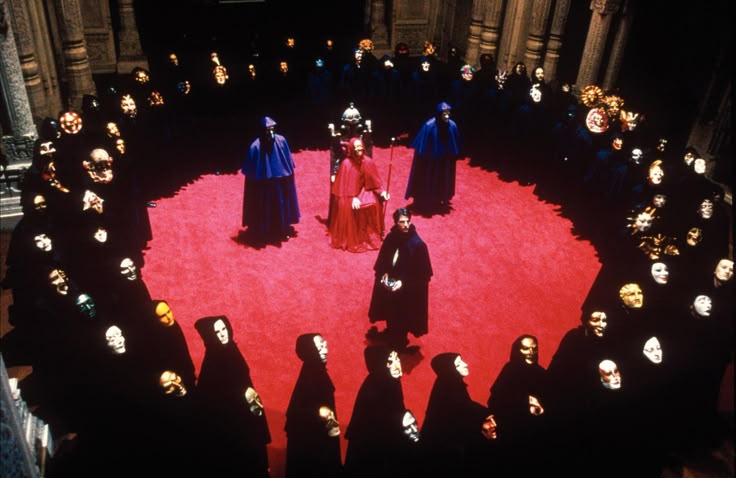
Cinema has played a major role in shaping what audiences imagine when they hear the word “Illuminati.” One of the most discussed examples is Stanley Kubrick’s 1999 film Eyes Wide Shut, starring Tom Cruise and Nicole Kidman.
The film follows a Manhattan doctor who stumbles into a masked, secret ritual among the wealthy elite. The elaborate costumes, occult imagery, and hidden gatherings have fueled endless speculation that Kubrick was exposing the rituals of real-world secret societies.
Film critics, however, interpret Eyes Wide Shut differently. Many see it as an allegory about desire, secrecy, and class — a psychological study of how power and privilege can distort morality. Kubrick’s precise symbolism — masks, cloaks, dim lighting, and haunting music — mirrors the audience’s own voyeuristic curiosity about what the rich and powerful do behind closed doors.
While the film never mentions the Illuminati by name, online communities often cite it as “proof” that Hollywood is aware of or influenced by such societies. In reality, Kubrick’s work was more about revealing human behavior under moral disguise than confirming conspiracy lore.
The Rise of Illuminati Symbolism in Music and Social Media
In the 2000s, the idea of the Illuminati exploded on YouTube, Reddit, and later TikTok, where creators began spotting “hidden symbols” — triangles, eyes, pyramids, and hand gestures — in celebrity performances. Musicians like Jay-Z, Beyoncé, Lady Gaga, and Rihanna were accused of using Illuminati imagery in their videos, with fans pointing to stage designs, lyrics, or even eye movements as evidence of secret allegiance.
These videos often feature clips of celebrities forming triangles with their hands, wearing checkerboard fashion, or appearing in Masonic-style settings. In truth, such imagery is often artistic or aesthetic — borrowed from Renaissance art, mysticism, or ancient symbolism. Yet the online fascination persists because the Illuminati myth gives meaning to fame, wealth, and influence that seem otherwise unattainable.
Sociologists note that these theories thrive during times of social inequality and digital overload. When people feel excluded from power, they often imagine that those who have it must be united by some secret code. The “Illuminati” becomes a metaphor for control and the corruption of success, not a literal organization.
Eyes Wide Shut and Modern Billionaire Symbolism
Returning to Eyes Wide Shut, it’s not surprising that the film’s imagery has been connected to modern billionaires and global elites. Lavish masked parties, secret gatherings, and hidden deals — these motifs parallel today’s concerns about wealth concentration and elite networking events like Davos or private island retreats.
Still, it’s essential to distinguish symbolism from reality. While the film dramatizes the moral isolation of the rich, real-world power operates through legal, economic, and political systems — not occult ceremonies. Yet, in social media discourse, these visual parallels make the Illuminati myth feel tangible.
On TikTok, videos dissecting Kubrick’s cinematography and linking it to elite power dynamics often receive millions of views. Hashtags like #IlluminatiConfirmed or #EyesWideShutExplained reveal the modern hunger for hidden meaning in a world oversaturated with information.
Why the Illuminati Myth Persists
Psychologists argue that conspiracy stories like the Illuminati offer comfort in chaos. They simplify complex global systems into a single narrative — “someone is in control.” This belief can be strangely reassuring, even when it’s dark.
Moreover, the entertainment industry has leaned into the imagery. Music videos, fashion brands, and even movie posters now deliberately use “Illuminati aesthetics” — eyes, pyramids, and occult lighting — precisely because they attract curiosity and engagement online. What was once feared as hidden is now used as marketing.

Pop Culture’s Unending Dance with the Illuminati
From Kubrick’s cryptic storytelling to social media theories, Illuminati symbolism in pop culture continues to shape how audiences interpret art, fame, and power. It reflects a world fascinated by secrets — a culture both skeptical and obsessed with elites.
Whether seen as myth, metaphor, or modern folklore, the Illuminati remains a mirror of our anxieties: about control, inequality, and the unseen machinery of influence. As Eyes Wide Shut proved, the allure of mystery is eternal — and as long as power exists, people will keep looking for the symbols that explain it.