
Updated by FFRNews on November 1, 2025
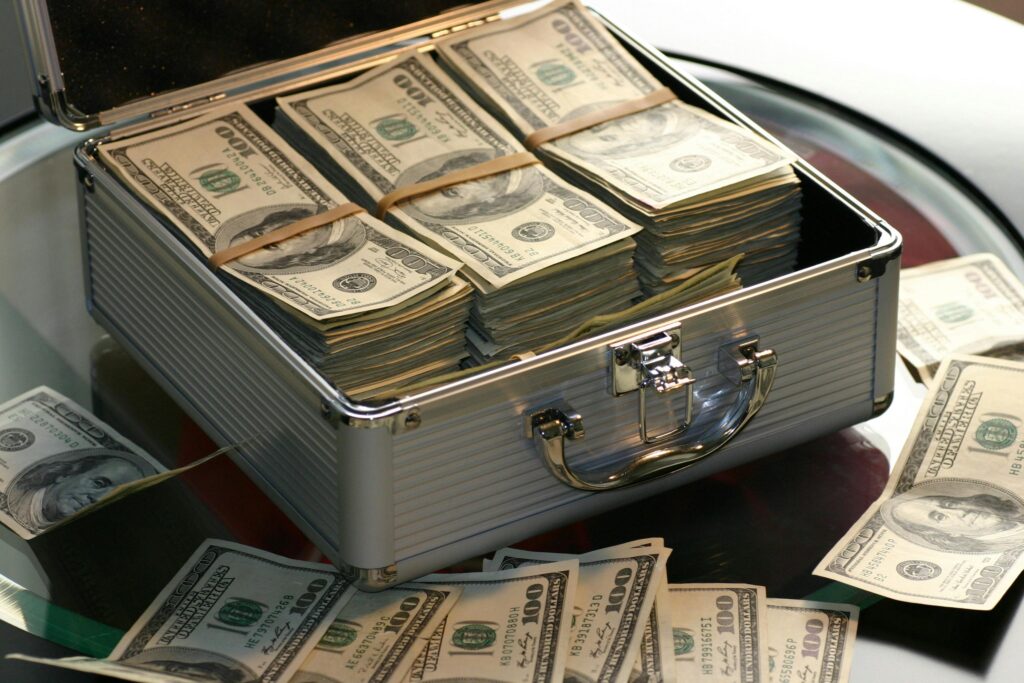
Berkshire Hathaway profit reached record-breaking heights this quarter, signaling both strength and caution as the legendary Warren Buffett prepares to step down as chief executive at the end of the year. The company’s cash reserves swelled to an unprecedented $381.7 billion, reflecting Buffett’s conservative stance toward increasingly uncertain global markets.
Between July and September, the Omaha-based conglomerate sold more stocks than it purchased — marking the 12th straight quarter as a net seller. Despite rising profits, Berkshire’s decision to hoard cash and avoid stock buybacks suggests a defensive strategy ahead of a major leadership transition.
Warren Buffett’s Final Chapter: A Legacy of Caution and Control
At 95 years old, Warren Buffett remains one of the most influential investors in history. But his cautious approach in 2025 reveals his growing unease with inflated equity valuations and global economic volatility. Buffett’s successor, Greg Abel, 63, is set to take over as CEO, marking the end of an era that began over six decades ago.
Abel, currently Vice Chairman overseeing non-insurance businesses, is known for his operational rigor and hands-on management style. While Buffett will remain Chairman of Berkshire Hathaway, the upcoming transition has already stirred speculation over how Abel might deploy the company’s colossal cash reserve.
Analysts predict that Berkshire’s record $381.7 billion in cash could fund acquisitions, increase dividends, or stabilize the company through economic turbulence. Some market watchers believe Berkshire may even introduce its first dividend since 1967 — a historic move under Abel’s leadership.
Berkshire Hathaway Profit: Numbers Behind the Record
In its third-quarter financial report, Berkshire Hathaway profit jumped 34%, reaching $13.49 billion in operating income — a sharp rise from $10.09 billion a year earlier.
The company’s net income also surged 17% to $30.8 billion, or about $21,413 per Class A share, largely driven by unrealized gains from stock investments. While Buffett continues to dismiss net income as a true measure of performance — due to fluctuations in stock prices — the results reinforce Berkshire’s financial dominance.
Berkshire’s insurance and reinsurance businesses also posted strong recoveries, aided by lower loss projections. However, GEICO, its flagship auto insurer, saw reduced underwriting gains due to higher customer acquisition costs.
View Berkshire’s full Q3 earnings release
Cautious Investing: Berkshire Still a Net Seller
Despite the surge in Berkshire Hathaway profit, Buffett’s company continued its trend of cautious investing. It sold more stocks than it bought, maintaining a conservative posture amid global uncertainty. The conglomerate’s equity portfolio — valued at $283.2 billion — includes blue-chip holdings such as Apple, American Express, and Coca-Cola.
This marks the 12th consecutive quarter of net stock sales, underscoring Buffett’s skepticism about current market valuations. Notably, Berkshire also repurchased none of its own shares for the fifth consecutive quarter, a sign that Buffett may view the company’s stock as fully valued or even overpriced relative to the broader market.
Financial experts see this as a message of restraint. “Buffett’s caution isn’t fear — it’s discipline,” said Morgan Greene, a market strategist at Wells Fargo. “He’s preparing Berkshire to thrive in the next decade, even without him at the helm.”
A Massive Cash Hoard: Opportunity or Overprotection?
Berkshire’s record cash pile is both a sign of strength and a potential challenge. With inflation cooling and interest rates steady, some investors are urging Abel to put that money to work through strategic acquisitions.
The company has already announced plans to spend $9.7 billion buying OxyChem, a chemicals unit of Occidental Petroleum, further expanding its footprint in the industrial and energy sectors.
However, critics argue that the conglomerate’s risk-averse stance could cause it to lag behind more aggressive competitors in the long run. Since Buffett announced his retirement plans in May 2025, Berkshire’s stock has fallen 12%, trailing the S&P 500 by 32 percentage points.
Market Reaction: Investors Show Apprehension
Investor sentiment has been mixed. While Berkshire Hathaway profit continues to impress, the market remains cautious about the leadership transition. The company’s underperformance relative to the broader market has fueled speculation about how Abel’s management style may reshape its investment philosophy.
Buffett’s conservative investing style — prioritizing long-term stability over short-term gains — has served Berkshire well for decades. Yet in today’s fast-moving market, some analysts question whether that approach will still work without Buffett’s personal influence and legendary intuition.
Diversification and Global Reach
Berkshire Hathaway owns nearly 200 companies across diverse sectors including utilities, railroads, manufacturing, and consumer goods. Among its most recognized brands are Dairy Queen, Fruit of the Loom, and See’s Candies.
Beyond consumer businesses, Berkshire also has significant investments in energy infrastructure, renewable power, and industrial operations, positioning itself as one of the most diversified conglomerates in the world.
Still, it hasn’t made a major acquisition since its $32.1 billion purchase of Precision Castparts in 2016, followed by Pilot Travel Centers ($13.6 billion) and Alleghany Corporation ($11.5 billion).
Many expect Greg Abel to break this dry spell once he assumes full control — potentially targeting technology, green energy, or insurance sectors to drive future growth.
What’s Next for Berkshire Hathaway?
The upcoming leadership transition is one of the most closely watched events in global business. Analysts expect Abel to maintain Buffett’s principles of value investing and financial prudence, but also anticipate a more aggressive operational approach.
Abel’s background in energy and industrial operations may lead to strategic diversification in clean energy, sustainability, and technology-driven investments — areas Buffett historically approached with caution.
“The world after Buffett will be different,” said financial analyst Karen Li from Bloomberg Economics. “But Abel inherits a fortress balance sheet and an investment culture rooted in discipline — that’s a powerful combination.”
Final Outlook: The End of an Era, The Start of a Strategy
As Berkshire prepares for a future without its iconic leader, Berkshire Hathaway profit and cash reserves stand as testaments to Buffett’s unmatched discipline and vision. The company’s restraint in spending and its massive liquidity position could become its greatest strength — enabling it to seize opportunities when markets eventually cool.
For investors and analysts alike, this moment marks both an ending and a beginning. Buffett’s shadow will loom large, but the stage is set for Greg Abel to prove that Berkshire’s best days may not be behind it — they might just be evolving.