
Updated by FFRNews on November 2, 2025
U.S. economic conditions are facing increasing headwinds in 2025, as a combination of slow growth, persistent inflation, high interest rates and political uncertainty threaten to undermine what had been labelled a resilient recovery. While the official numbers show the economy is still expanding, analysts and business leaders are warning that much of the strength may be illusory and that significant gradual erosion is underway.
According to forecasts from firms such as Deloitte, real GDP growth is expected to slow to around 1.4% in 2026 after an estimated 1.8% in 2025. Deloitte+1 The U.S. current-account deficit meanwhile narrowed in the second quarter of 2025 to about $251.3 billion, signalling improvement in external imbalances. bea.gov Yet the narrowing deficit masks deeper stresses in domestic demand, investment and consumer sentiment.
Growth softening and investment dynamics
Business investment in areas such as artificial intelligence and high-tech continues to provide a lifeline, but the broader investment climate is showing strain. Deloitte observes that while equipment spending surged in early 2025, higher tariffs and interest rates will slow investment growth through 2026–27. Deloitte Consumer spending remains positive but is decelerating: real personal consumption expenditures are projected to rise by 2.1% in 2025 but drop closer to 1.4% in 2026.
Housing, a traditional engine of growth, is also under pressure: long-term mortgage rates remain elevated (30-year fixed close to 6.7%) and builder sentiment recently plunged to a two-and-a-half-year low. Reuters These signs show that sectors reliant on affordable credit are buckling.

Inflation, interest rates and labor market shifts
Inflation remains a stubborn challenge. While headline inflation has eased somewhat, core inflation and services price pressures are persistent. EY forecasts core Personal Consumption Expenditures (PCE) inflation — the Federal Reserve’s target gauge — will reach about 3.2% by year-end 2025. EY High interest rates amplify this headwind: the Fed remains cautious about cutting rates too soon given inflation risks.
The labour market, once the bedrock of strength, is showing signs of fragility. Job creation has slowed considerably, with the unemployment rate ticking up toward the mid-4% range. Firms are reported to be cautious about hiring amid cost pressures and uncertainty over trade and regulations.
Consumer sentiment and confidence risks
Despite the underlying resilience, American consumers are becoming more cautious. According to research by Pew Research Center, most Americans rated U.S. economic conditions negatively in October 2025 and fewer expect better conditions ahead. Pew Research Center The consumer confidence dip is significant because consumer spending powers roughly two-thirds of U.S. GDP. As confidence erodes, spending — especially on durable goods — is likely to weaken, further slowing the economic engine.
Trade, tariffs and geopolitical spill-over
One of the under-reported drags on U.S. economic conditions is the impact of escalated tariffs and trade tensions. Nominally, the U.S. current-account deficit has improved, but the broader cost of import price increases and supply-chain disruptions remains. The International Monetary Fund (IMF) has warned the U.S. faces elevated recession risk driven by trade uncertainty and constrained policy flexibility.
Tariffs raise costs for consumers and businesses alike, reduce investment incentives and increase policy uncertainty. This environment complicates planning for firms and creates drag on growth even when headline numbers appear adequate.
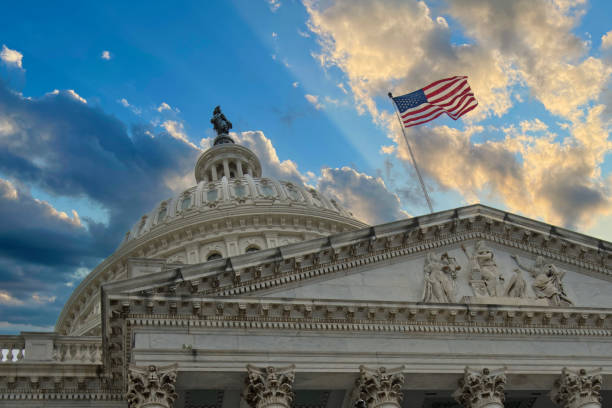
Political and structural risks: Government shutdown & data gaps
A further layer of risk to U.S. economic conditions stems from political gridlock. In 2025 the U.S. experienced a government shutdown that halted significant amounts of federal data collection and threatened the continuity of critical services. According to estimates, each week of the shutdown may reduce GDP by around $15 billion. The resulting data blackout and uncertainty further weaken confidence for both business and consumers.
Additionally, labour force participation, debt levels, and demographic changes continue to create long-term structural pressures. Even if cyclical headwinds are navigated, the U.S. economy must confront these deeper risks to maintain sustainable growth.
Outlook and implications
What does the outlook for U.S. economic conditions tell us? First, continued growth appears likely but at a much slower pace than in the post-pandemic rebound years. Even modest growth of 1–2% will feel sluggish compared to historical norms. Second, major sectors — housing, manufacturing, consumer goods — face more visible stress, meaning that the lucky “soft landing” scenario may still involve meaningful pain for many households.
Monetary policy faces a difficult balancing act: too aggressive in cutting rates, and inflation could rebound; too cautious, and growth remains stuck in low gear. Fiscal policy and structural reforms will be pivotal to support investment, productivity and labour market resilience.
For investors and businesses, the signal is clear: while the headline U.S. economy remains standing, many of its structural supports are weakened. Solvency and profitability will increasingly depend on navigating cost pressures, interest-rate uncertainty, and tariff hazards.
For households, pressure points will include rising costs, weaker wage growth, less job security and reduced expectations of rapid improvement in living standards. Equally important is what this means globally: as the U.S. moderates growth, the ripple effects for trade partners, commodity markets and global investments will increase.
For more on economic and financial developments, visit FFRNews