Updated by FFRNews on November 3, 2025
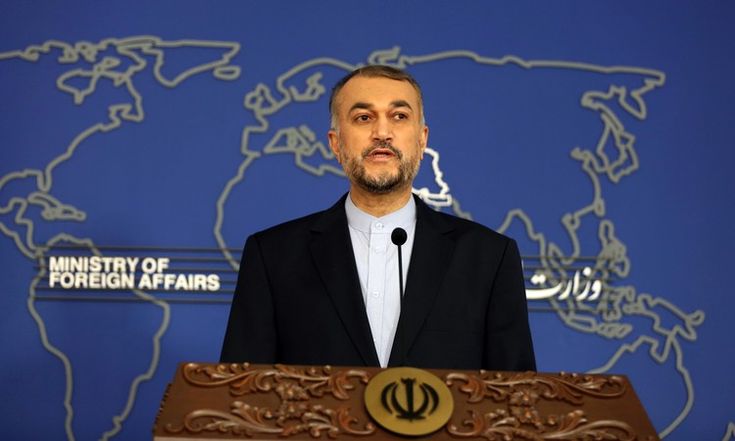
Iran not in hurry to resume nuclear talks — that was the clear message from Iranian Foreign Minister Abbas Araghchi, who stated in a televised interview that Tehran will not rush into negotiations with Washington under current terms. His remarks underscore Iran’s growing defiance in the face of renewed sanctions, mounting economic challenges, and the shifting geopolitical balance across the Middle East.
Iran pushes back against Western demands
Speaking with Al Jazeera Arabic at his office in Tehran, Araghchi stressed that Iran remains open to dialogue but only on “equal terms based on mutual interest.” He dismissed Washington’s preconditions for restarting the nuclear talks — including demands for zero uranium enrichment, the dismantling of missile programs, and an end to support for regional allies — as “illogical and unfair.”
“It appears they are not in a hurry,” Araghchi said of the US position. “We are not in a hurry, either.”
His statement came despite the growing strain of United Nations sanctions and persistent economic troubles that have driven inflation and devalued the Iranian rial. Yet, the foreign minister insisted that Iran will not negotiate from a position of weakness or under pressure, a stance aimed at projecting national resilience amid external challenges.
Regional dynamics: shifting focus toward Israel
In one of the most striking parts of the interview, Araghchi argued that the political narrative in the Middle East is evolving. “There is now a shared understanding that Israel, not Iran, is the main source of instability in the region,” he said.
Referring to Israeli Prime Minister Benjamin Netanyahu, he added: “Mr Netanyahu is a war criminal who has committed every atrocity, but he has done one positive thing — he proved to the entire region that Israel is the main enemy, not Iran, and not any other country.”
His comments reflect a strategic effort by Tehran to reposition itself as a stabilizing power while isolating Israel diplomatically. The remarks came just days after Oman’s Foreign Minister Badr bin Hamad al-Busaidi joined criticism of Israel’s government, describing it as the “primary source of insecurity” in the region.
The statement from Oman, traditionally a neutral mediator, signals a growing regional consensus that could reshape alliances and influence future peace efforts.
A mediator caught in the middle
Oman has long served as a trusted mediator between Iran and the United States, playing an instrumental role in earlier rounds of nuclear negotiations. The two countries were reportedly set to resume a sixth round of talks in mid-June before tensions spiked.
That meeting never happened. Israel’s sudden military strike on Iran’s nuclear facilities in June 2024 triggered a 12-day conflict, killing more than 1,000 people and inflicting billions of dollars in infrastructure damage. Since then, both sides have remained locked in a cycle of hostility and diplomatic distance.
According to reports cited by Al Jazeera, the administration of US President Donald Trump recently attempted to send a new message to Tehran via Oman. Iranian government spokeswoman Fatemeh Mohajerani confirmed that such messages were received but declined to reveal their content. The White House, for its part, has not publicly commented.
Nuclear setbacks and hidden stockpiles
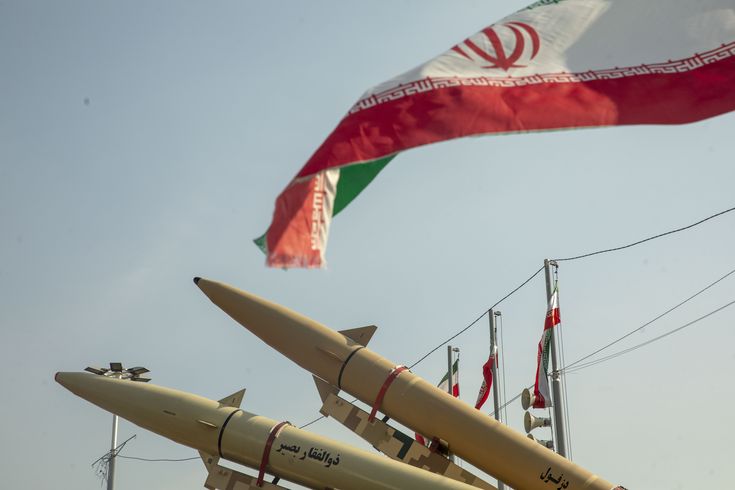
During the interview, Araghchi also offered a rare update on Iran’s nuclear stockpile. He revealed that roughly 400 kilograms of 60-percent enriched uranium had been buried beneath the rubble of bombed nuclear sites, the result of US and Israeli strikes during last year’s conflict.
“We have no intention of removing them until conditions are ready,” he said. “We do not even know how much of it remains intact until we excavate.”
Analysts say this statement may be designed to send a dual message — that Iran retains nuclear capabilities while signaling that its program is on hold until geopolitical conditions shift in its favor.
Europe’s role and the return of sanctions
Meanwhile, European powers are once again tightening pressure on Tehran. France, Germany, and the United Kingdom — all original signatories to the 2015 Joint Comprehensive Plan of Action (JCPOA) — have expressed interest in restarting talks but have also reinstated sanctions related to Iran’s nuclear and drone programs.
In September, the trio suspended bilateral air service agreements with Iran, disrupting routes for airlines like Iran Air. However, recent developments suggest a slow thaw: Austrian Airlines resumed flights to Tehran’s Imam Khomeini International Airport this week, and Lufthansa is reportedly preparing to follow suit.
Despite these moves, meaningful progress in diplomacy remains elusive. Araghchi reiterated that as long as the US and its allies impose “unjust conditions,” Tehran sees no reason to resume negotiations.
China, Russia, and the rejection of Western sanctions
Araghchi emphasized that Iran is not alone in its defiance. Both China and Russia have formally rejected the legitimacy of renewed UN sanctions against Tehran, calling them unilateral and politically motivated. Their stance has bolstered Iran’s position, allowing it to deepen trade and military cooperation with non-Western partners.
Observers say this eastward pivot has become a key pillar of Iran’s foreign policy — one that reduces its vulnerability to Western isolation while solidifying its influence in Asia.
A calculated patience
Experts view Iran’s current posture as one of “strategic patience.” Despite economic hardship, Tehran appears determined to wait out Washington’s shifting political winds, particularly as the US faces its own electoral and foreign policy pressures.
“Iran believes time is on its side,” said a political analyst from the FFRNews World Desk. “By holding back, Tehran can strengthen its bargaining position, expand regional ties, and showcase independence from Western coercion.”
The Iran not in hurry to resume nuclear talks approach thus reflects both pragmatism and pride — a refusal to return to the table under terms perceived as humiliating or unequal.
The bigger picture
As the region continues to adjust to shifting alliances, the stalemate between Iran and the US underscores broader questions about the future of Middle East diplomacy. The balance of power — once dominated by Western-led coalitions — is now being challenged by a multipolar landscape where Gulf states, China, and Russia each play decisive roles.
For Iran, waiting might be costly in the short term, but it could also be a calculated move that reshapes the narrative of power and sovereignty in the region.
For further coverage of Middle Eastern affairs and global diplomacy, visit FFRNews Politics Section or read the full original report on Al Jazeera.