
November 09, 2025
Dune Messiah Production has officially kicked off, marking the highly anticipated continuation of Denis Villeneuve’s visionary sci-fi saga. Legendary Pictures confirmed the news today, revealing that Timothée Chalamet and Zendaya are set to reprise their roles as Paul Atreides and Chani in what promises to be one of the most ambitious cinematic projects of the decade.
Following the monumental success of Dune: Part Two, which captivated audiences with its breathtaking visuals and faithful adaptation of Frank Herbert’s novel, Villeneuve is now preparing to close the trilogy with Dune: Messiah. The film will continue Paul Atreides’ complex journey as he grapples with power, prophecy, and the political chaos of a universe shaped by betrayal and destiny.
Denis Villeneuve’s Vision for the Final Chapter
During a recent interview with Variety, director Denis Villeneuve described Dune: Messiah as “far darker and more intimate” than the previous installments. He emphasized that while the first two films explored destiny and revolution, the final chapter will confront the heavy consequences of power and hero worship.
“Dune: Messiah is not about victory,” Villeneuve said. “It’s about understanding the price of leadership and how prophecy can turn into tragedy.”
Production is reportedly set to begin in early 2026, with principal photography taking place across several international locations, including Jordan, Abu Dhabi, and Budapest — the same settings that brought Arrakis to life in the earlier films.
Returning Cast and New Faces
Alongside Chalamet and Zendaya, several fan-favorite cast members are expected to return, including Rebecca Ferguson as Lady Jessica, Javier Bardem as Stilgar, and Florence Pugh as Princess Irulan. Austin Butler’s portrayal of Feyd-Rautha will also play a critical role in the aftermath of the second film’s events.
Legendary Pictures has hinted at new additions to the cast, including several prominent Hollywood names being considered for key supporting roles. While no new casting announcements have been made, insiders suggest the production aims to introduce at least two major characters from Herbert’s sequel novel who have yet to appear on screen.

The Storyline: The Rise and Fall of a Prophet
Dune: Messiah takes place several years after the events of Part Two, as Paul Atreides — now the Emperor of the Known Universe — faces the moral consequences of the jihad waged in his name. Haunted by visions of the future and the weight of his own legend, Paul must navigate treacherous political alliances and personal loss.
The novel explores themes of fanaticism, destiny, and human fallibility, making it a deeply introspective counterpart to the grand epic of the first two films. Villeneuve has stated his intention to remain faithful to Herbert’s tone, while expanding on the emotional and philosophical depth that defines the source material.
Why Dune: Messiah Matters for Cinema
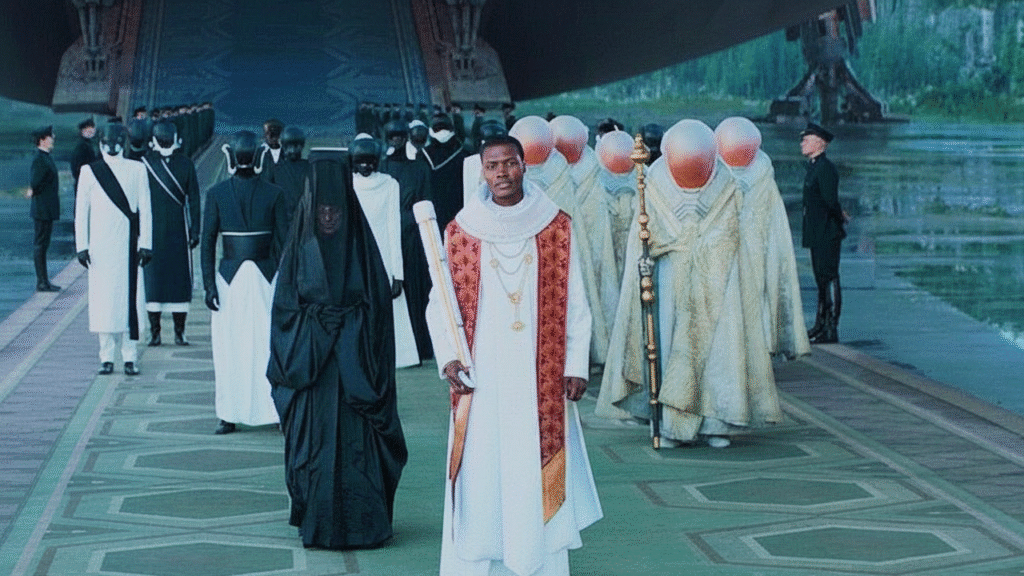
The Dune franchise has redefined modern science fiction, both technically and thematically. Its use of practical effects, natural landscapes, and minimal CGI has earned widespread praise for creating an authentic and immersive visual experience. With Part Two grossing over $1 billion globally and earning multiple Academy Awards, expectations for the trilogy’s conclusion are sky-high.
Critics have credited Villeneuve with reviving the intellectual side of sci-fi — one rooted in philosophy, ecology, and politics rather than mere spectacle. As the director steps into the final installment, he faces the challenge of concluding a saga that has balanced blockbuster scale with literary complexity.
Film analyst Grace Randolph commented, “Villeneuve has achieved something very few filmmakers have managed: transforming an unfilmable novel into a global phenomenon. Dune: Messiah could be his magnum opus.”
The Return of Epic Storytelling
The return of Timothée Chalamet and Zendaya ensures continuity in the franchise’s emotional core. Their chemistry, praised in Dune: Part Two, will now evolve as their characters face the burdens of leadership and destiny. According to reports, Villeneuve plans to delve deeper into their relationship, which will serve as the film’s emotional anchor.
Zendaya hinted in a social media post that Dune: Messiah will explore “love, loss, and legacy” — three words that perfectly capture the tragic scope of Herbert’s universe.
Meanwhile, Hans Zimmer, who composed the Oscar-winning scores for the first two films, is also confirmed to return. His sound design, combining throat singing, deep percussion, and haunting vocal textures, has become synonymous with the Dune experience.
Legacy and Expectations
The production of Dune: Messiah symbolizes not only the completion of Villeneuve’s trilogy but also the culmination of one of Hollywood’s boldest cinematic ventures. The director’s approach — prioritizing artistic depth over commercial formulas — has resonated with audiences seeking storytelling that challenges and inspires.
As Villeneuve put it during his 2025 interview:
“This is the end of one journey, but perhaps the beginning of another — not just for Paul Atreides, but for how we think about science fiction as a reflection of our own humanity.”
Fans will have to wait until 2027 for Dune: Messiah’s theatrical release, but anticipation is already building across film communities and social media platforms. With production officially underway, the film is expected to dominate awards conversations and redefine the boundaries of epic cinema once again.
This report is based on information originally published by Variety, with additional analysis and context provided by FFR Culture