The New Zealand landslide deaths have plunged the country into mourning after two people were killed and several others went missing following powerful landslides across the North Island. The disaster, triggered by days of relentless rainfall, has caused widespread flooding, power outages, and a state of emergency across multiple regions.
Authorities confirmed the fatalities in Welcome Bay, while rescue teams continue searching through debris at a separate landslide site at a popular campground on Mount Maunganui. Emergency officials said there are currently no signs of life in the affected areas, and while they have a preliminary estimate of how many people may be buried, the final number remains unclear.
Deadly Landslides Strike Welcome Bay and Mount Maunganui
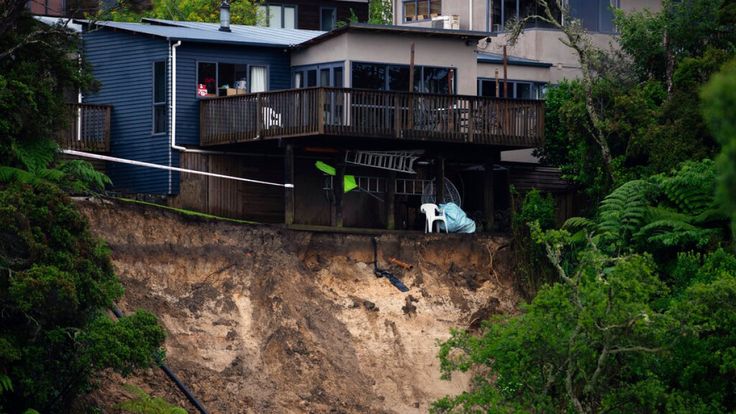
The landslides occurred after heavy rain saturated already unstable ground across the Bay of Plenty region. At Mount Maunganui, an extinct volcano and one of New Zealand’s most visited tourist destinations, a massive slip struck a campground near the base of the volcanic dome, crushing caravans and flattening tents.
Search and rescue teams, supported by sniffer dogs and heavy equipment, have been working continuously through hazardous conditions. Megan Stiffler, deputy national commander of the Urban Search and Rescue team, said the operation is “complex and high-risk,” but crews are committed to continuing the search through the night.
Authorities confirmed that among the missing is at least one young girl, intensifying fears and emotional distress for families awaiting news.
Prime Minister Says Nation Is “Heavy With Grief”
New Zealand Prime Minister Christopher Luxon described the situation as a “profound tragedy,” saying the country is “heavy with grief” as emergency services respond to one of the most severe weather disasters in recent years.
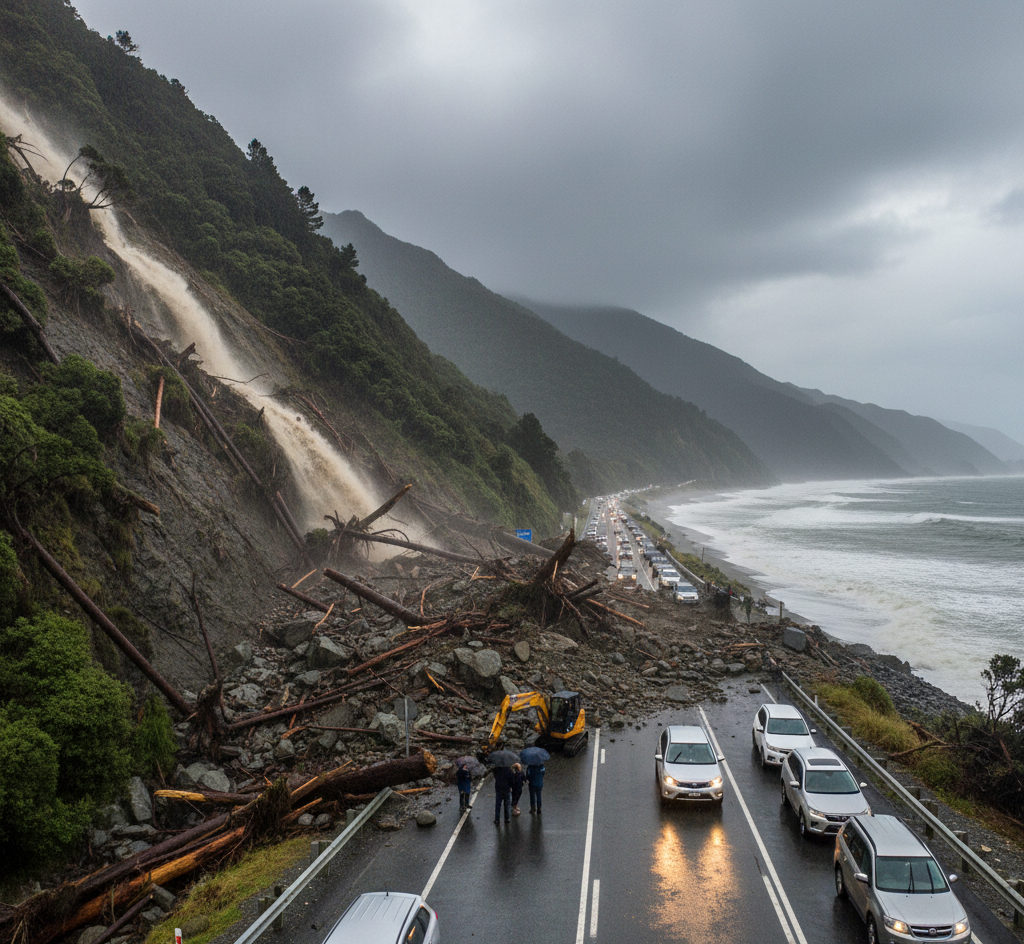
One government minister said parts of the east coast now resemble “a war zone,” with washed-out roads, submerged homes, and widespread infrastructure damage. The scale of devastation has stretched emergency resources as multiple regions battle simultaneous flooding and landslide threats.
Tourists and Witnesses Describe Terrifying Escape
Survivors and witnesses have described moments of panic as the landslides struck without warning. Australian tourist Sonny Worrall told local media that he heard a loud crack before seeing earth and debris rushing downhill.
“I turned around and had to jump out of my seat and just run,” he said, adding that he is still shaking from the experience.
Hiker Mark Tangney told local reporters he heard people screaming from beneath the rubble and rushed to help. According to Tangney, the cries for help lasted around 30 minutes before falling silent — a detail that has deeply unsettled rescuers and residents alike.
State of Emergency Declared Across Multiple Regions
A state of emergency has been declared in the Bay of Plenty, as well as other parts of the North Island including Northland, Coromandel, Tairāwhiti, and Hauraki. Authorities have evacuated nearby areas, including a surf club near Mount Maunganui, due to fears of further landslides.
Several regions recorded their wettest days on record, with Tauranga receiving nearly three months’ worth of rain in a single day, according to local reports. Floodwaters cut off roads, swept away vehicles, and forced thousands of residents to flee their homes.
Power Outages and Missing Persons Add to Crisis
Radio New Zealand reported that approximately 8,000 people were without power, compounding the challenges faced by emergency responders. In another incident linked to the severe weather, a 47-year-old man was swept away in the Mahurangi River while driving to work.
According to reports, he managed to save his nephew by pushing him toward a tree branch, allowing the younger man to climb to safety. The man’s wife said she remains hopeful, noting that her husband is an experienced fisherman who knows how to swim and dive.
Sacred Site and Tourist Landmark Repeatedly Hit
Mount Maunganui is not only a popular tourist destination but also a sacred Māori site, adding cultural significance to the disaster. Despite its beauty, the area has been struck by landslides multiple times in recent years, raising concerns about long-term safety and land management.
Local holiday websites often describe the area as a “slice of paradise,” making the scale of destruction especially shocking for residents and visitors alike.
Climate Patterns Raise Long-Term Concerns
While December to February are typically New Zealand’s sunnier months, extreme rainfall events have become increasingly frequent. In February 2023, Cyclone Gabrielle devastated large parts of the North Island, causing NZ$13.5 billion in damage — the costliest cyclone ever recorded in the Southern Hemisphere.
This week’s flooding has added to the burden for communities still rebuilding from past disasters, prompting renewed debate over climate resilience, infrastructure planning, and emergency preparedness.
This report forms part of FFRNEWS Environment coverage, examining the growing impact of extreme weather events across the Pacific region. Details are informed by reporting from BBC News, alongside updates from New Zealand emergency authorities and public broadcasters. Ongoing coverage and global context on climate-driven disasters can be found through FFRNEWS, which tracks environmental risks and natural emergencies affecting communities worldwide.