
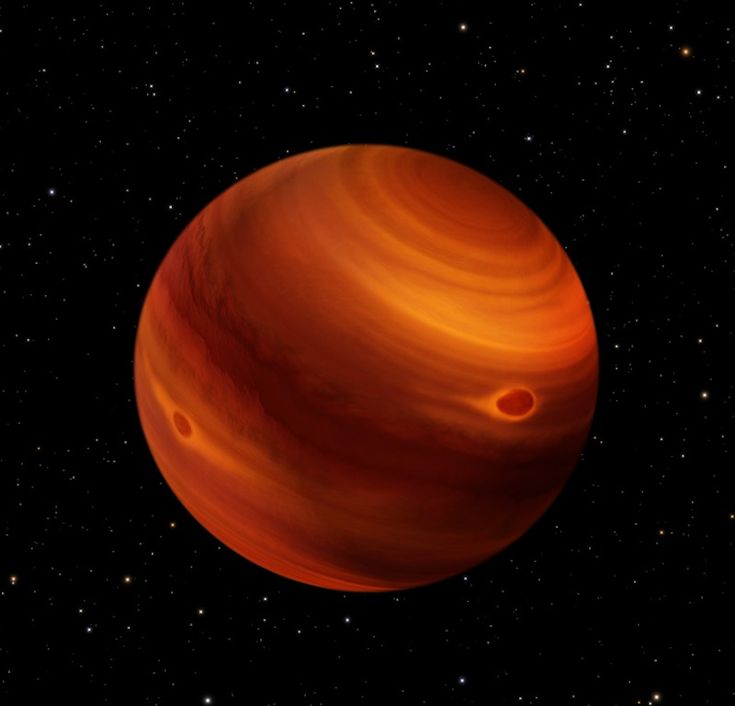
Red dwarf stars carbon oxygen research is offering astronomers a powerful new way to trace the cosmic origins of two of the most essential elements for life. A new analysis of nearby stars suggests that these small, long-lived stellar neighbors preserve chemical fingerprints that reveal how carbon and oxygen were created and dispersed throughout the galaxy.
Scientists examining high-resolution stellar spectra have uncovered rare isotopes of carbon and oxygen hidden in the atmospheres of red dwarf stars close to the Sun. These findings provide fresh insight into stellar nucleosynthesis — the process by which stars forge heavier elements — and help explain how the building blocks of planets and life spread across the universe.
Why Red Dwarf Stars Matter in Cosmic Chemistry
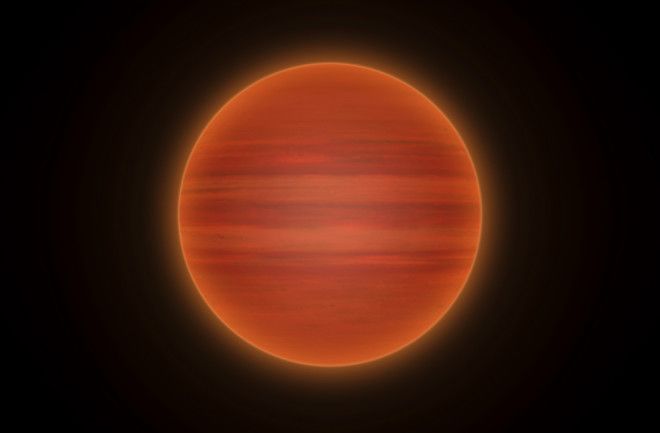
Red dwarf stars, also known as M-type stars, are the most common stars in the Milky Way galaxy. Though smaller and cooler than the Sun, they burn fuel far more slowly, allowing them to remain stable for tens to hundreds of billions of years.
Because of their long lifespans, red dwarfs act as time capsules. Their atmospheres retain chemical signatures from the era in which they formed, making them ideal laboratories for studying the evolution of elements over cosmic time.
Astronomers have long suspected that these stars could reveal details about galactic chemical evolution, but until recently, the data lacked the precision needed to detect subtle isotope variations.
Unlocking Hidden Elemental Fingerprints
The breakthrough came when astronomers reexamined high-resolution spectra originally collected for an entirely different purpose: the search for exoplanets. Led by astronomer Darío González Picos of Leiden University, researchers analyzed archived data from the Canada-France-Hawai‘i Telescope to look for rare isotopes of carbon and oxygen.
Isotopes are variations of elements that differ by the number of neutrons in their atomic nuclei. While most carbon atoms contain six neutrons, a small fraction contains seven. Similar variations exist for oxygen.
By measuring the ratios of these isotopes in 32 nearby red dwarf stars, the team achieved unprecedented precision, revealing subtle chemical differences tied to each star’s formation history.
What the Isotopes Reveal About Stellar Evolution
The study found that stars with lower overall chemical enrichment than the Sun also contained fewer rare isotopes of carbon and oxygen. This observation aligns with long-standing models of galactic chemical evolution, which predict that heavier isotopes accumulate over time as successive generations of stars enrich the galaxy.
These findings help confirm that carbon and oxygen production increases as stars form, evolve, and return material to space through stellar winds and explosive deaths.
As stars age and shed material, their elements become part of interstellar clouds that eventually give rise to new stars and planetary systems — including those capable of supporting life.
How Stars Create Carbon and Oxygen
Element creation inside stars begins with nuclear fusion. In their cores, stars fuse hydrogen into helium, releasing energy that powers their light and heat. As stars evolve, more complex fusion reactions occur, producing heavier elements.
In stars like the Sun, helium fusion eventually leads to the formation of carbon and oxygen. Massive stars go even further, producing heavier elements before ending their lives in supernova explosions that scatter these materials across space.
Red dwarf stars do not reach the same extreme conditions as massive stars, but their atmospheres preserve the chemical history of the interstellar material from which they formed.
A New Tool to Rewind the Cosmic Clock
Researchers say the ability to measure carbon and oxygen isotopes in red dwarf stars provides a new method for tracing the galaxy’s chemical timeline. By comparing isotope ratios across stars of different ages and compositions, astronomers can reconstruct how elements accumulated over billions of years.
This technique allows scientists to “rewind” the chemical clock of the Milky Way, offering insights into when and where life-essential elements became abundant enough to form planets like Earth.
The findings also highlight the value of revisiting archived astronomical data with fresh perspectives and modern analysis techniques.
From Stellar Chemistry to Human Origins
Carbon and oxygen are fundamental to life as we know it. Carbon forms the backbone of organic molecules, while oxygen plays a crucial role in respiration and planetary chemistry.
Understanding how these elements formed and spread throughout the galaxy helps answer one of humanity’s most profound questions: how did the ingredients for life come to exist?
Astronomers say that studying nearby red dwarf stars connects stellar physics with planetary science and astrobiology, bridging the gap between cosmic processes and life on Earth.
Unexpected Discoveries from Planet-Hunting Data
One of the most striking aspects of the study is that the data were not originally collected for isotope research. Instead, they were part of surveys designed to detect planets around nearby stars.
This repurposing of data demonstrates how modern astronomy increasingly relies on interdisciplinary approaches, where observations gathered for one goal can yield breakthroughs in entirely different areas of research.
Scientists involved in the study say this approach may lead to further discoveries as astronomers revisit existing data sets with new questions in mind.
What This Means for Future Research
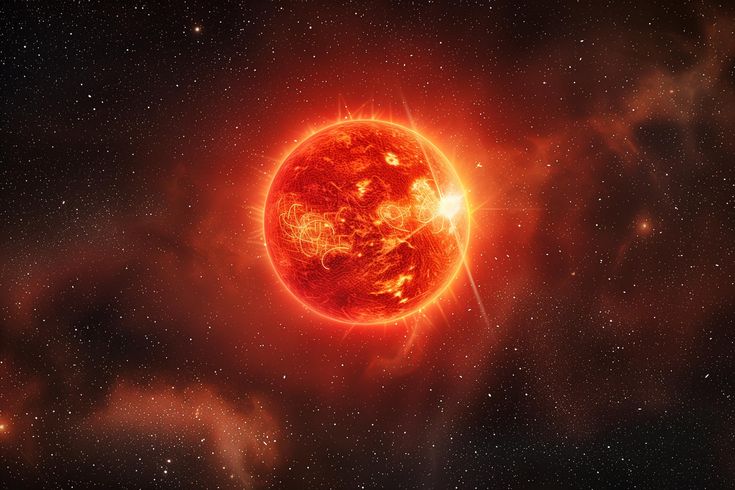
The success of this study opens the door to expanding isotope measurements to larger samples of stars across the galaxy. Future research could refine models of stellar evolution and improve understanding of how chemical enrichment varies between different regions of the Milky Way.
With next-generation telescopes and more sensitive instruments, astronomers expect to explore elemental origins with even greater detail, shedding light on how the universe became chemically rich enough to support life.
This report is part of FFRNews Astronomy coverage, focusing on space science, stellar evolution, and cosmic origins. Details in this article are based on reporting by Universe Today, which covered new research into red dwarf stars and their role in revealing the origins of carbon and oxygen.