India EU Trade Deal discussions reached a historic breakthrough as New Delhi and Brussels officially announced a sweeping free trade agreement, marking one of the most significant global economic partnerships in recent decades. The deal, concluded after nearly 20 years of stalled and revived negotiations, is being hailed by leaders on both sides as transformational for global trade, supply chains, and geopolitical alignment.
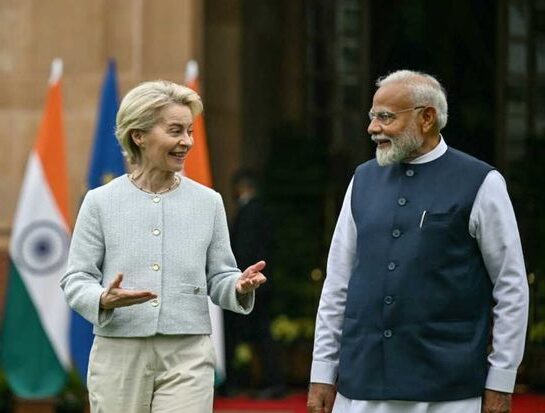
European Commission President Ursula von der Leyen described the agreement as “the mother of all deals” during a joint media briefing in Delhi, while Indian Prime Minister Narendra Modi called it a “historic milestone” that will reshape India’s economic engagement with Europe. Together, India and the European Union represent nearly 25 percent of global GDP and a combined market of more than two billion people.
The agreement allows for freer trade in goods and services between India and the 27-member EU bloc, significantly lowering or eliminating tariffs across a wide range of sectors. European exports of chemicals, machinery, electrical equipment, aircraft, and spacecraft will benefit from phased tariff reductions, while Indian exporters gain preferential access to one of the world’s largest consumer markets.
One of the most striking provisions involves motor vehicles. Import duties on European cars entering India — previously as high as 110 percent — will be reduced to 10 percent under a quota system allowing up to 250,000 vehicles. This quota is substantially larger than similar concessions India has granted in recent trade deals, signaling the scale and ambition of the agreement.
India has also agreed to cut tariffs on EU products such as wine, beer, and olive oil, while ensuring sensitive domestic sectors remain protected. Indian officials emphasized that industries including dairy, cereals, poultry, soy meal, and select fruits and vegetables have been carefully safeguarded to balance export growth with domestic food security and farmer interests.
For India, the benefits are broad and strategically significant. Nearly all Indian exports are expected to receive preferential access to EU markets. Sectors such as textiles, leather goods, marine products, handicrafts, gems, and jewelry — many of them labor-intensive — are expected to see immediate gains. These industries were among the hardest hit by high tariffs imposed by the United States in recent years.
The agreement also includes a mobility framework designed to ease short-term travel for professionals between India and the EU. This provision is expected to benefit skilled workers in technology, engineering, research, and services, strengthening people-to-people ties and innovation partnerships.
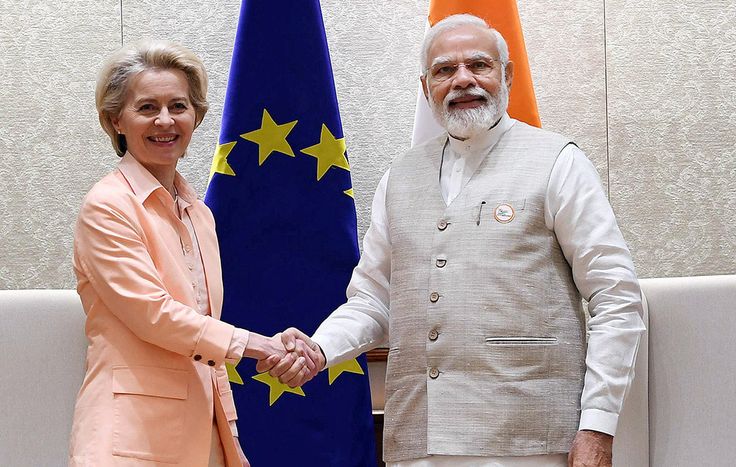
Prime Minister Modi emphasized that the deal would boost manufacturing, services, and innovation while opening new opportunities for India’s farmers and small businesses. He also framed the agreement as part of India’s broader strategy to integrate more deeply into global supply chains while maintaining strategic autonomy.
The geopolitical backdrop played a crucial role in accelerating the agreement. Both India and the EU are navigating growing economic and political pressure from the United States. India continues to face steep tariffs imposed during President Donald Trump’s second term, while the EU has recently clashed with Washington over trade, security, and territorial disputes.
European leaders openly acknowledged the symbolic importance of the pact. Von der Leyen described it as a “win-win partnership” and a powerful signal that cooperation, rather than protectionism, remains the best answer to global challenges. European Council President António Costa echoed this sentiment, saying the deal sends a clear message in favor of trade agreements over tariffs.
Analysts say the agreement provides the EU with greater economic certainty at a time of global turbulence, while helping diversify supply chains away from overreliance on any single market. Germany and France are expected to be among the biggest beneficiaries within Europe, particularly in manufacturing, automotive, and industrial exports.
However, challenges remain. Experts caution that Indian manufacturers will need to meet strict EU regulatory and environmental standards, particularly around sustainability and carbon emissions. The EU is a global leader in climate-linked trade regulations, and compliance could require significant upgrades across Indian industries.
Economist Mitali Nikore noted that while India’s manufacturing sector may not yet be fully prepared for EU-level environmental standards, the agreement should be viewed as an opportunity rather than a threat. She emphasized that adapting to these standards could enhance India’s long-term competitiveness in global markets.
Beyond trade, the deal also strengthens cooperation in security, defense, and climate action. India and the EU are advancing parallel discussions on maritime security, cyber threats, and defense supply-chain integration. Indian Defence Minister Rajnath Singh confirmed talks with senior EU officials aimed at building trusted defense ecosystems and future-ready capabilities.
Bilateral trade between India and the EU has already nearly doubled over the past decade, reaching approximately $136 billion in goods trade in 2024–25. Negotiations for this agreement first began in 2007 but stalled in 2013 over market access and regulatory disagreements. Talks formally resumed in 2022, with recent global trade tensions acting as a catalyst to push the deal across the finish line.
The formal signing of the agreement is expected later this year, pending approval by the European Parliament and EU member states. While some observers note recent setbacks to other EU trade agreements, the India pact is considered less controversial due to carefully balanced concessions on both sides.
In recent months, India has rapidly expanded its trade footprint, signing major agreements with the United Kingdom, Oman, New Zealand, Australia, and the European Free Trade Association. The EU deal now stands as the largest and most strategically important of them all.
Read more about global trade and diplomacy in the FFRNews Business Section and follow continuing updates from BBC News for international reporting on economic policy and geopolitics.