Biofilms, the complex communities of microorganisms, have long been hypothesized to play a critical role in the origin of life on Earth. Recent research now suggests that these resilient microbial systems could also support human life in space while offering practical applications back on our planet.
A recent international study published in npj Biofilms and Microbiomes investigates the potential of space biofilms in microgravity environments, while also addressing the health risks they pose to astronauts. By studying biofilm growth in space, scientists aim to harness their unique properties for space exploration and Earth-based technologies.
Biofilms: From Primordial Earth to Modern Applications
Biofilms are structured microbial communities embedded in a self-produced matrix that allows microorganisms to thrive collectively. On early Earth, biofilms likely facilitated the evolution of complex life by providing protective and interactive environments for microorganisms.
The new study highlights how biofilms contribute to human health, agricultural production, and environmental stability. In microgravity, biofilms behave differently, altering their structure and interactions with human gut microbiomes and plant rhizospheres. Understanding these changes is key for designing safe and effective biofilm applications in space.
NASA’s Space Biofilms Research
NASA has studied biofilms for decades, particularly in closed-system environments like the International Space Station (ISS). Researchers have observed that biofilms in microgravity attach more easily to surfaces, resist antimicrobials, and can damage equipment, including water systems, metal surfaces, and air filtration systems.
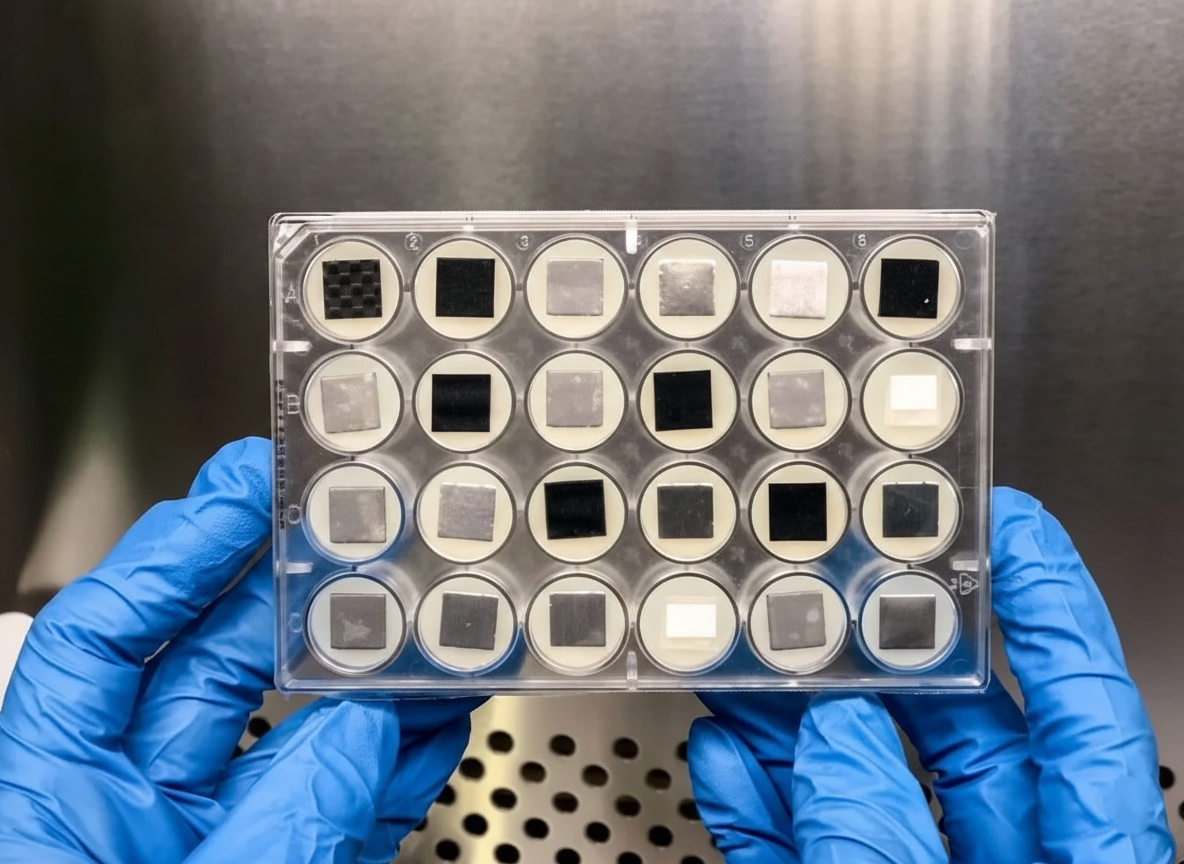
The ISS-based Characterization of Biofilm Formation, Growth, and Gene Expression on Different Materials and Environmental Conditions in Microgravity (Space Biofilms) experiment investigates how biofilms develop under spaceflight conditions. Findings from these studies may help prevent equipment malfunctions while guiding the design of biofilm-based technologies for future missions.
Potential Benefits of Biofilms in Space
Despite their risks, biofilms offer numerous benefits for long-term space exploration. Researchers suggest that biofilm communities could be engineered to produce medicines in situ, reducing the need for resupply missions from Earth.
Biofilms may also play a role in regenerative medicine and plant cultivation in extraterrestrial habitats. By enhancing crop yield and quality while reducing reliance on chemical fertilizers and pesticides, biofilms could support sustainable food production for astronauts on extended missions to the Moon or Mars.
Microgravity Effects on Biofilms
Microgravity uniquely affects biofilm formation and function. Studies have shown that biofilms grow differently on various surfaces and exhibit altered gene expression patterns in space. These adaptations allow biofilms to survive in harsh environments, making them both a challenge and an opportunity for astronauts.
In past research, simulated microgravity experiments demonstrated that biofilms can thrive in conditions similar to those encountered during spaceflight. These insights are critical for designing safe habitats and long-term life-support systems in space.
Earth Applications of Space Biofilm Research
Research on space biofilms has immediate implications for Earth. Insights from microgravity experiments can help develop new strategies for combating biofilm-related infections, preventing microbial corrosion, and improving agricultural productivity.
The study emphasizes that biofilms should not simply be seen as threats but as adaptive biological tools that can be leveraged to address challenges in medicine, agriculture, and industry. By applying knowledge from space experiments, scientists may unlock innovative solutions to longstanding Earth-based problems.
Future Directions and Open Science Principles
The study builds on over two decades of space biofilm research, including projects simulating microgravity biofilm reactors and evaluating gene expression under space conditions. Using NASA’s Open Science Data Repository (OSDR), researchers share findings broadly, promoting transparency and accelerating technological development.
Future exploration will likely focus on optimizing biofilm communities for pharmaceutical production, crop enhancement, and sustainable life-support systems. By integrating space-based biofilm studies with terrestrial applications, scientists hope to create technologies that benefit both astronauts and Earth’s population.
Challenges and Health Considerations
While biofilms offer promise, they also pose risks to astronaut health. Resistant biofilm communities can lead to contamination of water and air systems, which are crucial for life support in space habitats. Addressing these risks requires careful monitoring, engineering controls, and targeted antimicrobial strategies.
Moreover, the ability of biofilms to adapt to space conditions highlights the importance of understanding microbial evolution in extreme environments, which could have profound implications for human health during long-duration missions.
Conclusion: Biofilms as a Key to Space and Earth Sustainability
“Biofilms have supported life since primordial Earth,” the study concludes. In space, they may enable sustainable life-support systems, in situ medicine, and efficient agriculture, while on Earth, they offer innovative solutions to medical, industrial, and environmental challenges.
As humanity plans for long-term missions to the Moon, Mars, and beyond, biofilms may play a central role in making space exploration feasible and sustainable. The dual impact of this research underscores the value of understanding these complex microbial communities both for pioneering space technology and enhancing life on Earth.
This report is part of FFRNEWS Astronomy & Science coverage, tracking breakthroughs in space biology and applied microbiology. Reporting is based on verified sources, including:
- Universe Today: Space Biofilms May Have Sparked Life on Earth
- NASA Open Science Data Repository: OSDR Space Biofilms Experiments