
The Trump 10% Tariff Reset has reshaped the global trade conversation after the U.S. Supreme Court struck down most of Donald Trump’s sweeping international import taxes in a landmark 6–3 decision. The ruling concluded that the former president overstepped his authority when he imposed broad tariffs under a 1977 emergency law.
Within hours of the decision, Trump responded by announcing a new 10% blanket tariff under a different legal provision, escalating trade tensions and injecting fresh uncertainty into global markets. The rapid policy shift has left businesses, investors, and trade partners trying to understand what comes next.
Why the Supreme Court Blocked the Original Tariffs
The Supreme Court ruled that Trump’s earlier global tariffs, imposed under the International Emergency Economic Powers Act (IEEPA), were unlawful. The administration had argued that the law allowed the president to “regulate” trade during national emergencies. However, challengers — including U.S. states and small businesses — argued that the law did not explicitly grant authority to impose sweeping tariffs.
Chief Justice John Roberts wrote that when Congress delegates tariff powers, it does so clearly and with strict limits. The majority opinion stated that if Congress intended to grant such sweeping authority, it would have done so explicitly.
The decision was joined by the court’s three liberal justices and two conservative justices appointed by Trump — Amy Coney Barrett and Neil Gorsuch. Three conservative justices dissented.
The ruling opens the door to potentially billions of dollars in tariff refunds for companies that paid duties under the invalidated policy. However, the Court did not outline a refund mechanism, leaving that issue to lower courts and administrative processes.
What the Trump 10% Tariff Reset Changes
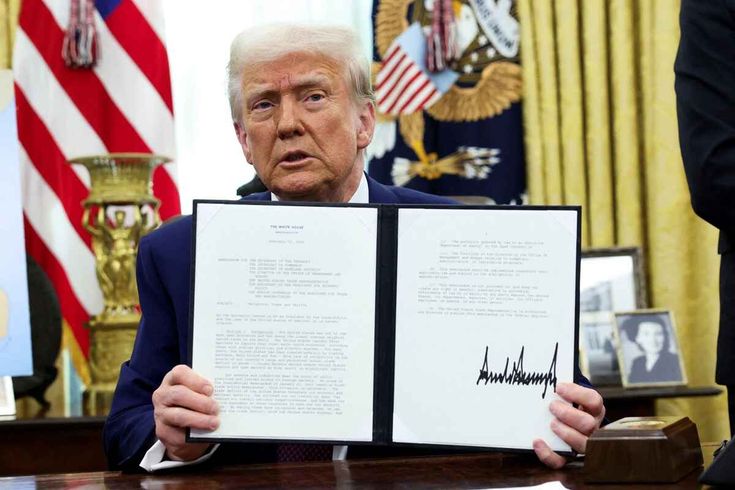
The Trump 10% Tariff Reset was announced almost immediately after the ruling. Instead of relying on IEEPA, the new tariff is being implemented under Section 122 of U.S. trade law. This provision allows a president to impose tariffs of up to 15% for 150 days to address trade imbalances, after which Congress must step in to continue or modify the policy.
The new 10% tariff will take effect on 24 February and applies broadly to imports from most countries. However, several exemptions were included in the proclamation:
- Certain minerals and natural resources
- Fertilizers
- Some agricultural goods such as oranges and beef
- Pharmaceuticals
- Selected electronics
- Certain vehicles
Canada and Mexico retain exemptions under the USMCA trade agreement for most goods. Meanwhile, countries that previously negotiated trade deals with the United States — including the UK, India, and the European Union — will now face the standard 10% rate instead of their earlier negotiated terms.
Market Reaction and Business Response
Financial markets initially reacted positively to the Supreme Court ruling. The S&P 500 rose about 0.7% following the announcement, as investors welcomed the rollback of the broader tariff regime.
Businesses across multiple sectors had warned that the original tariffs significantly increased costs, disrupted supply chains, and fueled inflation concerns. The U.S. government has already collected at least $130 billion in tariffs under the IEEPA framework.
Many small business owners cautiously welcomed the Court’s decision. However, the Trump 10% Tariff Reset complicates the outlook. While the new rate is lower than some of the previously imposed duties, it still affects a vast range of imports, meaning cost pressures remain.
Economists warn that policy uncertainty itself can discourage investment. Companies must now prepare for potential legal disputes, refund claims, and possible further policy adjustments.
Will Companies Get Refunds?
A major unresolved issue following the ruling is refunds. Because the Court invalidated the legal basis for the previous tariffs, businesses that paid those duties may be entitled to reimbursement.
However, Trump indicated that refunds would likely face prolonged legal challenges. Analysts suggest that companies may need to file lawsuits or navigate complex administrative procedures to reclaim funds.
For smaller firms, the cost of litigation could outweigh potential recovery, creating an uneven playing field. Legal experts have suggested that the government could create a streamlined refund process to avoid overwhelming the courts, but no such plan has been formally announced.
Political Fallout and Constitutional Impact
The Trump 10% Tariff Reset has intensified debate over executive authority in trade policy. Trump criticized the Supreme Court’s decision, calling it deeply disappointing and arguing that tariffs are essential to protecting American manufacturing and encouraging domestic investment.
The ruling reinforces Congress’s constitutional role in taxation and tariff policy. While presidents have been granted limited trade authority, the Court emphasized that sweeping economic measures require clear legislative approval.
The administration is also expected to consider alternative tools such as Section 232 (national security tariffs) and Section 301 (addressing unfair trade practices), both of which were previously used to impose duties on sectors like steel, aluminum, and automobiles. Those sector-specific tariffs were not affected by the ruling.
What Comes Next for Global Trade
The Trump 10% Tariff Reset is temporary under Section 122, lasting up to 150 days unless Congress acts. That timeline sets the stage for potential legislative battles in Washington. Lawmakers will face pressure from business groups, trade partners, and domestic manufacturers to either formalize, modify, or eliminate the new tariff.
International reaction has been measured so far, with trade partners reviewing the decision and its implications. However, global markets remain cautious, as further legal or political developments could shift policy again.
Trade analysts say the situation has become more complex rather than resolved. The Supreme Court limited executive power, but the rapid introduction of a new tariff ensures that trade tensions will continue.
The Trump 10% Tariff Reset represents a dramatic turn in U.S. trade policy. While the Supreme Court struck down the earlier global tariffs, the immediate implementation of a new 10% import tax under a different legal framework keeps the trade debate alive.
Businesses may gain relief through refunds, but legal uncertainty remains high. Markets responded positively to the constitutional clarity, yet long-term stability will depend on how Congress and the courts address the next phase of the tariff battle.
For further coverage on global trade policy, read more in the FFRNews Politics Section and follow continuing updates from BBC and Reuters for global reporting on international tariffs and U.S. trade developments.