Lasers Can Melt Through Extraterrestrial Ice Efficiently, Offering a New Era for Space Exploration

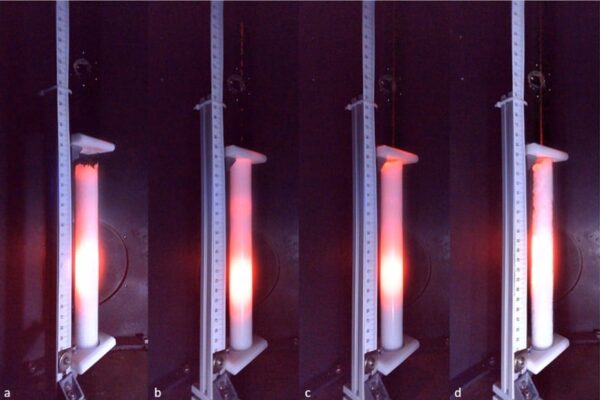
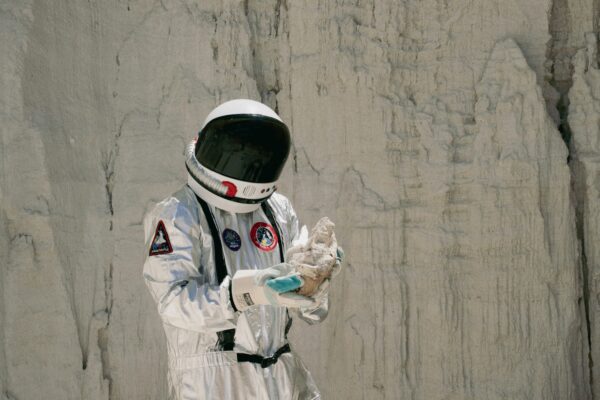
Lasers can melt through extraterrestrial ice efficiently — and scientists believe this breakthrough could completely transform how we explore icy moons, comets, and polar regions on Mars. A new study published in Acta Astronautica by researchers at the Technical University of Dresden presents an innovative laser drilling system designed specifically for use on icy bodies…

Read More

JWST MINERVA Survey Unlocks New Insights Into the Cosmic Dawn

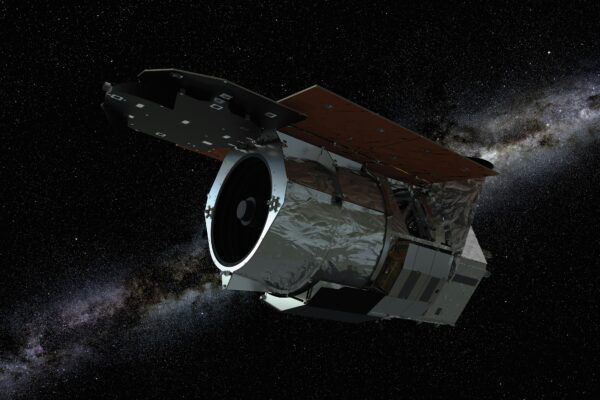
JWST MINERVA Cosmic Dawn research marks a groundbreaking step in astronomy, as the James Webb Space Telescope (JWST) continues to reshape our understanding of the early universe. Scientists have launched the MINERVA project—short for Medium-band Imaging with NIRCam to Explore ReVolutionary Astrophysics—a multi-wavelength survey that aims to study four extragalactic fields in greater depth than…

Read More

Juno Detects Callisto’s Footprints in Jupiter’s Aurorae, Unlocking New Mysteries

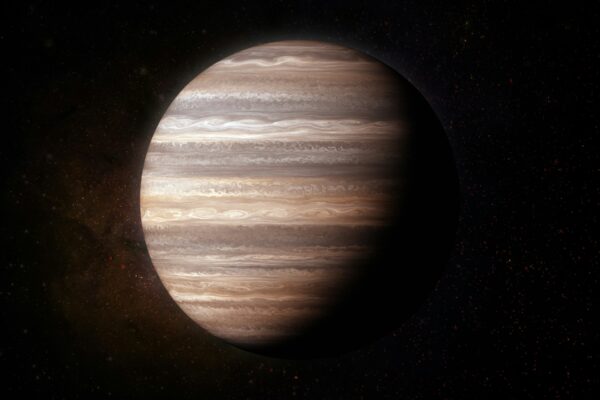
In a groundbreaking discovery, NASA’s Juno spacecraft has observed something astronomers had long suspected but never confirmed: Juno detects Callisto’s footprints in Jupiter’s dazzling aurorae. This marks the first time that the giant moon Callisto has been directly linked to creating distinct auroral signatures on the gas giant, joining its Galilean siblings Io, Europa, and…

Read More

Murchison Widefield Array Expansion Doubles Telescope Power for Cosmic Discoveries

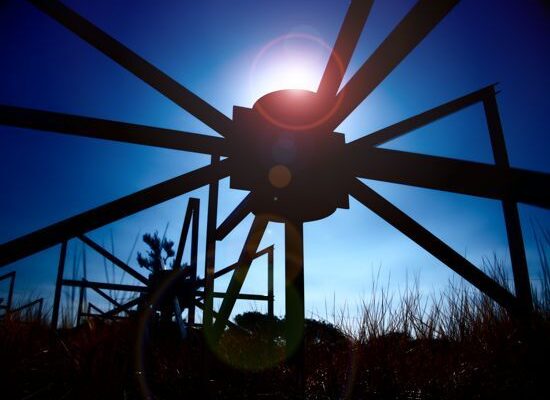
The Murchison Widefield Array Expansion marks a significant leap forward for radio astronomy. Located in the remote outback of Western Australia, the Murchison Widefield Array (MWA) has been a workhorse in the hunt for cosmic signals since 2013. Now, with its latest upgrade—doubling in size and capability—it stands ready to answer some of the universe’s…

Read More

SwRI Interstellar Mission Concept to Explore Objects Like 3I/ATLAS

The Southwestern Research Institute (SwRI) has unveiled an exciting new study proposing how humanity could send a spacecraft to intercept and study an interstellar visitor, such as 3I/ATLAS. This bold vision, known as the SwRI Interstellar Mission Concept, could transform our understanding of the universe by providing firsthand data about objects that come from beyond…

Read More

Double Trouble: Solar Orbiter Traces Superfast Electrons Back to the Sun

The Sun, our life-giving star, is also the Solar System’s most powerful particle accelerator. It hurls vast amounts of energetic material into space, sometimes with incredible force. Among these outbursts are electrons that can travel nearly at the speed of light, flooding space with dangerous radiation known as Solar Energetic Electrons (SEEs). Now, thanks to…

Read More