
In a significant policy shift, Beijing announced on Saturday that it will loosen the China chip export ban that had strained relations with the Netherlands and disrupted European supply chains. The decision follows mounting international pressure and a meeting earlier this week between US President Donald Trump and Chinese President Xi Jinping in South Korea.
The move comes just weeks after Dutch authorities took over Nexperia, a Chinese-owned semiconductor manufacturer based in the Netherlands, citing national security and governance concerns. The takeover, conducted under a Cold War-era law, marked one of the boldest European interventions into Chinese-linked technology firms to date.
Why the Ban Was Imposed
The dispute began in September when the Dutch government used emergency powers to take control of Nexperia, claiming it needed to protect its domestic chip supply and ensure production continuity in the event of geopolitical tension. Dutch officials cited “serious governance shortcomings” in Nexperia’s management, triggering Beijing’s fury.
In retaliation, China imposed a ban on re-exporting completed Nexperia chips to Europe, a decision that quickly rattled automakers and electronics manufacturers across the continent. Roughly 70% of chips produced in the Netherlands are shipped to China for completion before being re-exported to Europe and other markets.
The Chinese embargo caused an immediate shortage, forcing European car companies to warn of potential production halts. The European Automobile Manufacturers’ Association (ACEA) called the situation “alarming” and said chip supplies could run out within weeks unless the ban was lifted.
“Without these chips, European automotive suppliers cannot build the essential parts needed to supply vehicle manufacturers,” ACEA said in a statement last month. “This threatens widespread production stoppages and layoffs.”
China chip export ban – Beijing’s Shift in Tone
Facing escalating criticism from Europe and growing concern within its own technology sector, Beijing appeared to soften its stance on Saturday. A statement released by the Ministry of Commerce said the government would “comprehensively consider the actual situation of enterprises and grant exemptions to exports that meet the criteria.”
While China did not specify what those criteria entail, trade experts interpret the move as a measured climbdown designed to de-escalate tensions with Europe without appearing to surrender leverage.
At the same time, Beijing issued a stern rebuke to The Hague, accusing the Netherlands of “improper interference in the internal affairs of enterprises” and blaming Dutch authorities for “the current disruption of global production and supply chains.”
Economic and Political Implications
The China chip export ban had quickly become a flashpoint in the broader global technology rivalry, drawing in the United States and other allies. The timing of Beijing’s announcement — just days after the Trump-Xi meeting — suggests the issue was a major point of discussion between the two leaders.
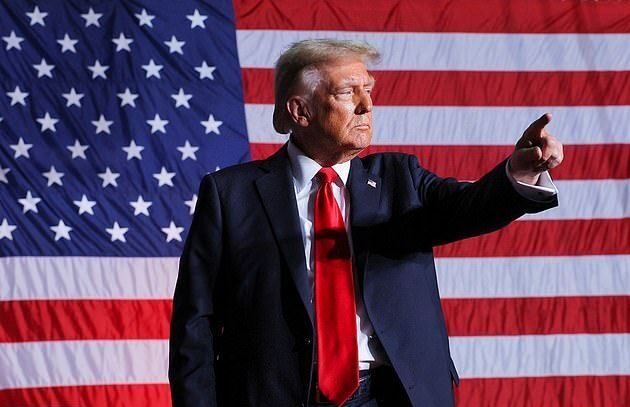
President Trump told reporters that the pair had discussed semiconductor trade and potential steps toward easing global supply bottlenecks. Beijing’s official readout of the meeting did not explicitly mention chips but referred to “constructive progress” on trade matters.
According to Reuters, the White House is expected to release a fact sheet detailing a new trade agreement that includes the resumption of Nexperia exports. Analysts believe the development could mark the beginning of a thaw in US-China trade relations, which have been tense since 2023 over competing technology bans and export controls.

Impact on European Industry
European automakers, already under pressure from high energy costs and the transition to electric vehicles, have struggled to secure a stable supply of chips since the COVID-19 pandemic. Nexperia, based in Nijmegen, is one of the region’s key suppliers of automotive semiconductors, providing components used in vehicle sensors, braking systems, and battery management units.
The chip shortage threatened to stall production lines at major manufacturers including Volkswagen, Stellantis, and BMW. Industry leaders welcomed China’s new stance as a lifeline for Europe’s car sector, though they remain cautious about how quickly supply can resume.
“It’s a positive step, but the damage from weeks of halted shipments has already been felt,” said Hans Müller, a supply chain analyst at the European Technology Forum. “Automakers will now scramble to replenish inventories while assessing whether Beijing’s new export exemptions are reliable.”
Background on Nexperia and Global Reactions
Nexperia, a subsidiary of China’s Wingtech Technology, has been at the center of multiple security debates across Western governments. In December 2024, the US placed Wingtech on its ‘entity list’, identifying it as a national security concern. The move limited Nexperia’s access to advanced American chip-making tools and design software.
In the UK, the company was ordered to sell its Newport Wafer Fab facility following a parliamentary inquiry over national security risks. It still operates a factory in Stockport, though analysts say the Netherlands’ intervention has further complicated its European footprint.
Dutch officials maintain that the takeover was necessary to preserve domestic technology capabilities. “Our priority is to ensure critical chip production remains accessible during any global emergency,” the Dutch Ministry of Economic Affairs stated earlier this month.

What Comes Next
With Beijing signaling flexibility, European trade officials are preparing to engage in new talks to formalize export exemptions and secure longer-term guarantees. The European Commission said it will “closely monitor” implementation of China’s decision, emphasizing the need for transparency and stability in semiconductor supply chains.
The easing of the China chip export ban may also improve sentiment in global markets. Semiconductor stocks across Europe rose slightly following Beijing’s announcement, reflecting investor optimism that a prolonged supply shock can be avoided.
However, experts warn that geopolitical risk remains high. “Even if production resumes, the episode underscores Europe’s vulnerability to supply chain concentration,” said Marianne Dubois, senior fellow at the Centre for Strategic Trade Studies. “Without diversification, a single policy decision from Beijing can disrupt entire industries.”
Conclusion
For now, the partial lifting of the China chip export ban represents a cautious de-escalation in a dispute that could have had severe consequences for both sides. The coming weeks will determine whether the exemptions announced by Beijing lead to a sustainable resolution or merely a temporary reprieve.
For more on global trade and business news, visit FFRNEWS Business
or read the original BBC report here.