
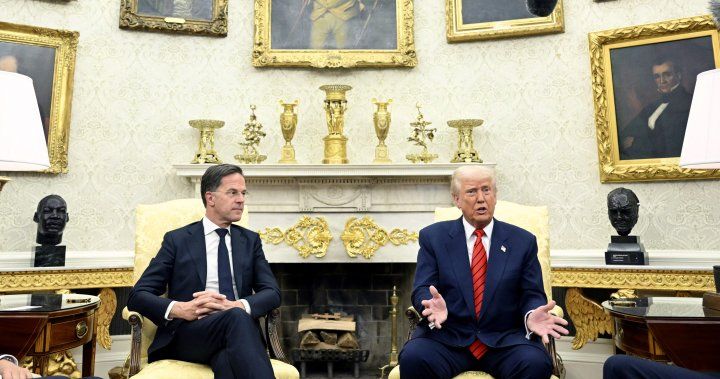
The debate over US acquiring Greenland has erupted into one of the most explosive geopolitical controversies of the year. What once sounded like an outrageous joke has now become an official White House discussion, with military options openly acknowledged as being “on the table.”
The revelation has sent shockwaves through Europe, rattled NATO allies, and reignited fears of territorial conflict in the Arctic. Denmark has pushed back forcefully, Greenland’s leaders have spoken out, and European powers have united in defense of sovereignty and international law.
So why does Washington want Greenland so badly? What are the real options being considered? And could this unprecedented move tear apart NATO from within?
This article breaks down everything you need to know about the US acquiring Greenland debate, the hidden power calculations behind it, and the dangerous consequences that could follow.
Why the US Is Discussing Acquiring Greenland
The idea of US acquiring Greenland resurfaced aggressively after President Donald Trump repeated claims that the United States “needs” Greenland for national security reasons.
According to the White House, Greenland is now viewed as a strategic priority, particularly as global competition intensifies in the Arctic. A spokesperson confirmed that Trump and his advisors are actively exploring “a range of options” to achieve this goal.
While US officials insist there are no immediate plans to invade Greenland, the acknowledgment that military force is an option has alarmed allies and analysts alike.
Greenland, though semi-autonomous, remains part of the Kingdom of Denmark — a fellow NATO member. Any forced action would represent an unprecedented conflict between alliance partners.
White House Confirms Military Options Are on the Table
In one of the most controversial statements yet, the White House told the BBC that using the US military is always an option available to the president.
This confirmation marked a dramatic escalation in the US acquiring Greenland debate.
While Secretary of State Marco Rubio reportedly told lawmakers that an invasion was not planned, he confirmed that purchasing Greenland or forming a Compact of Free Association were being discussed behind closed doors.
A senior US official later told Reuters that these options could include:
- Outright purchase from Denmark
- Expanded US military control
- A political association similar to US ties with Pacific island nations
Such discussions have intensified fears that Washington is prepared to push boundaries of international law to secure strategic dominance.
Why Greenland Is a Strategic Goldmine
Understanding why the US wants Greenland requires looking beyond politics and into geography, resources, and global power.
1. Arctic Military Advantage
Greenland sits at a crucial point between North America and Europe. Control of the island would dramatically strengthen US missile defense systems and early-warning radar coverage.
The US already operates Thule Air Base in Greenland, a key part of its Arctic defense network.
2. Rare Earth Resources
Greenland holds vast untapped deposits of rare earth minerals essential for:
- Military technology
- Renewable energy systems
- Advanced electronics
With China currently dominating rare earth supply chains, US acquiring Greenland could significantly reduce American dependence on Beijing.
3. Emerging Trade Routes
Melting Arctic ice is opening new shipping lanes, potentially reshaping global trade. Control over Greenland could give the US enormous leverage over future Arctic commerce.
These factors explain why Greenland has suddenly become one of the world’s most contested territories.
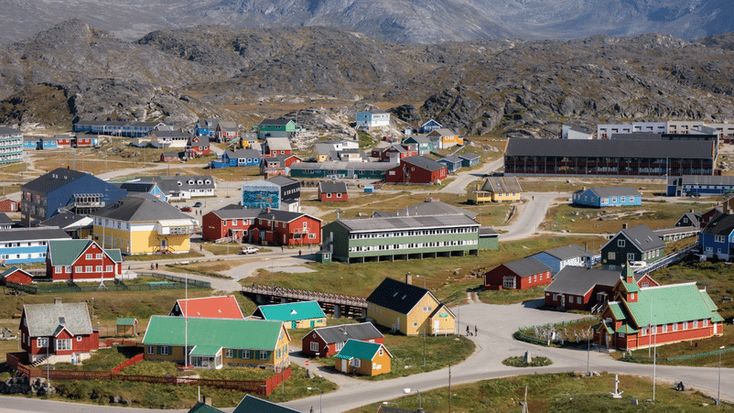
Denmark, Europe, and NATO Push Back Hard
European leaders responded swiftly and forcefully to the US acquiring Greenland discussion.
Denmark made it clear that Greenland is not for sale, and Danish Prime Minister Mette Frederiksen warned that any US attack would effectively end NATO as we know it.
Soon after, leaders from:
- The United Kingdom
- France
- Germany
- Italy
- Poland
- Spain
issued a joint statement affirming that Greenland belongs to its people and that only Denmark and Greenland can decide its future.
They emphasized that Arctic security must be achieved collectively through NATO, not through unilateral US action.
The statement also reaffirmed commitment to:
- Sovereignty
- Territorial integrity
- The UN Charter
This unified response highlights just how dangerous the Greenland debate has become for Western unity.
Greenland’s People Strongly Reject US Control
While governments argue, the people of Greenland have been unequivocal.
Opinion polls show overwhelming opposition to becoming part of the United States, despite most Greenlanders favoring eventual independence from Denmark.
Greenland’s Prime Minister Jens-Frederik Nielsen stressed that any dialogue must respect international law and Greenland’s territorial integrity.
Protests have already taken place, with demonstrators carrying signs reading:
- “Greenland belongs to Inuit”
- “Kalaallit don’t want to be annexed”
Morgan Angaju, a 27-year-old Inuit resident, told the BBC that hearing US leaders talk about Greenland as something to “claim” was terrifying.
For many Greenlanders, the US acquiring Greenland debate feels less like diplomacy and more like a threat to their identity and autonomy.
What US Acquiring Greenland Could Mean for NATO
Perhaps the most dangerous implication of US acquiring Greenland is its impact on NATO.
NATO operates on the principle that an attack on one member is an attack on all. If the US were to use force against Danish territory, it would create an unprecedented crisis within the alliance.
Analysts warn that such a move could:
- Shatter NATO unity
- Encourage rival powers to exploit divisions
- Undermine Western credibility globally
European leaders have already warned that ignoring international law would weaken the very foundations NATO was built upon.
In short, Greenland could become the issue that finally fractures the alliance from within.
Russia, China, and the Arctic Power Struggle
The Arctic is rapidly becoming the next global battleground.
Russia has expanded its Arctic military presence, while China has declared itself a “near-Arctic state” and invested heavily in polar research and infrastructure.
US officials argue that US acquiring Greenland is necessary to counter these moves.
However, critics say aggressive US actions could backfire, pushing Europe away and giving Moscow and Beijing propaganda victories.
Rather than strengthening Western security, unilateral action may weaken it.
Final Thoughts: A Dangerous Turning Point
The discussion around US acquiring Greenland marks a turning point in global geopolitics.
What began as a controversial idea has evolved into official policy discussions involving military force, economic leverage, and geopolitical dominance.
Greenland’s people have spoken. Europe has drawn a clear line. NATO’s unity hangs in the balance.
Whether the US chooses diplomacy or pressure will determine not just the future of Greenland — but the future of Western alliances in an increasingly unstable world.
- Read more on global politics at FFR Business
- BBC News

What’s up, just wanted to say, I enjoyed this post. It was funny. Keep on posting!
I will right away take hold of your rss feed as I can’t to find your email subscription link or newsletter service. Do you’ve any? Please permit me understand so that I may subscribe. Thanks.
Hi there, I read your blog regularly. Your humoristic style is witty, keep doing what you’re doing!
I wanted to thank you for this wonderful read!! I definitely loved every little bit of it. I have got you bookmarked to look at new stuff you
I need to to thank you for this great read!! I certainly loved every bit of it. I’ve got you saved as a favorite to check out new things you
I really happy to find this web site on bing, just what I was looking for 😀 too saved to my bookmarks.
I wanted to thank you for this wonderful read!! I definitely loved every bit of it. I’ve got you bookmarked to check out new stuff you
Wow, this paragraph is fastidious, my sister is analyzing such things, so I am going to tell her.
I read this article completely regarding the resemblance of latest and previous technologies, it’s remarkable article.
I will right away snatch your rss feed as I can not to find your e-mail subscription link or newsletter service. Do you’ve any? Kindly allow me realize in order that I may just subscribe. Thanks.
I am very happy to read this. This is the type of manual that needs to be given and not the accidental misinformation that’s at the other blogs. Appreciate your sharing this best doc.
But wanna remark that you have a very decent web site, I love the layout it really stands out.
Way cool! Some very valid points! I appreciate you penning this article and also the rest of the site is very good.
I’ll right away seize your rss feed as I can’t find your e-mail subscription hyperlink or newsletter service. Do you’ve any? Kindly let me recognize in order that I may just subscribe. Thanks.
Hi there, I check your new stuff daily. Your story-telling style is witty, keep up the good work!
My brother recommended I might like this web site. He was once totally right. This publish truly made my day. You cann’t consider simply how so much time I had spent for this information! Thanks!
I simply could not depart your web site prior to suggesting that I really loved the standard info an individual supply in your visitors? Is gonna be back incessantly in order to investigate cross-check new posts
I for all time emailed this website post page to all my contacts, because if like to read it then my friends will too.
I am genuinely happy to glance at this weblog posts which consists of lots of useful data, thanks for providing these statistics.
Greetings! Very helpful advice within this post! It’s the little changes that produce the most important changes. Thanks for sharing!
Ahaa, its pleasant conversation concerning this post here at this weblog, I have read all that, so at this time me also commenting at this place.
Amazing! This blog looks just like my old one! It’s on a entirely different subject but it has pretty much the same layout and design. Wonderful choice of colors!
Ahaa, its fastidious discussion about this piece of writing here at this web site, I have read all that, so at this time me also commenting here.
Whoah this weblog is fantastic i really like reading your posts. Keep up the good paintings! You recognize, lots of individuals are hunting around for this information, you can aid them greatly.
Hi there, I check your blog like every week. Your humoristic style is awesome, keep it up!
There is definately a lot to know about this subject. I really like all the points you have made.
Yes! Finally something about Beard.