Australia’s Social Media Ban for Under-16s Takes Effect: A World-First Experiment to Safeguard Young Digital Natives
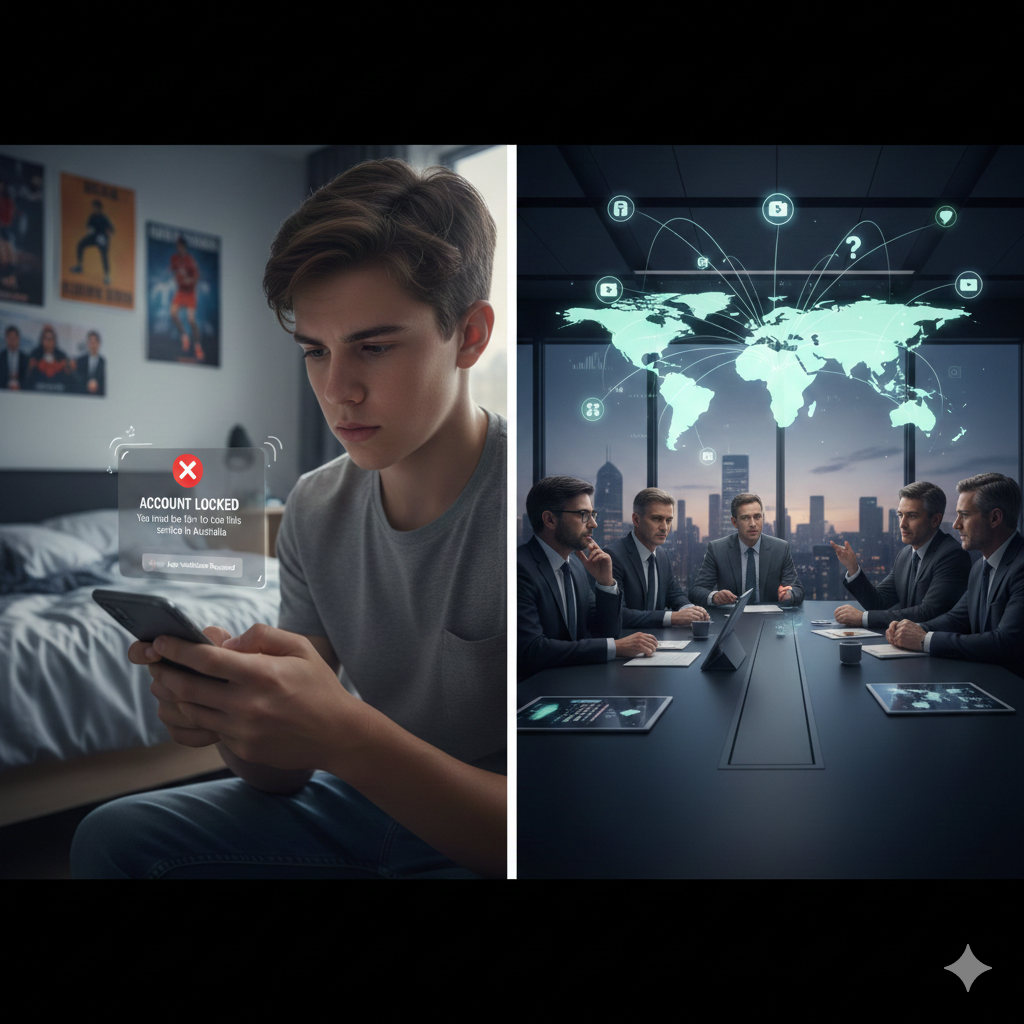
The global debate over the profound impact of social media on the mental health, safety, and development of young people has reached a pivotal moment. Australia, in a bold and unprecedented move, has officially enforced a Social Media Ban for children under the age of 16. Effective midnight local time on Wednesday, December 10, 2025, the new legislation marks a world-first, compelling major digital platforms to restrict access to their services for millions of young Australians. This sweeping reform, known as the Online Safety Amendment (Social Media Minimum Age) Act, has been hailed by parents and child advocates as a necessary shield against the “predatory algorithms” of the digital age, yet it is simultaneously being scrutinised by tech giants, free speech campaigners, and concerned teenagers.
This is more than just a domestic policy change; it is a grand, high-stakes social experiment that is being watched closely by lawmakers and regulators around the world, from Denmark to Malaysia, and several US states. The core aim of this Social Media Ban is clear: to introduce a critical friction point into a system that, until now, has prioritised engagement over the well-being of developing minds, effectively delaying children’s access to the pressures and risks inherent in algorithm-driven online environments.
The Scope and Force of the Social Media Ban
The new law places the sole responsibility for compliance squarely on the tech companies, not on the children or their parents. Ten of the world’s most significant platforms have been designated as ‘age-restricted’ and face severe financial consequences—fines of up to AU$49.5 million (around US$33 million) per breach—if they fail to take “reasonable steps” to prevent Australians under 16 from creating or maintaining an account.
📵 Platforms Affected by the Social Media Ban
The initial list of platforms subject to the Social Media Ban is comprehensive, targeting those primarily focused on social interaction and content-sharing:
- Meta Platforms: Facebook, Instagram, Threads
- Video/Content Sharing: TikTok, YouTube, Kick
- Microblogging/Social News: X (formerly Twitter), Reddit
- Streaming: Twitch
- Messaging/Image Sharing: Snapchat
It is crucial to note that certain popular services, such as WhatsApp, Messenger, Roblox, Discord, and Pinterest, are currently exempt, primarily due to their classification as primarily messaging, gaming, or utility-focused platforms. However, the Australian eSafety Commissioner, the primary regulatory body, has confirmed the list remains under continuous review and can be updated as the usage and nature of online services evolve.
Enforcement and Age Verification Methods
To enforce the Social Media Ban, platforms must employ robust age assurance methods. The Australian government and the eSafety Commissioner have stressed that companies cannot mandate government-issued identification as the sole method, requiring alternatives to be available to preserve user privacy and inclusiveness. Platforms are now scrambling to implement a layered, successive validation approach that may combine various techniques, including:
- AI-Powered Age Estimation: Using photographic or video input (e.g., a selfie) to estimate a user’s age.
- Account Deactivation: Proactively identifying and removing existing accounts registered by under-16s, often based on self-declared age or in-platform behaviour.
- Alternative Verification: Offering options like linking an Australian bank account (for proof of financial maturity) or conducting an in-service review.
However, the efficacy of these methods is already under scrutiny. Local media reports and anecdotal evidence from young Australians suggest that “canny teenagers” are actively brainstorming and executing workarounds, including using their parents’ IDs, older siblings’ accounts, or even leveraging AI-generated images to bypass facial age checks. The government acknowledges the ban will not be perfect at the outset, positioning it as a necessary step to introduce friction and accountability where none existed.
The Rationale and Opposition to the Social Media Ban
The introduction of the Social Media Ban is driven by deep governmental and parental concerns over the detrimental effects of unregulated platform access on young Australians.
The Government’s Case: Protecting Generation Alpha
Prime Minister Anthony Albanese has been vocal in his support, describing the law as essential to protect children from a modern digital “purgatory.” He argues that the measures are needed to shield the developing minds of Generation Alpha from a constant barrage of online harm:
“Too often, social media isn’t social at all. Instead, it’s used as a weapon for bullies, a platform for peer pressure, a driver of anxiety, a vehicle for scammers and, worst of all, a tool for online predators.”
The push for the ban was significantly fueled by compelling personal testimonies from parents who linked their children’s mental health crises and even suicides to pressures amplified by social media. Government research and reports by the eSafety Commissioner have also highlighted that over half of young Australians have faced cyberbullying, while a significant number are exposed to harmful content related to eating disorders, self-harm, and violence. The new law is thus positioned as a public health measure, likening the age restriction to existing curbs on alcohol, tobacco, and driving.
Tech Industry and Free Speech Backlash
The legislation has sparked immediate and fierce opposition from major tech companies and civil rights groups. Their criticisms centre on the law being a “clumsy blanket ban” that is rushed, poorly designed, and ultimately counterproductive.
- Meta and YouTube have publicly condemned the ban, arguing that it removes beneficial features like parental controls and curated, safer environments (like YouTube Kids or supervised teen accounts) from which young users can learn and connect. YouTube specifically stated that forcing kids to browse anonymously or use adult accounts will make them “less safe” online by pushing them into “deeper, darker corners of the internet.”
- The Sydney-based internet rights group, Digital Freedom Project (DFP), has already launched a constitutional challenge in Australia’s High Court. The lawsuit, backed by two 15-year-old plaintiffs, Noah Jones and Macy Neyland, argues that the Social Media Ban improperly violates an implied constitutional right to freedom of political communication for millions of young Australians. The DFP maintains that the government should invest in better digital literacy education and smarter safety mechanisms, not a comprehensive ban that risks “silencing” youth voices on critical issues.
- Concerns have also been raised by academics and mental health experts regarding the potential for increased social isolation and exclusion, particularly for young people in minority groups or remote areas for whom online connections serve as a vital “lifeline.”
The Global Ripple Effect of Australia’s Social Media Ban
Australia’s legislation is not occurring in a vacuum. It is part of a growing global consensus that the current self-regulation model for social media is failing children. The world is keenly observing this “grand social experiment” for a potential template on how to effectively regulate the digital sphere for minors.
International Interest and Parallel Measures
The Australian government has confirmed significant interest in the Social Media Ban from several international jurisdictions:
- Malaysia has indicated firm plans to introduce a similar ban for under-16s next year.
- Denmark is considering a ban on social media for children under 15, though with potential exceptions for parental consent.
- The European Commission, France, Greece, Romania, and New Zealand are also actively reviewing or considering setting minimum ages for social media access, often as part of broader online safety legislative packages.
Many of these countries are grappling with the same regulatory dilemma: how to balance the need for safety with the fundamental rights of access and expression. Experts from New Zealand and the UK have pointed out that a simple, stand-alone ban might be insufficient and must be accompanied by a robust digital safety infrastructure, which Australia is building alongside its new law.
The Crux of the Challenge: Access vs. Platform Behaviour
The most fundamental critique of the Social Media Ban is that it targets access rather than platform behaviour. Critics argue that the core problem—the addictive, harmful, and anxiety-inducing design features of social media—affects all users, not just minors. They suggest that policymakers should focus on mandating platform-wide changes, such as banning personalised advertising to minors, implementing industry-wide parental controls, and forcing a systematic reduction in harmful algorithmic content.
However, the Australian eSafety Commissioner maintains that delaying account access introduces a crucial moment of reflection and parental involvement, which was previously absent. It is a necessary “delay” that provides a window for young people to mature and develop essential digital literacy skills before being fully immersed in the complex, algorithmically driven social media ecosystem.
Navigating the New Digital Reality: A Path Forward
The implementation of Australia’s Social Media Ban immediately thrusts Australian teenagers, parents, and tech platforms into a new, complex digital reality. For the platforms, the next few months will involve an intensive and costly race to refine age verification technologies while simultaneously fighting legal battles that could overturn the law. For parents, the ban presents a complicated choice: uphold the spirit of the law, or help their children circumvent it to maintain social connections, potentially pushing their digital activities underground and out of sight.
Ultimately, the long-term success of the Social Media Ban will be judged not just on compliance rates, but on its demonstrable effect on the mental health and well-being of young Australians. It serves as a monumental test case for the rest of the world, signalling a firm shift in global regulatory thinking: when it comes to the safety of children, the era of relying solely on the goodwill of Big Tech may be over.
The Australian government’s decisive action has put tech accountability and child protection at the forefront of the global digital policy agenda, challenging the notion that unfettered digital access is always a benign force. As the world watches to see if a full-scale Social Media Ban can be effective and sustainable, the lessons learned in Australia will undoubtedly shape the future of digital childhood for generations to come.
External Sources and References
Official Government & Regulatory References
- Australian Government Department of Infrastructure, Transport, Regional Development, Communications and the Arts – Social Media Minimum Age – Fact sheet
- eSafety Commissioner’s Guidance – eSafety Commissioner Social Media Age Restrictions Hub
Major News Coverage & Analysis
- Overview of the Law and Implementation – Australia’s world-first social media ban for under-16s takes effect
- Social media ban explained: when does it start in Australia, how will it work and what apps are being banned for under-16s? – The Guardian