Updated by FFR NEWS on November 06, 2025
Typhoon Kalmaegi hits Vietnam with full force, unleashing winds of up to 92mph (149km/h) and triggering massive floods across the country. The storm, one of the strongest to hit Asia this year, made landfall on Thursday evening, following a deadly rampage through the Philippines that left at least 114 people dead and entire neighborhoods submerged.
The Vietnamese government deployed more than 260,000 soldiers and emergency personnel to assist in rescue operations. Over 6,700 vehicles, boats, and helicopters are on standby, according to the national disaster management agency. Officials also confirmed the closure of six airports, warning that hundreds of flights would be canceled due to the extreme weather conditions.
The Environment Ministry of Vietnam stated that Typhoon Kalmaegi struck the provinces of Dak Lak and Gia Lai, causing widespread damage. Roofs were ripped from homes, glass panels at hotels were shattered, and trees were uprooted across central and coastal areas. “Hundreds of localities are at risk of floods and landslides,” the ministry warned.
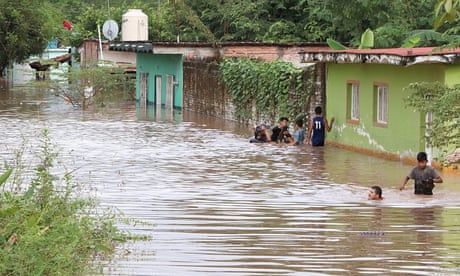
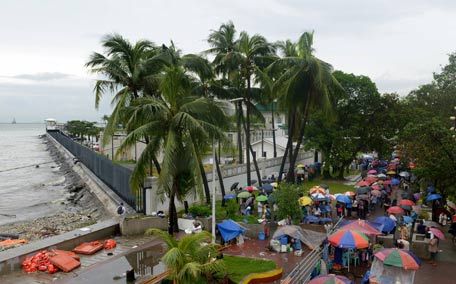
In Quy Nhon, strong gusts tore through beachfront properties while emergency workers rushed to evacuate stranded residents. Reports from Dak Lak province, located about 350km northeast of Ho Chi Minh City, described families trapped in collapsed homes as floodwaters rose quickly.
Prime Minister Pham Minh Chinh chaired an emergency meeting to coordinate rescue efforts and supply distribution. “We must reach isolated areas and ensure everyone has access to food, drinking water, and essential supplies,” he said. “No one should be left hungry or cold.”
Before hitting Vietnam, Typhoon Kalmaegi — known locally as Tino — wreaked havoc in the Philippines, where it dumped more than a month’s worth of rain in just 24 hours. Torrents of mud and debris swept through Cebu and neighboring provinces, destroying homes and displacing thousands. Survivor Mely Saberon from Talisay City said, “We don’t have any home anymore. We didn’t expect the surge of rain and wind. This one was different.”
Philippine President Ferdinand Marcos Jr declared a state of emergency, describing the storm’s damage as catastrophic to lives, property, and infrastructure.
Vietnam’s Central Flood Control Department reported that coastal towns, including the UNESCO-listed cities of Hue and Hoi An, have already suffered from severe flooding. Streets have turned into rivers, and locals are using wooden boats to move through neighborhoods.
Weather experts warn that sea levels could rise between 4 to 6 meters (13–20 feet) in the coming days, posing an additional threat to fishing communities. Deputy Director Nguyen Xuan Hien compared Kalmaegi to 2017’s Typhoon Damrey but cautioned that “Kalmaegi is significantly stronger and should not be underestimated.”
Neighboring Thailand is also bracing for the storm’s impact, issuing flash flood and landslide warnings in several provinces.
Environmental experts say Kalmaegi’s ferocity highlights the worsening effects of climate change in the region. Southeast Asia, already vulnerable to tropical storms, is now experiencing more frequent and intense weather patterns. As recovery begins, both the Philippines and Vietnam face enormous rebuilding challenges.
For readers interested in environmental coverage and climate-related updates, visit our Environment section on FFR News.
Source:
BBC News – Typhoon Kalmaegi hits Vietnam after killing at least 114 in Philippines