
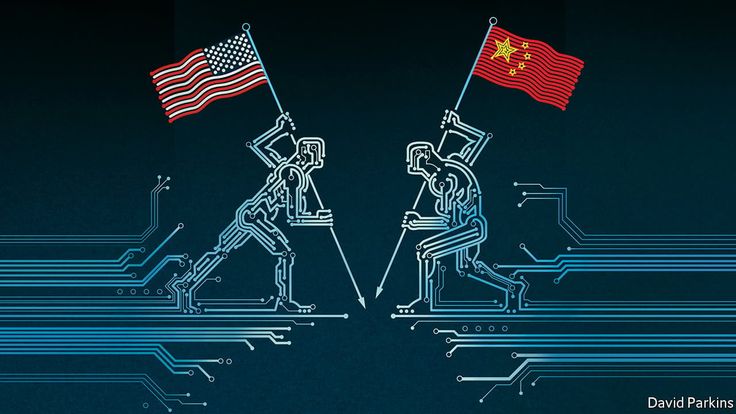
America promotes AI to Asia-Pacific partners as U.S. officials announced a new $20 million initiative aimed at boosting the adoption of American artificial intelligence technologies across countries in the Asia-Pacific region. The announcement came during the Asia-Pacific Economic Cooperation (APEC) forum in Guangzhou, where political leaders and technology experts gathered to discuss economic cooperation, trade, and emerging innovation opportunities. The initiative underscores strategic competition in technology — particularly between the United States and China — and signals Washington’s commitment to maintaining global leadership in AI development and deployment.
The plan is designed to support U.S.-based AI systems in emerging markets throughout the Indo-Pacific, building partnerships that extend beyond traditional trade relationships and positioning American innovation as a key driver of economic and technological progress in the region.
Strategic Importance of AI in Global Innovation
Artificial intelligence has become one of the most critical areas of innovation in the 21st century, influencing virtually every sector including healthcare, transportation, energy, defense, and finance. For the United States, maintaining leadership in AI technology is seen as vital not only to economic competitiveness but also to national security. By promoting American AI abroad, policymakers hope to expand the reach of U.S. innovation standards and ethical frameworks while fostering deeper strategic ties with partner countries.
The Asia-Pacific region represents a significant part of this strategy due to its economic growth, technological adoption rates, and influence on global markets. Countries in this region are increasingly investing in AI and digital infrastructure as they seek to modernize industries and compete on the world stage.
The APEC Platform and U.S. Engagement
The APEC forum in Guangzhou provided an ideal venue for the announcement, bringing together leaders from 21 Pacific Rim economies, including the United States, Japan, South Korea, Australia, and others. Discussions at APEC typically focus on economic integration, innovation, sustainability, and cooperation — making it a strategic platform for unveiling an initiative that blends technology diplomacy with economic development.
At APEC, U.S. officials emphasized the importance of international collaboration in emerging technologies. They highlighted that AI must be developed and deployed responsibly, ensuring transparency, fairness, and ethical use — principles that the U.S. seeks to promote globally as AI adoption accelerates.
The $20 Million Fund and Its Purpose
The centerpiece of America’s announcement was the launch of a $20 million fund dedicated to supporting the integration of U.S. AI systems in partner economies. The fund is expected to be used for a range of purposes, including:
- Capacity-building programs to help public and private sectors adopt advanced U.S. AI technologies
- Technical assistance and training to strengthen local expertise in AI governance and deployment
- Collaborative research grants for AI-driven projects addressing regional challenges such as healthcare access and climate resilience
- Support for small and medium-sized enterprises (SMEs) to incorporate AI tools into business operations
By allocating these resources, the U.S. government aims to make American AI solutions more accessible to regional partners and to build long-term integration that fosters innovation ecosystems aligned with U.S. technology standards.
Countering China’s Influence in AI
One of the driving motivations behind America’s initiative is strategic competition with China, which has aggressively expanded its own AI capabilities and influence across Asia and beyond. Chinese companies and government initiatives have invested heavily in AI research, infrastructure, and smart city technologies, making the technology race a central element of broader geopolitical dynamics.
By promoting U.S. AI technologies to Asia-Pacific partners, American policymakers seek to ensure that partner countries have viable alternatives to Chinese systems. This effort aligns with broader U.S. foreign policy goals of supporting open markets, ethical technology standards, and diversified supply chains that reduce dependency on any single global power.

Partner Countries and Regional Impact
While specific details on how funds will be distributed are still emerging, several countries in the Asia-Pacific region have signaled interest in strengthening ties with the U.S. on technology cooperation. Nations such as Vietnam, Indonesia, the Philippines, and Thailand have rapidly growing tech sectors and are exploring AI applications across government services, manufacturing, and digital governance.
In addition to collaboration on AI, the initiative could pave the way for joint innovation hubs, student and professional exchange programs focused on technology, and shared research centers that bridge academic and private sectors.
Building Local AI Talent
An essential part of America’s strategy is training and education. The $20 million fund is expected to support AI training programs that help students, developers, and government officials learn how to design, deploy, and manage advanced AI systems. Building local talent not only facilitates the adoption of American AI technologies but also contributes to sustainable innovation ecosystems in partner countries.
Educational collaborations may include partnerships between U.S. universities and institutions in the Asia-Pacific region, as well as scholarships and internships for students focusing on machine learning, data science, and ethical AI governance.
Innovation and Ethical Standards
The United States has placed significant emphasis on developing AI in ways that uphold ethical standards, transparency, and accountability. As part of America’s engagement with Asia-Pacific partners, U.S. officials reiterated the importance of responsible AI — a framework that prioritizes:
- Fair and unbiased algorithms
- Data privacy protections
- Transparency in AI decision-making
- Safeguards against misuse of AI technologies
Promoting these standards internationally is seen as a way to shape global norms and ensure that AI innovation benefits societies equitably.
Economic and Trade Dimensions
The initiative has economic implications beyond innovation policy. By promoting U.S. AI technologies abroad, the United States could strengthen market opportunities for American tech companies and accelerate exports of software, hardware, and AI platforms. This aligns with broader trade agendas that seek to balance economic engagement with strategic influence.
Tech companies are expected to play a central role, potentially partnering with local governments and firms to pilot AI solutions in public services, agriculture, logistics, and healthcare delivery. Such collaborations could also spur investments and joint ventures that benefit local economies.
Next Steps in Implementation
As the details of the $20 million fund are finalized, the United States is expected to roll out pilot programs and solicit proposals from partner countries for collaborative AI projects. These next steps will likely involve coordination with embassies, tech companies, and multilateral organizations to ensure that initiatives align with regional needs and strategic priorities.
Officials plan to revisit progress at future international meetings, including subsequent APEC gatherings and technology summits, to highlight successful partnerships and refine support mechanisms.

Conclusion
America promotes AI to Asia-Pacific partners through a $20 million initiative that reflects both technological ambition and strategic diplomacy. By expanding the reach of U.S. AI technologies, investing in training and capacity building, and promoting ethical standards, Washington aims to strengthen innovation leadership while offering regional partners alternatives to rival systems.
This initiative underscores the growing importance of artificial intelligence in shaping global relations, economic cooperation, and innovation trajectories. As implementation unfolds, it could redefine how countries in the Asia-Pacific region adopt, govern, and benefit from advanced AI systems.
For more innovation and technology policy news, visit FFR News Innovation section for coverage on AI strategy and global tech partnerships. External reporting on America’s initiative to promote AI to Asia-Pacific partners and the $20 million support fund at APEC is available from major outlets covering U.S. foreign policy such as the The Times and international technology cooperation.