
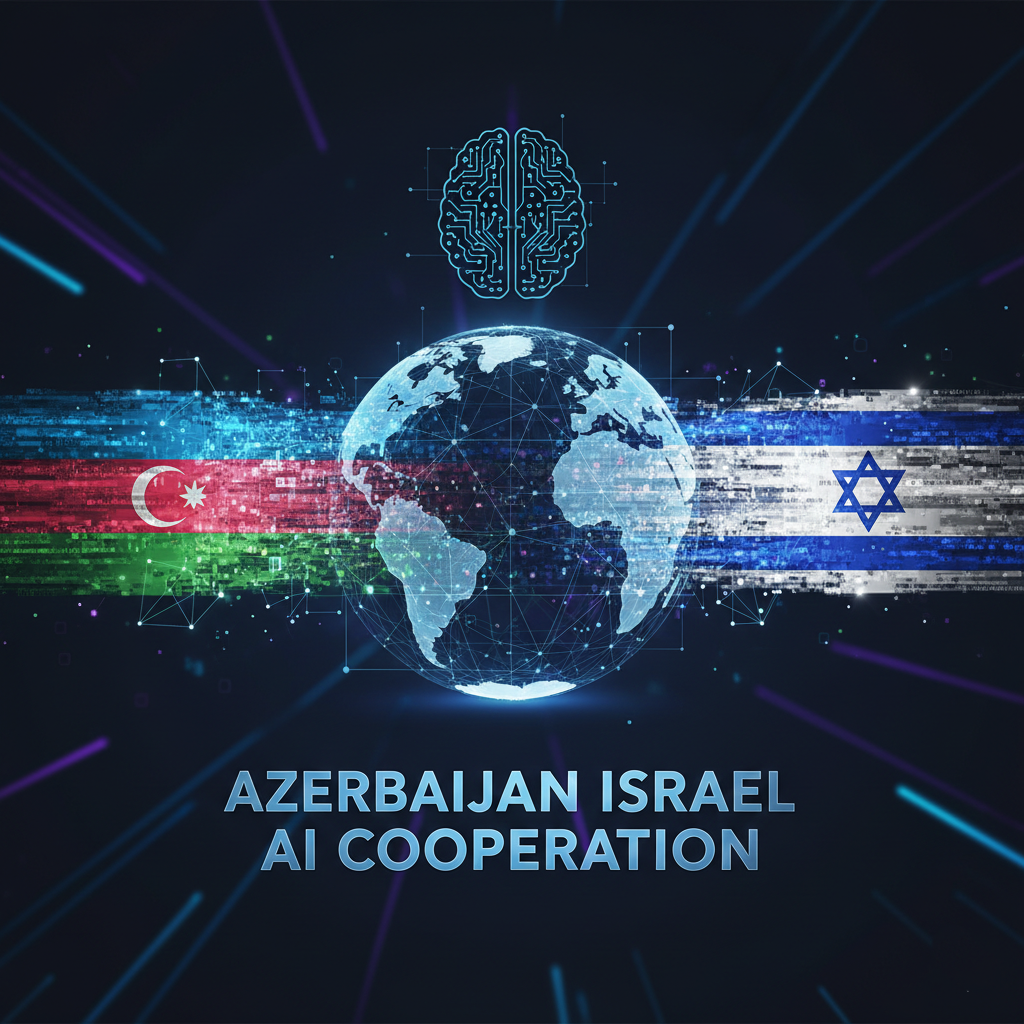
Azerbaijan Israel AI cooperation has taken a major step forward after the two countries signed a memorandum of understanding (MoU) aimed at deepening collaboration in artificial intelligence research, development, and innovation. The agreement signals a growing commitment by both nations to leverage AI as a strategic driver of economic growth, technological leadership, and digital transformation across multiple sectors.
The MoU focuses on joint AI initiatives, shared research programs, talent exchange, and cross-border innovation projects. Officials from both sides described the partnership as a long-term effort to align technological priorities while accelerating the development and application of artificial intelligence in areas ranging from cybersecurity and smart infrastructure to healthcare and industrial automation.
Strategic Partnership Focused on Emerging Technologies
The newly signed agreement reflects Azerbaijan’s broader push to modernize its economy through advanced technologies, while Israel continues to reinforce its global reputation as a leader in artificial intelligence and innovation-driven industries.
Under the MoU, both countries will cooperate on AI policy frameworks, ethical standards, and regulatory alignment to ensure responsible development and deployment of emerging technologies. This approach aims to balance innovation with governance, addressing growing international concerns over data privacy, algorithmic bias, and AI safety.
Israeli officials emphasized that partnerships like this allow Israeli technology firms and research institutions to expand their global footprint, while Azerbaijan gains access to advanced expertise, cutting-edge research methodologies, and innovation ecosystems that have powered Israel’s startup economy.
Expanding AI Research and Development Capabilities
A central pillar of the Azerbaijan Israel AI cooperation agreement is joint research and development. Universities, technology hubs, and research centers from both countries are expected to collaborate on AI-driven projects, including machine learning applications, natural language processing, and data analytics systems.
The MoU also encourages co-funded research initiatives, allowing scientists and engineers from Azerbaijan and Israel to work together on shared challenges. These include improving AI-driven decision-making systems, developing smart city solutions, and applying AI to energy efficiency and environmental monitoring.
For Azerbaijan, the partnership aligns with national efforts to build a knowledge-based economy and reduce reliance on traditional energy sectors by investing in digital innovation and high-tech industries.
Boosting Cross-Border Innovation and Startups
The agreement is expected to create new opportunities for startups and private-sector collaboration. Joint innovation programs will support early-stage AI companies, facilitate technology transfer, and encourage venture capital investment between the two countries.
Israel’s mature startup ecosystem — often referred to as the “Startup Nation” — offers a valuable model for Azerbaijan as it seeks to nurture its own innovation landscape. Through accelerator programs, mentorship initiatives, and shared incubators, Azerbaijani entrepreneurs may gain access to Israeli expertise in scaling technology companies and commercializing research.
Officials noted that AI-powered solutions developed through this partnership could be deployed across industries such as finance, logistics, agriculture, and public services, strengthening economic ties while generating exportable technologies.
AI Applications Across Multiple Sectors
The Azerbaijan Israel AI cooperation framework highlights several priority sectors where artificial intelligence can deliver immediate impact. These include cybersecurity, where Israel’s experience in AI-driven threat detection complements Azerbaijan’s growing digital infrastructure needs.
Healthcare is another key area of collaboration, with AI applications ranging from medical imaging and diagnostics to predictive analytics for patient care. Joint projects could help improve healthcare accessibility and efficiency while supporting medical research through advanced data analysis.
Additionally, the MoU emphasizes smart infrastructure and urban development, with AI tools designed to optimize traffic systems, energy consumption, and public safety. These initiatives align with Azerbaijan’s ambitions to develop smarter, more sustainable cities powered by digital technologies.
Strengthening Diplomatic and Economic Ties
Beyond technology, the AI agreement reflects broader diplomatic and economic cooperation between Azerbaijan and Israel. The two countries have maintained strong relations in areas such as trade, defense, and energy, and the AI MoU adds a new dimension to this partnership.
Analysts say technology collaboration often serves as a catalyst for deeper bilateral engagement, creating long-term relationships between institutions, businesses, and policymakers. By focusing on AI — one of the most transformative technologies of the 21st century — both nations position themselves as forward-looking partners in a rapidly evolving global economy.
The MoU also signals Azerbaijan’s intention to play a more active role in regional and international innovation networks, leveraging partnerships with technologically advanced countries to accelerate domestic development.
Global Context and Growing AI Competition
The agreement comes at a time when artificial intelligence has become a central focus of global competition and cooperation. Governments worldwide are racing to invest in AI capabilities, recognizing their impact on economic productivity, national security, and societal change.
By signing this MoU, Azerbaijan and Israel join a growing list of countries pursuing bilateral AI agreements to pool expertise, share resources, and remain competitive in an increasingly technology-driven world.
Observers note that such partnerships may also help smaller and mid-sized economies navigate the challenges posed by AI dominance among major global powers, allowing them to collaborate rather than compete in isolation.
Looking Ahead: Long-Term Impact of the AI MoU
While the immediate outcomes of the Azerbaijan Israel AI cooperation agreement will unfold over time, officials from both countries expressed confidence that the partnership will yield tangible results. Planned next steps include setting up joint working groups, identifying priority projects, and organizing technology forums to connect researchers, startups, and policymakers.
As artificial intelligence continues to reshape industries and societies, the MoU positions Azerbaijan and Israel to jointly influence how AI is developed and applied — not only domestically, but also across broader regional and international markets.
The partnership underscores a shared vision: using innovation and advanced technology as tools for sustainable growth, economic resilience, and global collaboration in the digital age.
This article is part of FFRNEWS Innovation & Technology coverage, tracking global developments in artificial intelligence and emerging technologies. Reporting is based on international coverage from Caspian News and regional technology briefings highlighting the Azerbaijan–Israel AI agreement.