
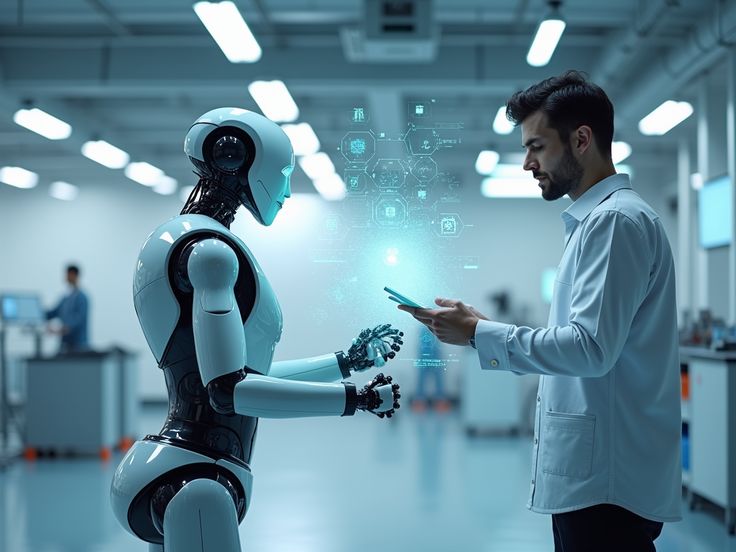
The robotics industry is entering a revolutionary phase with humanoid robots 2026 capable of performing tasks previously limited to humans. Advanced bionic arms, autonomous navigation, and multitasking capabilities are enabling these robots to work alongside people in homes, offices, and industrial settings. Experts say this evolution marks a significant shift in automation, making robots more accessible, functional, and human-like than ever before.
Bionic Arms and Human-like Functionality
Modern humanoid robots are equipped with bionic arms designed to replicate human dexterity. These systems allow robots to handle delicate objects, assist with household chores, or work in production lines with precision. According to industry reports from CES 2026, companies are demonstrating robots capable of pouring liquids, assembling small components, and even folding laundry—tasks that require complex motor control and advanced AI algorithms.
By integrating sensors, tactile feedback, and AI-driven decision-making, humanoid robots can adjust their movements in real time, improving safety and efficiency in collaborative human-robot environments.
Multitasking Capabilities and Autonomous Navigation
Beyond mechanical dexterity, humanoid robots 2026 are embracing multitasking through autonomous navigation and AI-powered situational awareness. Robots can now move safely around crowded environments, identify objects, and complete multiple tasks without constant human supervision.
At CES 2026, several robotics companies showcased humanoid models capable of:
- Delivering items within offices and homes
- Monitoring environments for safety or maintenance issues
- Assisting the elderly or people with mobility challenges
These autonomous features represent a major leap from earlier robotic assistants, which were often limited to repetitive or single-task operations.
Implications for Homes and Workplaces
The rise of humanoid robots in everyday environments is changing how people approach automation. In offices, robots are assisting with logistics, document handling, and collaborative projects, reducing repetitive workloads and improving efficiency. In homes, humanoid robots are gradually taking on household chores, security monitoring, and even basic caregiving tasks.
Industry analysts suggest that as these robots become more affordable and accessible, adoption will increase rapidly, particularly in sectors like healthcare, logistics, and domestic assistance. The human-like design of these robots also improves acceptance, as people are more comfortable interacting with machines that resemble familiar human behaviors.

Challenges and Ethical Considerations
Despite impressive advancements, humanoid robots 2026 raise important questions about safety, privacy, and employment. Ensuring that AI-driven robots operate safely alongside humans remains a top priority for developers, particularly as these machines become more autonomous and capable of performing complex tasks in both homes and workplaces. Ethical concerns include extensive data collection in private environments, over-reliance on automation, and potential displacement of workers in industries that rely on manual labor or repetitive tasks.
Moreover, experts emphasize that social acceptance of humanoid robots depends not only on technical reliability but also on transparent usage policies and clear communication with users about what robots can and cannot do. Regulatory frameworks will need to address liability, cybersecurity, and data protection to prevent misuse or accidents. Responsible design practices, combined with continuous monitoring, will be essential to ensure that innovation benefits society without creating unintended negative consequences. As the line between human and robotic interaction becomes increasingly blurred, careful ethical oversight will remain critical in shaping the future of automation.
Future Outlook for Humanoid Robotics
Looking ahead, experts predict that humanoid robots will continue evolving into more capable and lifelike machines. Future models may include enhanced AI decision-making, emotional recognition, and even conversational capabilities to better assist humans. Collaborative research in robotics, AI, and sensor technology is expected to accelerate development, making 2026 a pivotal year in the trajectory of humanoid automation.
This report forms part of FFRNEWS Innovation coverage, highlighting how robotics and AI are shaping the future of automation. Insights are informed by CES 2026 demonstrations, industry analyses from TechRadar and Tom’s Guide, and robotics research reports showing the growing capabilities and applications of humanoid robots in both domestic and professional environments. (FFRNEWS)

How are you?