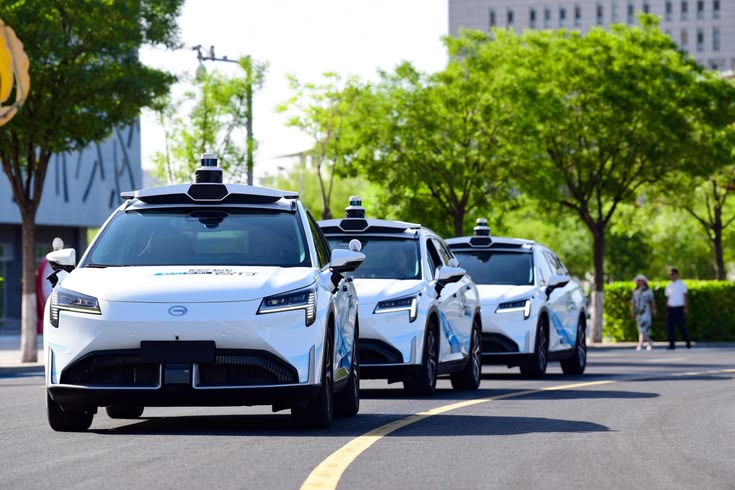

The world of urban mobility is about to change yet again as Waymo autonomous ride-hailing service in London becomes a reality. Alphabet’s self-driving car subsidiary announced plans to launch its fully driverless robotaxi service in London by 2026, marking a significant milestone in the company’s global expasnsion.
This move positions London as one of the first international cities outside the United States to host Waymo’s commercial autonomous fleet — a project that could redefine the future of public and private transportation across Europe.
Waymo’s Global Push Toward Driverless Expansion
Waymo, a subsidiary of Alphabet Inc., has been developing autonomous driving technology for more than a decade. What started as Google’s self-driving car project has evolved into one of the world’s most advanced autonomous mobility platforms.
Currently, Waymo operates in several U.S. cities, including San Francisco, Los Angeles, Phoenix, Atlanta, and Austin, where it completes over 250,000 paid trips weekly using approximately 1,500 autonomous vehicles.
The planned Waymo autonomous ride-hailing London rollout signifies a major leap forward for the company’s global ambitions. London’s dense urban landscape, diverse traffic patterns, and strict safety regulations make it one of the most challenging yet valuable testbeds for self-driving technology.
Collaborations with Moove and Local Regulators
To prepare for its London debut, Waymo is collaborating with Moove, a vehicle financing and fleet operations company that specializes in supporting mobility startups. Together, the companies will establish a network of fleet operations, charging facilities, and maintenance hubs throughout London.
Waymo confirmed that vehicles are already being shipped to the UK, where safety drivers will conduct supervised road tests before the service transitions to full autonomy next year. The company also noted that it is working “closely with local and national regulators” to meet all British transport safety standards.
This regulatory cooperation is essential, given the UK’s evolving autonomous vehicle framework. The British government has been pushing for the legal integration of self-driving technology, aiming to make the UK a global hub for autonomous innovation by 2030.
Building on Success in the U.S. and Japan
The Waymo autonomous ride-hailing London expansion comes after successful testing and data collection phases in multiple international markets.
Earlier in 2025, Waymo began collecting data in Tokyo, Japan, in partnership with Nihon Kotsu, one of Japan’s largest taxi firms, and Go, a popular taxi-hailing app. These initiatives provided crucial data on local traffic behavior, cultural driving norms, and pedestrian interactions.
Such experiences are invaluable as Waymo enters new regions with distinct traffic environments like London. By using a data-driven, safety-first approach, the company aims to minimize risks while improving the reliability of its AI-based driving systems.
Competing in the New Robotaxi Race
The timing of Waymo’s expansion is no coincidence. The race toward a fully autonomous ride-hailing ecosystem is heating up globally.
Tesla recently began testing its long-promised robotaxi service in the United States, while Uber announced plans to trial fully driverless rides in the UK by 2026, in collaboration with Wayve, an AI startup.
Meanwhile, General Motors’ Cruise program has faced setbacks due to collisions, recalls, and federal investigations, highlighting how complex and risky the path toward automation can be.
Waymo’s steady, regulation-friendly strategy has earned it a reputation as the most stable player in the self-driving sector, and the Waymo autonomous ride-hailing London project could help cement its dominance in the global mobility market.
Why London Matters for Waymo’s Vision
London’s inclusion in Waymo’s roadmap signals more than geographic expansion — it’s a test of scalability and public acceptance.
The UK capital offers diverse driving conditions: narrow streets, complex intersections, heavy pedestrian zones, and unpredictable weather. If Waymo can achieve smooth and safe autonomous operations in London, it could prove that its robotaxis are adaptable to virtually any city in the world.
Moreover, London’s large ride-hailing market, dominated by Uber and Bolt, offers fertile ground for a new competitor that promises safer, more sustainable, and human-error-free transportation.
Environmental advocates have also praised Waymo’s approach, noting that its electric fleet and AI-driven optimization systems could help reduce emissions and improve traffic flow in crowded city centers.
The Broader Picture: Waymo’s Impact on Urban Mobility
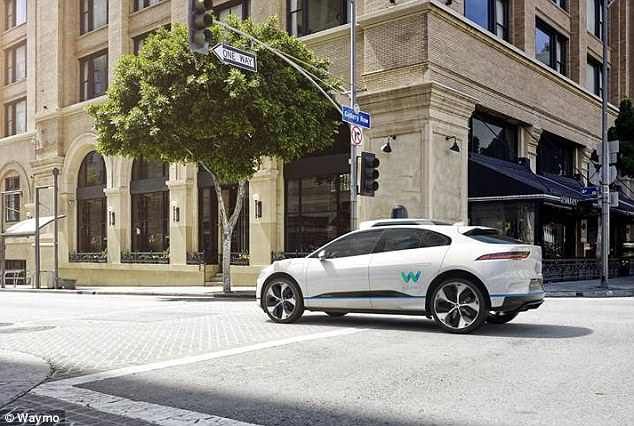
The Waymo autonomous ride-hailing London launch is not just a business milestone — it’s a technological statement. It demonstrates how AI, automation, and clean energy can converge to transform transportation.
Analysts expect that within five years, the presence of autonomous vehicles in major cities could reshape how people commute, own cars, and even design urban infrastructure. Parking spaces may shrink, public transport may integrate with AI-driven shuttles, and human drivers may become less common in urban centers.
Still, the road ahead isn’t without challenges. Legal frameworks, ethical debates, and concerns about job displacement among drivers continue to spark controversy. But if Waymo’s London project succeeds, it could serve as a blueprint for the safe global rollout of autonomous mobility.
End of the Road or Start of a Revolution?
As Waymo autonomous ride-hailing London edges closer to reality, the announcement represents both an end and a beginning — the end of the experimental phase of autonomous driving and the beginning of mainstream adoption.
Londoners may soon find themselves hailing a ride with no human driver, just a smooth AI-powered chauffeur trained on millions of miles of real-world data.
For Alphabet and Waymo, this marks not just another expansion — but the dawn of a new transportation era where technology and trust share the wheel.
Source: Reuters
Tags:
Waymo autonomous ride-hailing London, Alphabet driverless cars, Waymo UK launch, robotaxi technology