
A Minneapolis federal agent shooting on January 24, 2026, resulted in the death of a 37‑year‑old Minneapolis man during an immigration enforcement operation involving U.S. federal officers, including Border Patrol agents. The incident — the third fatal shooting in the city in less than three weeks by immigration enforcement personnel — has intensified public outrage and deepened tensions between local officials, residents and federal authorities.
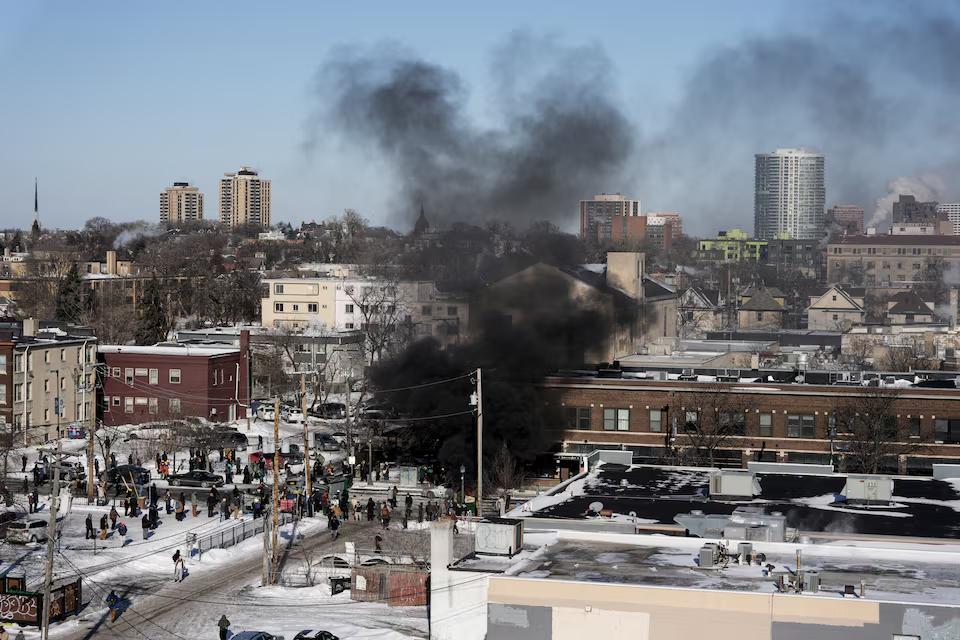
The Department of Homeland Security (DHS) said federal agents opened fire after the man allegedly approached them with a handgun during an operation in south Minneapolis, near Nicollet Avenue and 26th Street. Minneapolis Police Chief Brian O’Hara confirmed that the victim was a U.S. citizen and lawful gun owner with no known criminal record beyond minor traffic issues, heightening local criticism of the federal response.
Details of the January 24 Shooting
According to DHS statements, Border Patrol agents were conducting a planned enforcement action when the incident occurred around 9:05 a.m. The agency said the man had a 9 mm semi‑automatic pistol and two magazines and “violently resisted” attempts to disarm him, prompting an agent to fire in what officials described as a defensive action. DHS said medics provided aid, but the man later died.
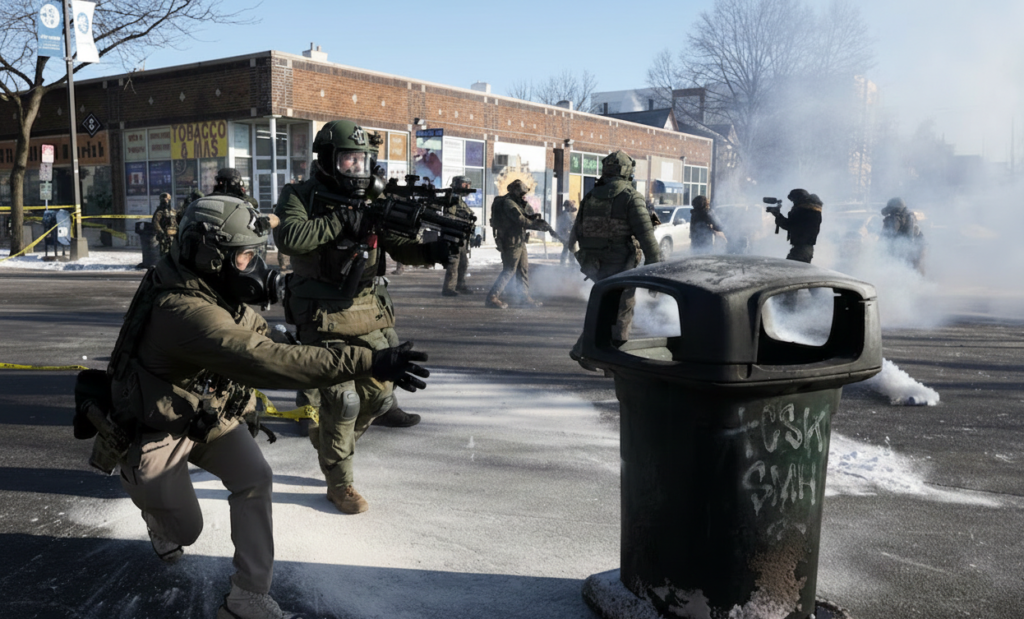
Witnesses shared chaotic scenes of a physical altercation between the man and federal officers just before shots were fired, followed by the deployment of tear gas and other crowd‑control measures to disperse onlookers and protesters at the scene.
Broader Immigration Enforcement Context
This shooting comes amid an expanded immigration enforcement effort in Minneapolis that has drawn hundreds of federal agents and sparked significant local pushback. In early January, Minneapolis was the site of a previous fatal shooting involving an Immigration and Customs Enforcement (ICE) agent who killed 37‑year‑old Renee Nicole Good during a vehicle encounter, an incident that triggered protests and calls for accountability.
Good’s death earlier in January was ruled a homicide by the Hennepin County Medical Examiner’s Office, which determined multiple gunshot wounds as the cause, including injuries to her chest, forearm and head. Her family and attorneys have publicly challenged federal narratives that portrayed the incident as defensive, arguing instead that video and witness accounts raise serious questions about use‑of‑force justification.
Local and Political Reaction
The Minneapolis mayor and Minnesota governor have denounced the latest shooting and the larger federal operation. Mayor Jacob Frey sharply criticized the actions of federal officers, saying that the city’s residents have endured repeated traumatic encounters with immigration agents that have escalated rather than ensured public safety. He and other officials have called for an immediate suspension of the enforcement operation.
Governor Tim Walz echoed these calls, calling on federal authorities to pull back and engage more cooperatively with local law enforcement. Protests across the city quickly grew in size following the shooting, reflecting deep frustration among many residents about what they view as an overly aggressive federal presence.
National political figures have also weighed in, with some condemning the actions of immigration enforcement and urging accountability. Illinois leaders, including Senator Tammy Duckworth and Representative Nikki Budzinski, publicly criticized ICE and called for changes to policy and funding, highlighting concerns about the escalation of force and its impact on community trust.
Community and Public Response
The Minneapolis community response has been intense. Protesters have blocked streets, confronted federal agents, and called for an end to what they view as an aggressive crackdown that threatens civil liberties and public safety. Some demonstrations have resulted in police responses with flash bangs and chemical irritants after tensions flared between demonstrators and officers at the scene.
Local residents have also organized solidarity actions, with businesses closing in response to the shootings and broader immigration enforcement tactics. Critics argue that the continued deployment of thousands of federal agents into local neighborhoods undermines peaceful community life and increases the likelihood of further violent encounters.
Investigation and Accountability Questions
Federal and local authorities continue to investigate the shooting. While DHS maintains that agents acted in self‑defense, local leaders and civil rights advocates have called for increased transparency and independent oversight. The involvement of multiple federal agencies and layers of jurisdiction has also raised questions about how investigations are being coordinated and whether state or local authorities are being sidelined.
This incident follows earlier concerns about the lack of independent access to evidence in Good’s shooting case, where state investigators were reportedly restricted by federal authorities during the investigation. Such disputes over jurisdiction and evidence access have fueled distrust among community members and officials.
What This Means for Minneapolis
The Minneapolis federal agent shooting on January 24 joins a series of high‑profile law enforcement encounters that have ignited debates over immigration enforcement practices, use of force standards, and federal‑local cooperation. With protests ongoing and calls for policy changes growing louder, the city finds itself at the center of a national conversation about civil rights, public safety, and how law enforcement operates in communities under stress.
Observers note that while federal agencies defend their actions as necessary responses to perceived threats, residents and critics argue that repeated deadly encounters erode trust and heighten fear among ordinary city residents — especially those with tenuous relationships with law enforcement.

This report is part of FFRNEWS U.S. Politics coverage, tracking federal immigration enforcement actions and related public safety issues. Details in this article are based on reporting by Reuters and ABC News, which covered the January 24 Minneapolis federal agent shooting and its broader reactions.