
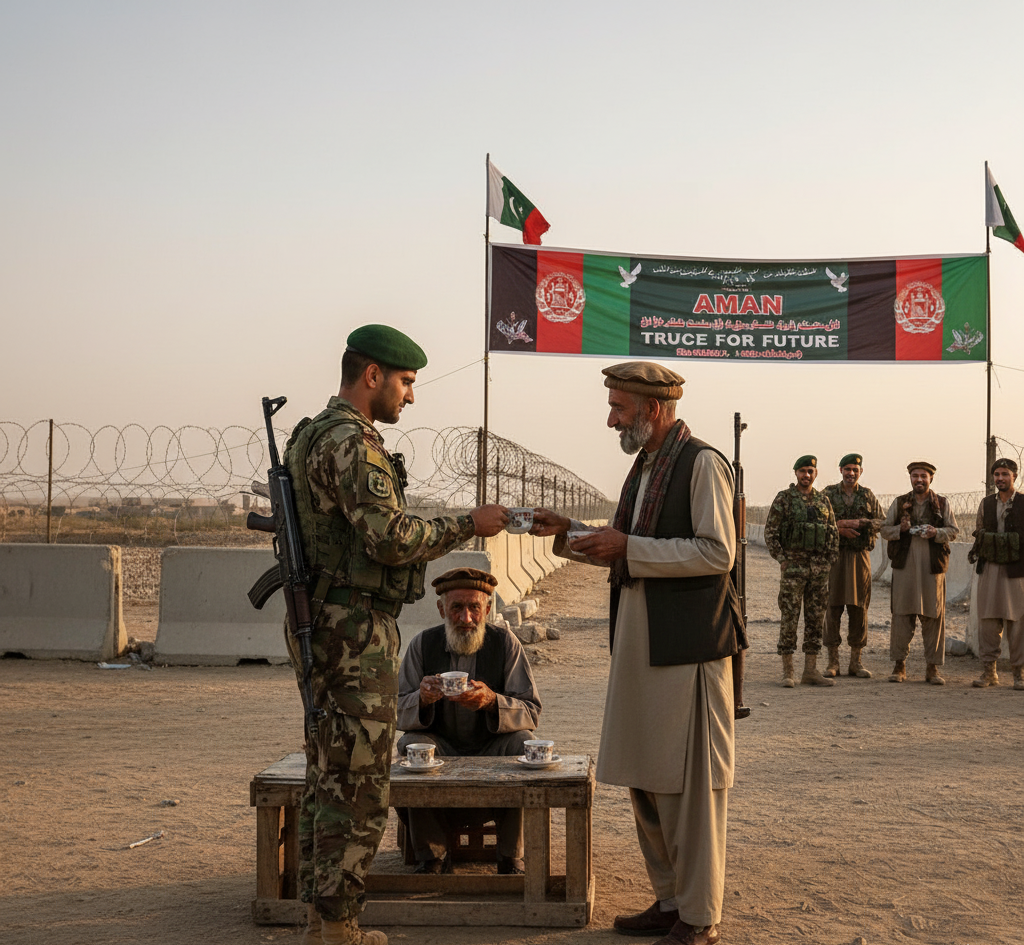
Pakistan Afghanistan truce extension has been announced following a surge in deadly cross-border violence that killed dozens and injured hundreds of civilians. The fragile ceasefire, originally set to expire on Friday, was extended by another 48 hours as tensions between Islamabad and Kabul reached a critical point.
According to diplomats in both countries, the truce aims to prevent further escalation after days of intense shelling and drone strikes along the border. The violence, the worst since 2021 when the Taliban took power in Afghanistan, threatens to destabilize a region already struggling with militant activity from groups such as ISIL (ISIS) and al-Qaeda.
Both nations accuse each other of provoking the situation. Pakistan claims that fighters from the Tehreek-e-Taliban Pakistan (TTP) are using Afghan soil as a safe haven to carry out attacks on Pakistani territory. Islamabad insists that Kabul must take “decisive action” against these elements or risk further deterioration in relations. The Afghan Taliban, however, reject these allegations, stating that Pakistan’s military operations and drone attacks are the real cause of instability. Kabul officials say that the strikes are “unprovoked violations” of their sovereignty and that Pakistan is attempting to deflect from its own internal security failures.
The clashes have also disrupted the lives of border communities, many of whom share ethnic and tribal ties across the Durand Line. Residents report fleeing their homes amid artillery fire and air raids, while local aid organizations struggle to provide food, shelter, and medical assistance to displaced families. “We don’t know where to go — bombs fall from both sides,” said one villager from eastern Afghanistan.
Observers warn that the situation could worsen if both sides fail to establish a lasting framework for communication and conflict management. The extension of the truce offers only a brief pause, and without international mediation, experts fear the violence could return with greater intensity.
Qatar’s reported willingness to host peace talks in Doha could be a turning point if both Islamabad and Kabul agree to participate. Diplomatic sources say regional partners, including China and Iran, are also monitoring the situation closely, as continued instability could threaten cross-border trade routes and major development projects like the China-Pakistan Economic Corridor (CPEC).
As tensions remain high, the next few days will be critical in determining whether this fragile Pakistan Afghanistan truce extension can evolve into a longer-term peace process or merely serve as another short-lived reprieve before fighting resumes.
Suicide Attack in Khyber Pakhtunkhwa
As the initial truce approached its deadline, a suicide car bomber backed by the Tehreek-e-Taliban Pakistan (TTP) struck a military compound in Mir Ali, North Waziristan. The attack triggered heavy gunfire, with conflicting reports emerging about casualties.
According to Pakistani officials cited by Reuters, seven soldiers were killed when the bomber rammed an explosives-laden vehicle into the camp wall. Two additional attackers were shot dead while attempting to breach the compound, leaving at least 13 others injured. However, Geo News reported a different version, stating four TTP attackers were killed while no Pakistani troops were lost.
The Pakistan military has yet to issue an official statement, while Afghan authorities deny involvement, accusing Pakistan of spreading misinformation and launching unprovoked strikes into Afghan territory.
Civilian Casualties and UN Response
The United Nations Assistance Mission in Afghanistan (UNAMA) reported that at least 37 civilians were killed and over 425 were wounded during this week’s cross-border clashes. Hospitals in Kabul confirmed treating dozens of injured victims following drone attacks allegedly launched by Pakistan shortly before the ceasefire began.
Pakistan has not released figures on civilian casualties on its side of the border, but residents in Khyber Pakhtunkhwa reported widespread fear and displacement near the conflict zones.
Diplomatic Mediation and Qatar’s Role
Media outlets have reported that Qatar may host peace talks between Pakistan and Afghanistan in Doha to facilitate a lasting resolution. While neither government has confirmed this development, sources suggest that diplomatic backchannels are actively working to extend calm and open dialogue.
Al Jazeera’s correspondent in Peshawar noted that “friendly nations” are pushing for continued restraint, with Pakistan warning that if its concerns remain unaddressed, the situation could “escalate at any moment.”
Broader Implications for Regional Stability
The renewed truce highlights the fragile nature of Pakistan-Afghanistan relations, which have deteriorated sharply since the Taliban’s rise to power. Islamabad continues to demand that Kabul curb militant groups using Afghan territory as safe havens, while the Taliban accuse Pakistan of violating sovereignty through cross-border strikes.
The violence underscores the complexity of regional security, where decades of mistrust, militant activity, and shifting alliances make peace efforts difficult. Analysts warn that without a verified mechanism to monitor the ceasefire, the situation could rapidly spiral back into open conflict.
What Comes Next
While the Pakistan Afghanistan truce extension offers temporary relief, long-term peace depends on sustained diplomatic engagement, verification of ceasefire commitments, and regional cooperation to eliminate militant threats. The next 48 hours will be critical in determining whether dialogue can replace gunfire at one of South Asia’s most volatile borders.
Source: Al Jazeera
9perc2