Thailand Cambodia border conflict: why fighting has erupted again
The Thailand Cambodia border conflict has exploded back into violence, shattering a fragile ceasefire that was supposed to draw a line under one of Southeast Asia’s most volatile disputes. Since Monday, at least three Thai soldiers and seven Cambodian civilians have been killed, airstrikes and rocket attacks have rattled border towns, and tens of thousands of people have fled their homes. Each government insists it is acting in self-defence and accuses the other of firing first.
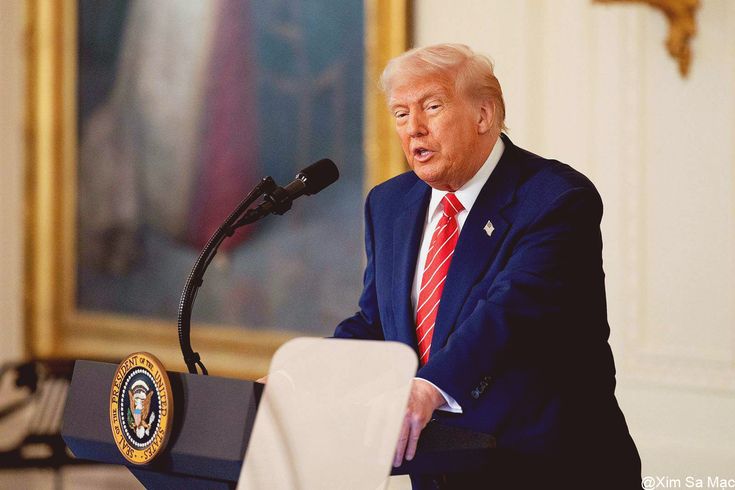
This renewed clash comes barely months after a US- and Malaysia-backed ceasefire, personally championed by US President Donald Trump, was signed in Kuala Lumpur. That agreement aimed to stop a conflict rooted in colonial-era maps, rival nationalisms and competing claims over ancient temples along a border that was never fully demarcated. Yet by December the deal was already fraying. Thai leaders complained that the security situation had not improved; Cambodia accused Thailand of dragging its feet over the release of prisoners and of laying new landmines.
To understand why the bullets and bombs are flying again, it’s necessary to look beyond this week’s headlines and unpack the history and politics driving the Thailand Cambodia border conflict.
Where is the Thailand–Cambodia border and why does it matter?
Thailand and Cambodia share a border of roughly 800km (about 500 miles), running from the Gulf of Thailand in the south to the Mekong River in the north. Much of it cuts across rugged hills and thick forest, and large sections remain only partially demarcated on the ground.

The provinces now at the centre of the Thailand Cambodia border conflict include:
- On the Thai side: Ubon Ratchathani, Buriram, Surin, Si Sa Ket, Sa Kaeo and Trat
- On the Cambodian side: Banteay Meanchey, Battambang, Pursat, Oddar Meanchey and Preah Vihear
This frontier zone is strategically important for several reasons:
- Historic temples and cultural symbols – The 11th-century Preah Vihear temple, perched on a cliff in Cambodia’s Preah Vihear province but accessible most easily from Thailand, is the most famous flashpoint. Other temples, such as Ta Moan and Ta Krabey, sit in areas where maps and on-the-ground demarcation disagree. Wikipedia+1
- Military geography – The Dangrek mountain range and other high ground offer commanding views and natural defensive positions. Whoever controls the ridges controls key access points between the two countries.
- Economic routes and trade – Cross-border trade in food, fuel, construction materials and consumer goods is vital for communities on both sides. Even short periods of fighting can disrupt supply chains, damage roads and checkpoints, and choke off local livelihoods.
- Symbolic nationalism – In both Thailand and Cambodia, border areas and historic temples are bound up with national pride. Political leaders under pressure at home often find it easier to take a tough line on territorial disputes than to risk being labelled weak. Wikipedia+1
Because of all this, skirmishes in what might otherwise seem remote rural districts quickly become national – and sometimes international – crises.
Historical roots of the Thailand Cambodia border conflict
Colonial maps and the French era
The Thailand Cambodia border conflict is not new. Its origins lie in the late 19th and early 20th centuries, when France controlled Cambodia as part of French Indochina and negotiated borders with the then-Kingdom of Siam (modern-day Thailand). French surveyors drew maps that were never fully agreed by both sides, leaving ambiguities over who owned what stretches of high ground and forest. Wikipedia
These maps later became critical evidence. In 1962, the International Court of Justice (ICJ) ruled that the Preah Vihear temple itself lay on the Cambodian side of the border, largely because Thailand had accepted a French-drawn map for decades without formally objecting. Thailand was ordered to withdraw its forces from the promontory on which the temple stands. Wikipedia+1
But the ICJ ruling did not settle ownership of the entire surrounding area. Thailand and Cambodia continued to disagree over a 4.6 sq km zone around the temple, as well as several other stretches of the border. For years the dispute remained relatively low-level, flaring up only occasionally.
UNESCO listing and the 2008–2011 crisis
Tensions spiked in 2008, when Cambodia sought to register Preah Vihear as a UNESCO World Heritage Site. The Thai government initially supported the move, but domestic opposition claimed the listing could undermine Thai claims to the surrounding land. Protests erupted, and troops from both sides moved into the disputed zone. Wikipedia+1
From 2008 to 2011, multiple clashes killed soldiers and civilians on both sides, damaged parts of the temple complex and displaced thousands of villagers. Heavy weapons, including artillery rockets and, according to rights groups, cluster munitions, were used. The crisis only eased after ASEAN mediation and further ICJ clarification in 2013, which confirmed Cambodia’s sovereignty over the temple promontory but again left some adjacent areas unclear. Wikipedia+1
Those earlier confrontations set the template for what we’re seeing again in 2025: overlapping legal claims, nationalist rhetoric and local military incidents that quickly spiral into something far larger.
From simmering tensions to open fighting in 2025
May: a death that reignited the dispute
The current phase of the Thailand Cambodia border conflict was triggered back in May, when a Cambodian soldier was killed in a clash along the frontier. Each side blamed the other, but the result was clear: relations plunged to their lowest point in more than a decade. Encyclopedia Britannica
In the following weeks, both governments tightened the economic and logistical screws:
- Cambodia banned a range of imports from Thailand, including fruit and vegetables, electricity supplies and internet services.
- Thailand strengthened its troop presence and stepped up patrols in border provinces.
- Cross-border checkpoints saw more inspections and occasional closures, hurting traders and migrant workers.
July: five days of war
By July, the situation tipped into outright conflict. Thai and Cambodian forces exchanged heavy gunfire, artillery and drone attacks in multiple provinces. Again, each side said the other had fired first.
The fighting escalated rapidly:
- Thailand accused Cambodia of launching rockets at its positions and of using bomb-dropping drones and kamikaze drones.
- Bangkok responded with airstrikes against Cambodian military targets along the border.
- At least 48 people were killed and thousands more displaced during five days of intense clashes. AP News+1
It was the worst violence in years – bad enough that regional powers, and eventually the United States, stepped in.
Trump’s Kuala Lumpur peace accord – and why it failed
A high-profile ceasefire
Amid July’s fighting, US President Donald Trump intervened, working with Malaysia to broker a ceasefire between Bangkok and Phnom Penh. After talks in Kuala Lumpur, both sides agreed to:
- Withdraw heavy weapons from the disputed region
- Allow an interim team of observers to monitor the ceasefire
- Work toward the release of 18 Cambodian soldiers held in Thailand
Trump hailed the deal as the “Kuala Lumpur peace accord”, though Thailand preferred the more neutral title “Joint Declaration by the prime ministers of Thailand and Cambodia on the outcomes of their meeting in Kuala Lumpur”. Reuters+1
For a time, the shooting largely stopped. But beneath the surface, key problems remained unresolved.
A fragile deal on life support
By November, Thailand had effectively paused its participation in the agreement. Prime Minister Anutin Charnvirakul argued that the security threat had “not actually decreased” and complained about alleged new Cambodian landmines and the unresolved issue of prisoners. Reuters+1
Cambodia, on the other hand, said it still supported the ceasefire terms and criticised Thailand for walking away. Phnom Penh insisted it wanted the observers to stay and accused Thailand of using the accord as a bargaining chip in wider trade and security disputes.
The result was a deal that existed on paper but was hollow in practice. Border restrictions tightened again, troops redeployed to forward positions, and both sides accused each other of preparing for new offensives. It was only a matter of time before something sparked another round of violence.
December escalation: how the latest clashes unfolded
Competing narratives of who fired first
On Monday 8 December, gunfire once again echoed across the border. Both Thailand and Cambodia quickly issued statements – each telling a different story.
According to the Thai army:
- Cambodian forces opened fire on Thai troops in Ubon Ratchathani province, inside Thai territory.
- A Thai soldier was killed in the initial exchange.
- Thailand then launched airstrikes on what it described as Cambodian military targets along the disputed border. The Guardian+1
Cambodia’s defence ministry offered the opposite account:
- Thai troops attacked first, in Cambodia’s Preah Vihear province.
- Cambodian units did not retaliate immediately but reserved the right to defend themselves.
The next day, Thailand accused Cambodia of escalating the conflict by firing rockets and deploying combat drones – including both bomb-dropping drones and so-called “kamikaze” drones that crash into targets. Some rockets, Thai officials said, landed in civilian areas. Bangkok responded with further airstrikes. The Guardian+1
Cambodia, for its part, accused Thailand of indiscriminate shelling into civilian neighbourhoods, particularly in Pursat province, and reported additional civilian deaths. Phnom Penh said Thai airstrikes had hit homes and public buildings near the frontier.
Human cost: casualties and displacement
So far, the December flare-up has reportedly killed at least three Thai soldiers and seven Cambodian civilians, on top of those who died in July’s fighting. Independent verification is difficult, and both sides may be under- or over-stating casualties for political effect. The Guardian+2AP News+2
Beyond the immediate death toll, the Thailand Cambodia border conflict has displaced vast numbers of people:
- Thailand has set up hundreds of shelters in border provinces like Buriram and Sa Kaeo, housing well over 100,000 evacuees.
- Cambodia says tens of thousands have fled villages in Banteay Meanchey, Battambang and Preah Vihear.
Photos from the region show families huddling in bunkers and schools, children playing beside makeshift tents, and long queues for food and water. For many, this is the second time in a year they have been forced to leave home. AP News+1
Why are Thailand and Cambodia fighting at the border?
Immediate triggers vs deeper causes
At the surface level, each outbreak of violence in the Thailand Cambodia border conflict seems to have a clear trigger: a landmine injury, a patrol that crosses a disputed line, a rocket that lands on the wrong side. But underneath these incidents lie deeper structural causes:
- Unresolved territorial claims – Despite ICJ rulings, key parts of the border – especially areas around ancient temples – remain disputed. Neither side wants to be seen as conceding territory. Wikipedia+1
- Nationalist politics – Political leaders in both Bangkok and Phnom Penh face domestic pressures. Rallying the public around defending the nation’s borders is a powerful political tool, especially when other issues – from the economy to corruption – are harder to solve.
- Military posture and mistrust – Years of skirmishes have entrenched suspicion. When one side moves troops or conducts exercises, the other tends to assume the worst and respond in kind. That makes accidental or localised clashes more likely to spiral.
- Economic leverage – Trade restrictions, such as Cambodia’s bans on Thai imports and services, add another layer of tension. They hurt border communities and can encourage smuggling and other illicit activity, which in turn prompts heavier policing and more friction.
- Incomplete ceasefire implementation – Key elements of the Kuala Lumpur accord, such as prisoner releases and permanent monitoring arrangements, were never fully implemented. That created a sense of grievance and allowed hardliners in both capitals to argue that the deal had failed. Reuters+2AP News+2
In short, Thailand and Cambodia are not simply fighting about a single incident; they are fighting over history, identity and influence, with each new clash feeding back into long-standing rivalries.
Domestic politics: how internal pressures feed the crisis
Thailand: security hawks and sovereignty
In Thailand, Prime Minister Anutin Charnvirakul has taken a tough line on the border dispute. His government argues that Thailand must defend its sovereignty and protect civilians in frontier provinces from Cambodian attacks and landmines. For Anutin, projecting strength may also help him manage domestic critics and the powerful military establishment. Reuters+1
Thai media coverage often emphasises Cambodian aggression and presents airstrikes and artillery as necessary self-defence. Opposition voices have warned about the economic and humanitarian cost of prolonged fighting, but a strong nationalist current in Thai politics makes compromise difficult.
Cambodia: nationalist memories and leadership dynamics
On the Cambodian side, veteran political figure Hun Sen – now Senate President but still an influential voice – has framed the conflict as a struggle to defend Cambodian territory and civilians from Thai bullying. He has vowed to hit back hard if Thai attacks continue, tapping into deep reservoirs of resentment rooted in Cambodia’s history of invasion and occupation by its neighbour. AP News+1
For Cambodia’s current leadership, demonstrating that they will not bow to Thai pressure is vital for maintaining legitimacy at home, especially among military elites and nationalist youth. Any perception of weakness at the border could become a powerful weapon for domestic opponents.
In both countries, then, leaders have strong incentives to stand firm and few incentives to make concessions – a classic recipe for stalemate and sporadic escalation.
International reactions and the role of external powers
Trump, Malaysia and the United States
President Trump’s earlier intervention created an unusual dynamic. On one hand, US involvement raised the cost of defying the ceasefire; on the other, it turned the conflict into a test of his personal diplomacy. After the December clashes, Trump called on both sides to respect the agreement, but so far neither appears willing to back down without significant concessions from the other. Reuters+1
US officials have hinted that trade negotiations and security cooperation could be affected if the conflict spirals further, but Washington is also wary of being seen as taking sides in a complex regional dispute.
ASEAN and neighbouring states
Malaysia, which co-brokered the Kuala Lumpur accord, has urged both sides to return to dialogue. ASEAN as a bloc, however, has limited tools beyond diplomatic pressure. Its long-standing principle of non-interference means it tends to avoid direct mediation unless all parties agree.
Other neighbours, such as Vietnam and Laos, are watching closely. A wider destabilisation of the region could disrupt trade routes, refugee flows and security cooperation on issues from trafficking to maritime disputes.
For now, international actors can encourage negotiations and offer technical help with border demarcation, de-mining and monitoring. Ultimately, though, only Thai and Cambodian leaders can decide to stop the shooting.
Impact on civilians and travel safety
Life on the frontline
For people living near the frontier, the Thailand Cambodia border conflict is not an abstract geopolitical issue; it is a nightly question of where to sleep and whether the next shell will land in their village.
Residents in Thailand’s Buriram and Sa Kaeo provinces have taken shelter in bunkers and temporary camps, while Cambodian villagers in provinces such as Banteay Meanchey and Pursat have been evacuated to schools and pagodas further inland. Fields lie untended, cattle are left behind, and small businesses lose customers overnight. The Guardian+1
Humanitarian agencies worry about access to clean water, sanitation and mental-health support for people repeatedly displaced. Unexploded ordnance and landmines – some laid years ago, others allegedly more recent – pose long-term dangers.
Travel advisories
For foreign travellers, the immediate question is whether Thailand and Cambodia are still safe to visit.
- The UK Foreign Office currently advises against all but essential travel to areas within 50km of the entire Thailand–Cambodia border on both sides, reflecting the unpredictable nature of the conflict.
- Major tourist hubs such as Bangkok, Chiang Mai, Phuket, Siem Reap and Phnom Penh remain far from the fighting and, for now, are not subject to the same level of warning.
Visitors are advised to monitor official travel advisories closely, avoid border regions, and be prepared for sudden changes in security assessments. Airlines and tour operators may alter routes or itineraries if the situation deteriorates.
What happens next in the Thailand Cambodia border conflict?
Predicting the trajectory of the Thailand Cambodia border conflict is difficult, but several scenarios are possible:
- Managed de-escalation – Under pressure from the US, ASEAN and their own populations, leaders in Bangkok and Phnom Penh might quietly scale back operations, pull artillery out of range and restore limited communication between commanders. Fighting would taper off, even if a formal new deal proves elusive.
- Return to the Kuala Lumpur framework – With adjustments, the existing ceasefire architecture could be revived: observers reinstated, prisoners exchanged, and timetables set for demarcation talks. This would require both sides to accept some loss of face and for outside mediators to play a sustained role.
- Prolonged low-intensity conflict – The riskier scenario is that sporadic shelling, drone strikes and sniper fire continue for months, displacing more civilians and further poisoning relations. In this case, accidents or miscalculations could trigger a larger, more dangerous confrontation.
- Domestic political shocks – Leadership changes, protests or economic crises in either country could unexpectedly shift the calculus, opening a window for compromise – or, alternatively, prompting even more aggressive nationalism.
Historically, clashes along the Thailand–Cambodia border have tended to de-escalate after a few days or weeks. But analysts warn that today’s combination of drones, social media-fuelled nationalism and relatively weak political leadership may make this round harder to contain. AP News+2The Times+2
Conclusion: an old dispute in a dangerous new phase
The Thailand Cambodia border conflict is often presented as a simple question – “Who fired first?” – but the reality is far more complex. The December flare-up is the product of unresolved colonial-era borders, competing claims over sacred temples, domestic political pressures and the partial breakdown of an international ceasefire deal.
What happens next will depend on whether leaders in Bangkok and Phnom Penh can show the political courage to step back from the brink, even at the cost of short-term criticism. For civilians huddled in bunkers and shelters along the frontier, the hope is that this latest round of violence will follow the pattern of previous ones and fade – but each new clash leaves deeper scars, more unexploded ordnance and greater distrust.
Until the underlying issues of territory, demarcation and mutual suspicion are addressed, the Thailand–Cambodia border is likely to remain one of Southeast Asia’s most dangerous fault lines – a place where history, nationalism and modern firepower collide.
External sources for further reading
https://www.reuters.com/world/asia-pacific/thai-army-says-air-strikes-launched-along-disputed-border-area-with-cambodia-2025-12-08/
https://www.reuters.com/world/asia-pacific/thailand-says-tariffs-must-not-be-used-force-peace-with-cambodia-2025-12-09/
https://apnews.com/article/thailand-cambodia-border-conflict-2025
https://www.theguardian.com/world/2025/dec/08/thailand-airstrikes-disputed-border-cambodia
https://www.britannica.com/event/Thailand-Cambodia-Conflict
https://en.wikipedia.org/wiki/Cambodian%E2%80%93Thai_border_dispute
https://en.wikipedia.org/wiki/2008%E2%80%932011_Cambodian%E2%80%93Thai_border_crisis
https://spice.fsi.stanford.edu/docs/thailand_and_cambodia_the_battle_for_preah_vihear
https://www.gov.uk/foreign-travel-advice/thailand
https://www.gov.uk/foreign-travel-advice/cambodia