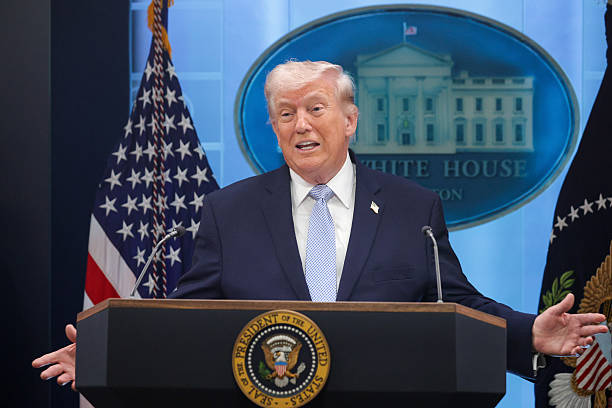
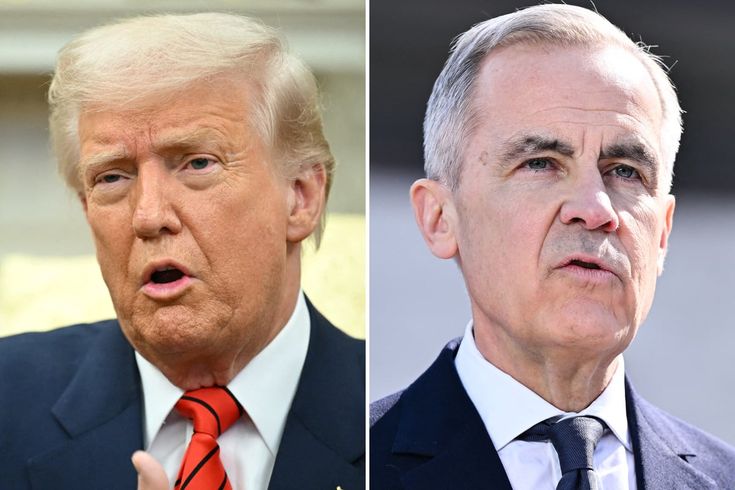
Trump threatens Canada with 100% tariffs after warning that Ottawa could face severe economic consequences if it deepens trade ties with China, marking a sharp escalation in tensions between the United States and its northern neighbour.
The warning came after Canadian Prime Minister Mark Carney held discussions with Chinese President Xi Jinping and announced progress on a trade agreement involving electric vehicles and agricultural products. US President Donald Trump responded with a public threat, raising fears of renewed trade disruptions between the two closely linked economies.
Speaking on his social media platform Truth Social on Saturday, Trump said Canada would face immediate penalties if it became what he described as a “drop-off port” for Chinese goods entering the US market. The statement has reignited debate over North American trade stability and Washington’s increasingly aggressive stance on China-related commerce.
Trump Issues Direct Warning to Ottawa
Trump’s remarks were blunt and unusually personal, referring to the Canadian leader as “Governor Carney” while suggesting that Canada’s economic survival depended on the United States. He warned that any agreement between Ottawa and Beijing would trigger sweeping tariffs on all Canadian imports.
“If Canada makes a deal with China, it will immediately be hit with a 100% tariff against all Canadian goods and products coming into the U.S.A.,” Trump wrote.
The statement did not specify a timeline or legal framework for the proposed tariffs, but analysts say the language alone is enough to rattle markets and complicate ongoing trade negotiations between the two countries.
China Trade Deal Raises Alarm in Washington
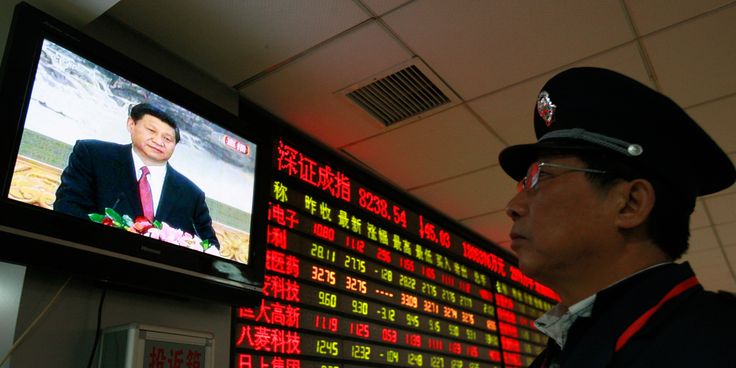
At the centre of the dispute is a potential agreement that would see Canada ease tariffs on Chinese electric vehicles while China reduces levies on Canadian agricultural exports. While Canadian officials have framed the deal as a pragmatic response to shifting global trade patterns, the White House appears to view it as a strategic threat.
Trump initially described the proposed agreement as “a good thing” earlier this month, but his tone shifted sharply following Carney’s appearance at the World Economic Forum in Davos. There, the Canadian prime minister argued that middle powers must adapt to a changing global order no longer dominated by a single superpower.
Although Carney avoided naming Trump directly, his comments were widely interpreted as criticism of US trade unilateralism, particularly toward allies.
Davos Speech Deepens Political Rift
Carney’s speech at the World Economic Forum warned of a “rupture” in the US-led global system and called for greater economic diversification. The remarks appeared to irritate Trump, who delivered his own address shortly afterward, emphasizing American dominance and dismissing Canada’s economic independence.
“Canada lives because of the United States,” Trump said during his remarks, a claim that Carney later rejected.
The clash in Davos highlighted growing philosophical differences between the two leaders, with Canada advocating multilateral engagement while the Trump administration doubles down on protectionism.
Trade Relationship Already Under Strain
Relations between Washington and Ottawa had shown signs of improvement in recent months, but Trump’s renewed tariff threats risk undoing that progress. When he returned to office last year, Trump imposed a 35% tariff on Canadian goods not covered under the existing US–Mexico–Canada Agreement (USMCA), which is currently under mandatory review.
Those measures already placed pressure on Canadian exporters, particularly in manufacturing and agriculture. A blanket 100% tariff would represent an unprecedented escalation, potentially disrupting billions of dollars in cross-border trade.
Canada is the largest export destination for US goods, while the United States remains Canada’s most important trading partner by a wide margin.
Canada Pushes Back on Economic Dependence Claims
Responding to Trump’s comments, Carney pushed back strongly against the suggestion that Canada’s economy depends entirely on the United States.
“Canada doesn’t live because of the United States,” he said. “Canada thrives because we are Canadians.”
Canadian officials have also emphasized that diversifying trade relationships is a matter of economic resilience, not political defiance. They argue that reducing reliance on a single market is essential in an era of rising geopolitical uncertainty.
Experts Warn of Long-Term Consequences
Trade experts told the BBC that Canada’s evolving approach toward China reflects growing unease about the reliability of US trade policy under Trump. Frequent tariff threats and abrupt policy shifts have made long-term planning difficult for Canadian businesses.
Analysts also note that while a China deal could expose Canada to US retaliation, walking away could limit growth opportunities in fast-expanding Asian markets.
“The world has changed,” Carney said earlier this month, adding that engagement with China positions Canada “well for the new world order.”
Broader Geopolitical Fallout
The tariff dispute comes amid broader tensions between the US and its allies. Trump has recently clashed with European leaders over Nato funding and sparked controversy with renewed rhetoric about acquiring Greenland.
He also withdrew Canada’s invitation to join a newly announced US-led “Board of Peace,” an organization billed as a forum for resolving international conflicts. In a separate post, Trump criticized Canada for opposing his proposed missile defense system over Greenland and for maintaining business ties with China.
These moves have fueled concerns that US foreign policy is becoming increasingly transactional, even with long-standing allies.
What Happens Next?
It remains unclear whether the threatened tariffs will materialize or if they are intended as leverage ahead of upcoming trade talks. The White House has not confirmed whether formal steps are being taken, and Canadian officials say they are seeking clarification through diplomatic channels.
Still, the warning has injected fresh uncertainty into US–Canada relations, with businesses on both sides of the border watching closely for signs of escalation.
If implemented, a 100% tariff would likely prompt retaliatory measures from Canada and could spark a broader trade conflict at a time when global economic growth remains fragile.
This report is part of FFRNews World & Middle East coverage, tracking major political and economic developments affecting global trade and diplomatic relations. Details in this article are based on reporting by BBC News, which first reported on Donald Trump’s tariff threat and the escalating tensions between the United States and Canada over China-related trade negotiations.