
📰 Trump’s Venezuela Boat Strike Video Denial: A Fact-Checking Deep Dive
In a recent and highly scrutinized exchange at the White House, President Donald Trump vehemently denied having previously stated he would have “no problem” releasing the full video footage of a controversial US military strike on an alleged Venezuelan drug boat on September 2nd. This denial, and the ensuing political firestorm it ignited, has put the spotlight squarely on the transparency and legality of the administration’s escalating military campaign against suspected narco-traffickers in the Caribbean. The central question remains: what did the president truly say, and why is this Venezuela boat strike video denial so significant, particularly concerning the alleged “double-tap” attack that reportedly killed survivors?
This comprehensive analysis utilizes open-source intelligence, verified reports, and legal expert commentary to meticulously fact-check the President’s claim and explore the broader implications of the strike.
The Heart of the Controversy: A Second Strike and a Denied Promise
The incident in question, which occurred off the coast of Venezuela in early September, was initially reported as a successful US military strike against a vessel allegedly carrying illegal narcotics. President Trump himself posted a short video clip of the initial strike on a social media platform shortly after the operation. However, the controversy deepened significantly following reports that the vessel was struck a second time—a so-called “double-tap” attack—which allegedly killed two survivors of the first blast who were reportedly clinging to the wreckage.
This alleged second strike immediately drew bipartisan concern from lawmakers and sparked outrage among international legal experts, who questioned the action’s legality under the laws of armed conflict. The Venezuela boat strike video denial from the President now forms a critical part of the transparency debate surrounding this deadly operation.
Trump’s Previous Stance on the Venezuela Boat Strike Video Denial
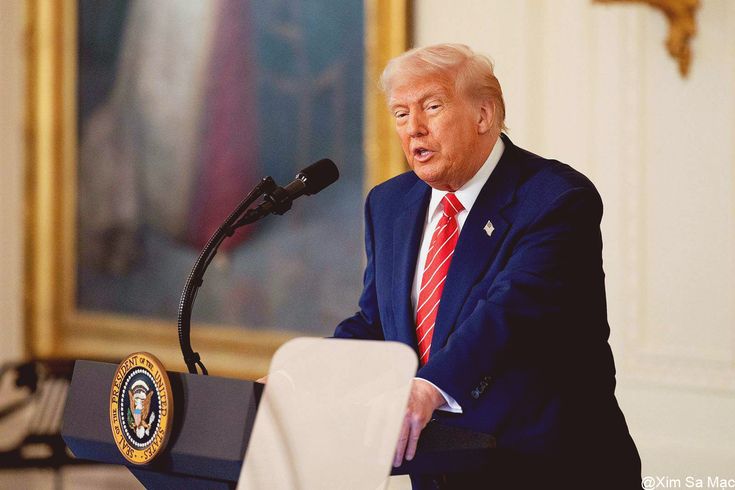
The core of the Venezuela boat strike video denial lies in a direct contradiction of the President’s own on-camera statements. Just days before denying the promise, President Trump was asked directly about releasing the footage of the second strike.
On December 3rd, when asked by a reporter about releasing the footage of the second strike, President Trump explicitly stated:
“I don’t know what they have, but whatever they have, we’d certainly release – no problem.”
This unambiguous statement confirmed the President’s willingness to make the footage public. However, when pressed on the matter just a few days later by an ABC News reporter, the President abruptly shifted his position, interjecting:
“I didn’t say that. This is ABC fake news.”
He then deferred the decision to Defense Secretary Pete Hegseth, stating, “Whatever Pete Hegseth wants to do is OK with me.” This dramatic about-face and the subsequent Venezuela boat strike video denial led to the immediate fact-checking by media organizations, confirming the President’s prior promise to release the footage.
The Legal and Ethical Fallout of the “Double-Tap” Attack
Beyond the political row over the Venezuela boat strike video denial, the far more grave issue is the legality of the second strike itself. The US administration’s use of military force against what it terms “narco-terrorists” operating in international waters has been widely criticized by international law experts.
International Law and the Status of Shipwrecked Survivors
The key legal hurdle facing the administration is the prohibition against attacking shipwrecked or incapacitated combatants. International humanitarian law, specifically the Second Geneva Convention, is explicit on this matter. It states that members of the armed forces and other persons who are “wounded, sick, or shipwrecked, shall be respected and protected in all circumstances.” Targeting such persons—who are considered hors de combat (out of the fight)—is strictly prohibited and can constitute a war crime.
- The Argument for Illegality: Legal scholars argue that even if one accepts the administration’s contentious claim that the US is engaged in an “armed conflict” with drug cartels (a designation disputed by many), the survivors of the initial blast, reportedly clinging to wreckage and unarmed, were clearly hors de combat. Experts have unequivocally stated that any order to fire upon the shipwrecked is “clearly illegal.”
- The Administration’s Defense: The administration, including Defense Secretary Hegseth, has defended the strike, asserting that the second attack was necessary to destroy the still-floating vessel and its drug cargo, and that the commander on site was “well within his authority.” Furthermore, the President claimed that the survivors were attempting to “return the boat back to where it could float,” justifying the second strike to prevent the continuation of the drug operation.
The Demand for Transparency
The fact that the administration released a short video of the initial strike but has refused to release the full, unedited video that includes the alleged second strike—the very footage the President initially said he would release—only fuels the controversy and the demand for transparency. Lawmakers in Congress, including those leading key defense committees, have demanded the release of the unedited video, with some even attempting to leverage the annual defense policy bill to compel the Pentagon to release the footage. The persistence of the Venezuela boat strike video denial by the administration suggests a deep-seated desire to control the narrative around an operation whose legality is tenuous at best.
Broader Context of US Anti-Drug Operations
The September 2nd strike is not an isolated incident but the first in a months-long series of military attacks on alleged drug vessels in the Caribbean and Pacific, which have resulted in over 80 deaths. This campaign represents a significant escalation of the Trump administration’s efforts, justified under a highly-criticized framework that designates certain drug cartels as “terrorist organizations.”
This escalation, coupled with the administration’s controversial use of the military against alleged criminal activity without explicit Congressional authorization, has raised profound concerns regarding:
- Constitutional Authority: The use of military force abroad without a formal declaration of war or specific Congressional authorization against a non-state actor outside the traditional “War on Terror” framework.
- Sovereignty: The implications of military strikes in international waters and the potential for escalation with sovereign nations, particularly Venezuela, given the administration’s ongoing pressure campaign against President Nicolás Maduro.
- Rule of Law: The dangerous precedent of using lethal military force instead of law enforcement and criminal justice mechanisms to combat drug trafficking, potentially blurring the lines between military action and extrajudicial killing.
The Path Forward: Congressional Oversight and Accountability
The Venezuela boat strike video denial and the underlying questions of war crimes have energized Congressional oversight efforts. With both Republican and Democratic lawmakers viewing the full video and offering conflicting assessments—Republicans defending the action as a necessary part of the “war on drugs” and Democrats describing it as deeply troubling—the pressure on Defense Secretary Hegseth and the administration to be fully transparent will only intensify.
Accountability, both domestic and international, hinges on the release of the full, unedited footage of the September 2nd strike. Until that footage is made public, the narrative will remain fraught with questions about the administration’s commitment to international law and its willingness to order strikes that potentially violate the most fundamental rules of warfare. The continued official denial of a clear public promise only compounds the perception of an administration attempting to conceal the most damaging details of a deadly military operation.
🔗 External Sources and Further Reading
For detailed reports and legal analyses related to the Venezuela Boat Strike Video Denial and the September 2nd operation, please consult the following sources:
- CBS News: Trump walks back support for releasing video of second boat strike
- The Washington Post: Trump says Hegseth will decide whether to release boat strike video
- AP News: Trump says survivors of scrutinized US strike were trying to right boat before 2nd missile was fired
- The Guardian: Killing of survivors sparks outrage – but entire US ‘drug boat’ war is legally shaky
- OHCHR (UN Human Rights): US war on “narco-terrorists” violates the right to life, warn UN experts after deadly vessel strike
This video provides context for how the US President has changed his stance on land strikes in Venezuela, which is related to the broader context of the controversial boat strikes. Trump Denies Reports That He’s Planning Strikes on Venezuela.