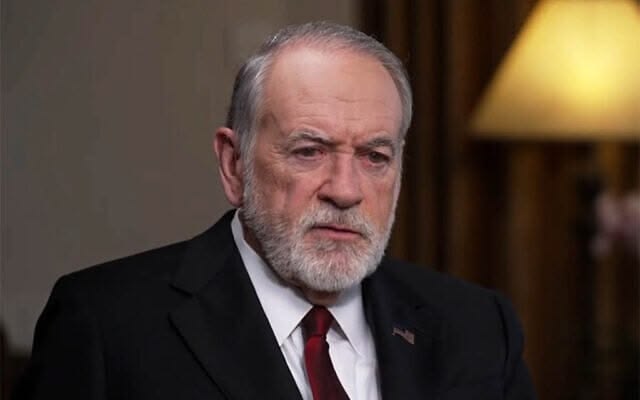
Tucker Huckabee Israel interview has become a major topic in global politics after a contentious sit-down between conservative commentator Tucker Carlson and U.S. Ambassador to Israel Mike Huckabee was released publicly, generating widespread controversy, diplomatic backlash, and debate over U.S. foreign policy toward the Middle East. The interview has thrown into sharp relief divisions within the Republican movement, provoked condemnation from Arab and Muslim nations, and reignited arguments about the role of religion in modern geopolitics.
Released on February 20, 2026, the nearly two-and-a-half hour conversation occurred at Israel’s Ben Gurion Airport and was followed by claims from Carlson that he and his team had been detained by Israeli authorities — a claim that was denied by Israeli officials, who describe the encounter as routine customs processing.
Biblical Justifications and Controversial Comments
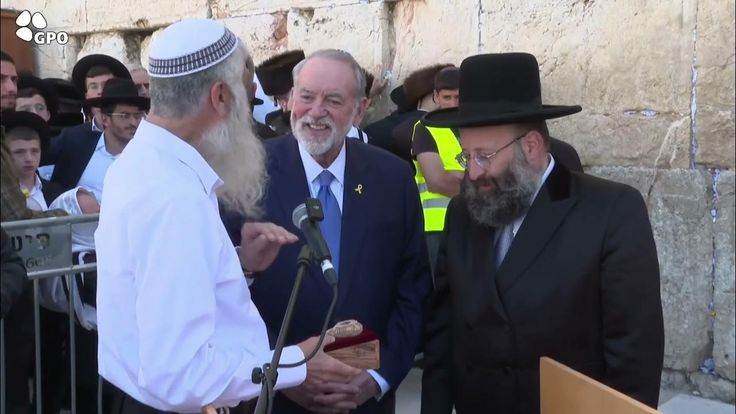
The heart of the Tucker Huckabee Israel interview controversy stemmed from a series of comments by Mike Huckabee regarding Israel’s territorial rights. In the interview, Carlson asked whether Israel had a right to land across much of the Middle East — referencing scripture from the Book of Genesis that promises Abraham and his descendants land “from the Nile to the Euphrates.” Huckabee responded that “it would be fine if they took it all,” framing the statement as rooted in biblical history and tradition, though he added that contemporary policy did not necessarily seek expansion to those biblical borders.
Critics argue that invoking ancient scripture to justify modern territorial claims is provocative and incompatible with international law. Arab and Muslim nations, including Egypt, Saudi Arabia and Jordan, condemned Huckabee’s remarks as violations of diplomatic norms and international principles, warning that such rhetoric threatens peace and stability in the region.
Huckabee’s remarks have drawn particular fire because they appear to go beyond established U.S. policy, which has traditionally supported a negotiated two-state solution between Israelis and Palestinians and respects internationally recognized borders. His comments were seen by some as tacitly embracing expansionist ideas that could inflame tensions and undermine diplomatic efforts in an already volatile region.
Diplomatic Backlash and Global Response
The Tucker Huckabee Israel interview rapidly drew international attention, prompting formal responses from regional governments. Saudi Arabia’s foreign ministry issued a statement condemning the remarks as “reckless” and incompatible with international law and U.S. commitments to territorial sovereignty. Jordan’s government also condemned the comments, calling them a breach of diplomatic norms that threaten regional stability.
The Organization of Islamic Cooperation (OIC) and the League of Arab States similarly rebuked Huckabee, describing his remarks as provocative and inflammatory. These responses underscored how sensitive the issue of territory and national sovereignty remains across the Middle East, particularly given longstanding conflicts involving land rights, occupation, and displacement.
While some international observers framed the backlash as predictable given the current geopolitical landscape, others warned that such statements from a U.S. ambassador — intended to represent American interests — could erode trust and complicate peace negotiations.
A Rift Within U.S. Conservative Politics
Beyond global reactions, the interview also highlighted a growing ideological split within American conservative politics. The Tucker Huckabee Israel interview exposed tension between traditional evangelical support for Israel — exemplified by Huckabee’s staunch Christian Zionist perspective — and a rising faction of conservative populists who question unconditional alignment with Israeli policy.
Carlson, once a mainstream media figure and host on Fox News before becoming an independent commentator, challenged Huckabee on whether biblical narratives should influence modern foreign policy, pushing back against what he suggested was an overly deferential approach toward Israel. This reflected Carlson’s shift toward a nationalist, skeptical viewpoint on U.S. foreign entanglements, a stance that has drawn criticism from establishment conservatives.
The exchange underscores broader debates within the Republican Party about how to balance ideological commitments, strategic national interests, and religious beliefs — especially in a post-Trump era where conservative identity politics continue to evolve. Such divisions may influence how future administrations shape foreign policy on contentious geopolitical issues like the Israeli-Palestinian conflict, relations with Middle Eastern powers, and U.S. global leadership roles.
The Airport Incident and Subsequent Claims
Adding further drama to the Tucker Huckabee Israel interview narrative were claims made by Carlson that he and his team were detained by Israeli airport security after the interview concluded. Carlson alleged that his passport was confiscated and his executive producer was taken for questioning about the content of the interview itself.
Official statements from Israeli authorities, however, denied any unusual detainment. They characterized the encounter as a routine security screening that took place in a private VIP lounge and that no extraordinary measures were taken. Critics of Carlson accused him of exaggerating the event to fuel controversy and attract attention to his podcast.
Analysis from commentators suggested that framing the airport encounter as a dramatic detainment was consistent with Carlson’s broader strategy of amplifying conflict and controversy — a narrative that resonates with his audience, despite questions about factual accuracy.
Implications for U.S.–Middle East Relations
The fallout from the Tucker Huckabee Israel interview extends to broader questions about U.S. foreign policy and diplomatic messaging. While the United States remains formally committed to a negotiated resolution between Israelis and Palestinians, the interview’s public airing — and Huckabee’s remarks — risk sending mixed signals to allies and adversaries alike.
Diplomats and foreign policy experts expressed concern that tying territory claims to religious narratives could undermine carefully negotiated positions and inflame extremist elements on all sides of the conflict. There were warnings that this rhetoric might embolden hardline actors or derail nascent diplomatic efforts in regions like Gaza, the West Bank, and adjacent states. Experts have emphasized the need for clarity and consistency in official foreign policy communications, cautioning that ambiguous or unorthodox statements from high-ranking envoys can have unintended consequences.
This report is part of FFRNews World & Politics coverage, examining major geopolitical developments and high-impact diplomatic news. The Tucker Huckabee Israel interview article is based on reporting from news organizations including The Jerusalem Post, The Washington Post, and Associated Press, with additional context from Middle East diplomatic responses.