
The Unprecedented High-Seas Takedown: Why the US Seizes Venezuela Oil Tanker
The geopolitical chess match between the United States and the Venezuelan regime of Nicolás Maduro reached an alarming new peak this week. In a dramatic, high-stakes military operation straight out of an action thriller, US forces successfully interdicted and seized a massive crude oil tanker, the Skipper, off the coast of Venezuela. This extraordinary action, confirmed by President Donald Trump and coordinated across multiple US agencies, has been swiftly—and furiously—denounced by Caracas as a “grave international crime” and an “act of piracy.”
The seizure of the US Seizes Venezuela Oil Tanker is far more than an isolated incident; it is a tactical escalation within the broader “maximum pressure” campaign designed to choke off the financial lifelines of the Maduro government. The vessel, a Very Large Crude Carrier (VLCC), was targeted not only for allegedly transporting sanctioned Venezuelan oil but also for its documented role in a shadowy network supporting internationally designated terrorist organizations, specifically Iran’s Islamic Revolutionary Guard Corps-Quds Force (IRGC-QF) and the Lebanese militant group Hezbollah.
This extensive report will dissect the complex layers of this event: the legal frameworks cited by the US government, the Venezuelan counter-narrative, the history of the US sanctions, the shadowy oil fleet that operates in defiance of global regulations, and the palpable military buildup in the Caribbean that threatens to turn this diplomatic crisis into a potential kinetic conflict.
Part I: The Operation and the Immediate Fallout
A Coordinated Strike: How US Forces Seized the Vessel
The operational details released by US officials paint a picture of precision and overwhelming force. According to Attorney General Pam Bondi, the operation was a joint effort involving the Federal Bureau of Investigation (FBI), the Department of Homeland Security’s Homeland Security Investigations (HSI), the US Coast Guard, and the Department of Defense.
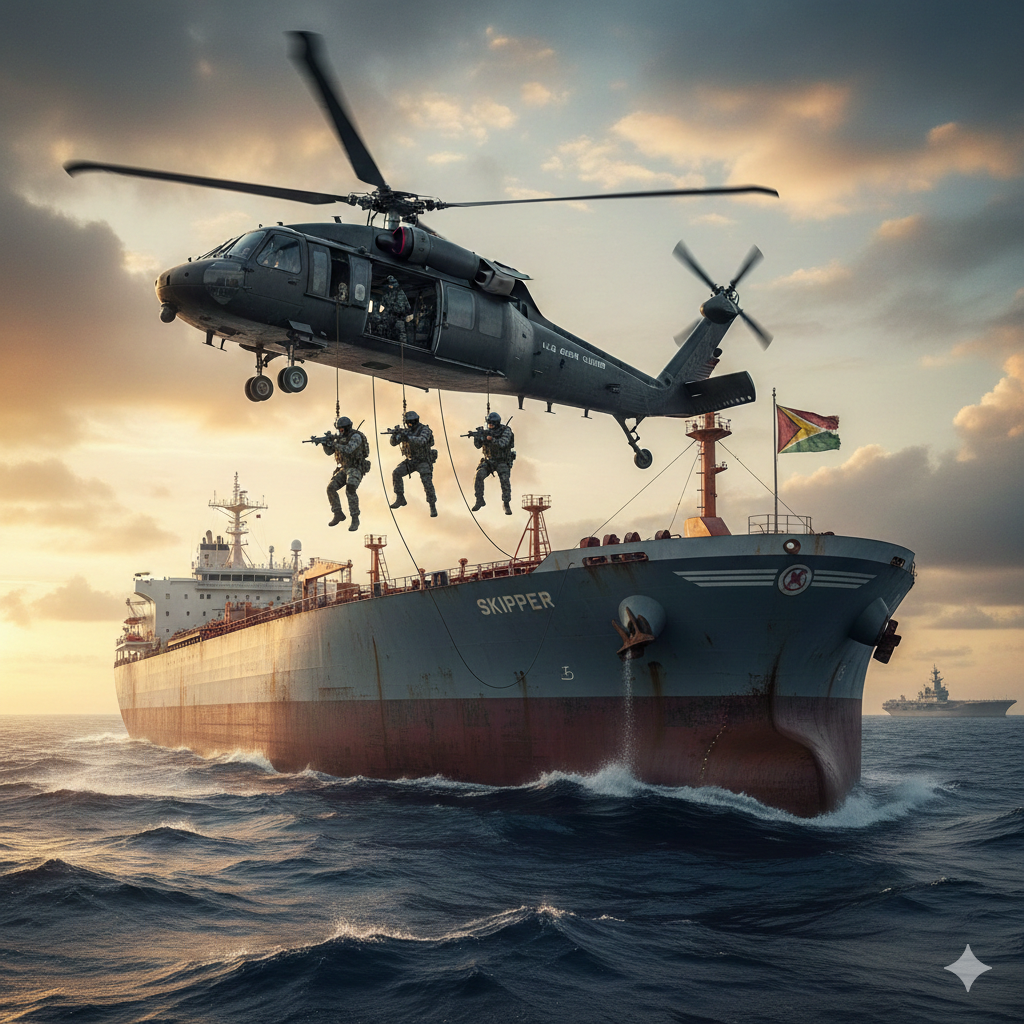
Footage released by Bondi showed an elite boarding team executing a fast-rope descent from military helicopters onto the deck of the colossal tanker. The specialized unit involved was reportedly the Coast Guard’s Maritime Security and Response Team, an elite interdiction force. The launch point for the helicopters was the USS Gerald R. Ford, the US Navy’s largest aircraft carrier, which has been deployed to the Caribbean region as part of a significant military buildup.
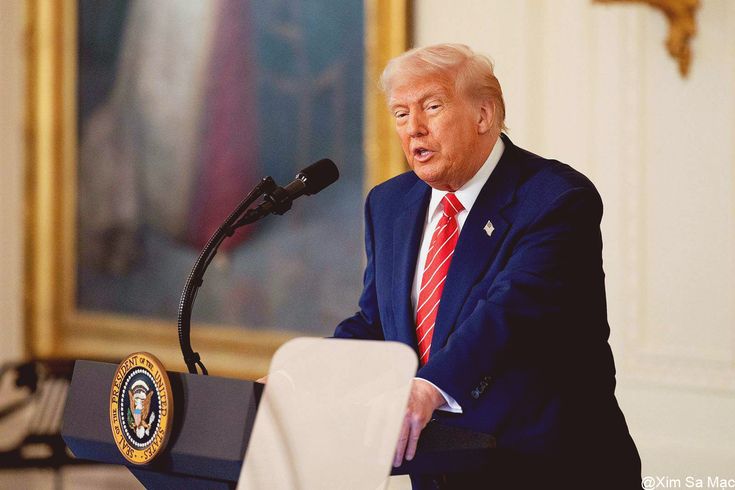
President Trump, confirming the seizure at a White House press event, framed the operation as a monumental success: “We have just seized a tanker on the coast of Venezuela—a large tanker, very large, the largest one ever seized, actually.” When asked about the fate of the crude oil cargo, Trump’s response was blunt: “We keep it, I guess… I assume we’re going to keep the oil.”
The US government’s claim is that they executed a seizure warrant on the vessel, which they allege was “used to transport sanctioned oil from Venezuela and Iran.” The oil cargo, reportedly loaded at Venezuela’s main export hub, José, was destined for Cuba, a key ally of the Maduro regime. The immediate goal of the US Seizes Venezuela Oil Tanker was not merely to stop one shipment but to deliver a financial and psychological blow to the illicit shipping networks financing two heavily sanctioned states.
Venezuela’s Outraged Response: An “Act of Piracy”
The reaction from Caracas was instantaneous and fiery. The Venezuelan government issued a formal statement denouncing the seizure as a “grave international crime” that “constitutes a blatant theft and an act of international piracy.”
Interior Minister Diosdado Cabello, a powerful figure within the Maduro government, went further, calling the US officials “murderers, thieves, pirates.” In a public address, he compared the US forces to “high seas criminals, buccaneers,” contrasting them with the fictional “hero” Jack Sparrow from Pirates of the Caribbean. President Maduro himself, speaking at a rally earlier that day (though it is unclear if he was aware of the seizure at the time), invoked a lighter tone but maintained a defiant posture, singing along to the 1988 hit “Don’t worry, be happy” as a message to Americans opposed to war.
The diplomatic chasm between the two nations has now deepened into a security crisis, raising critical questions about international law and the limits of unilateral sanctions enforcement.
Part II: The Legal and Financial Context of Sanctions Enforcement
The Skipper and the Shadow Fleet: An Anatomy of Evasion
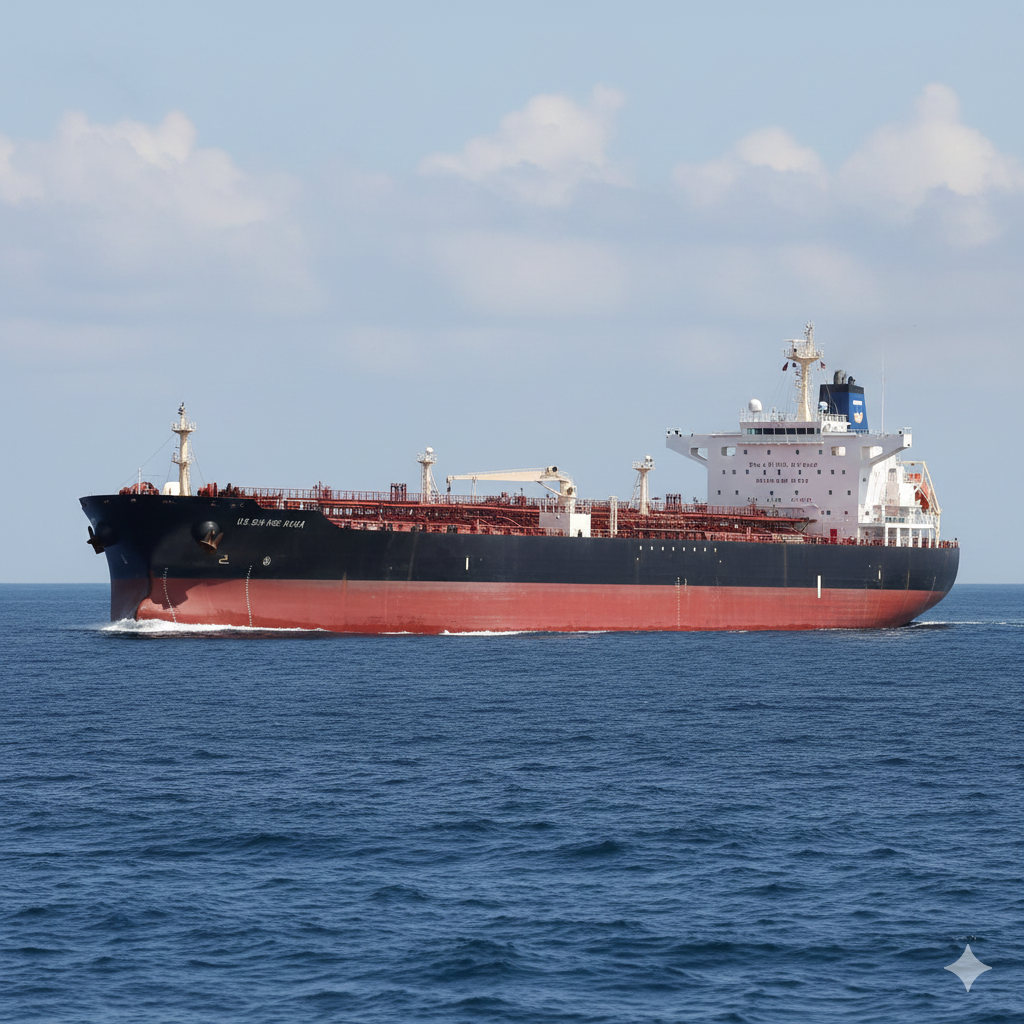
The seized vessel, the Skipper, is not a random target. It is a known entity within what is commonly referred to as the “shadow fleet” or “dark fleet”—a global network of aging tankers that engage in illicit trade to evade international sanctions.
The US Treasury Department had previously sanctioned the Skipper (which sailed under the name Adisa until a change of identity) in 2022. That sanctions notice explicitly named the vessel for its alleged involvement in a complex smuggling network supporting Hezbollah and the IRGC-Quds Force. This network, according to the Treasury, involved blending Iranian oil with other crudes to conceal its origin and using a web of shell companies, such as Marshall Islands-based Triton Navigation Corp., to obscure beneficial ownership. Maritime analysts at TankerTrackers.com estimated that the Skipper had transported nearly 13 million barrels of Iranian and Venezuelan oil since 2021.
The vessel employed classic evasion techniques common to the shadow fleet:
- AIS Spoofing: The Skipper was found to be “spoofing” its position, broadcasting a false location to evade monitoring systems. While legitimate tracking data placed it near the coast of Guyana, satellite imagery confirmed the tanker had recently loaded crude at the Venezuelan port of José.
- Flag Hopping: The tanker was falsely flying the flag of Guyana, a tactic known as “flag shopping” where vessels register in non-cooperative jurisdictions to minimize oversight and circumvent international law. Guyana’s Maritime Administration Department swiftly disavowed the vessel, confirming it was “falsely flying the Guyana Flag as it is not registered in Guyana.”
The Legal Basis for the Seizure: IEEPA and UNCLOS
The US legal justification for the seizure rests primarily on its comprehensive sanctions framework, anchored by the International Emergency Economic Powers Act (IEEPA). This statute grants the President broad authority to regulate international commerce following a declaration of a national emergency—in this case, the ongoing emergency related to the actions and policies of the Venezuelan and Iranian governments. The US Department of Justice (DOJ) used this authority to execute a seizure warrant, asserting that the vessel and its cargo are subject to forfeiture because they were used to facilitate terrorism and violate sanctions.
From an international maritime law perspective, the US action touches upon the United Nations Convention on the Law of the Sea (UNCLOS). While UNCLOS generally protects the freedom of navigation and sovereignty of flag states on the high seas, Article 110 does permit the boarding and inspection of foreign vessels under certain circumstances, such as when a vessel is without nationality or is engaged in piracy. The US argument goes further, asserting jurisdiction over vessels that engage in commerce that violates US law and directly finances entities designated as Foreign Terrorist Organizations (FTOs).
Venezuela’s “act of piracy” claim, while politically charged, is a counter-legal argument. Under the traditional definition in UNCLOS, piracy involves illegal acts of violence or detention for private ends on the high seas. The US operation, conducted by a state military under the authority of a seizure warrant, does not fit this classic definition. However, Caracas argues that a military seizure of state-owned cargo (or cargo linked to a state-owned enterprise, PDVSA) on the high seas, absent a UN Security Council resolution or direct threat, is a violation of its sovereign rights and a form of state-sponsored plunder.
Oil Markets React to the US Seizes Venezuela Oil Tanker
The seizure sent immediate ripples through the energy sector. Brent crude prices saw a slight increase following the news, reflecting short-term supply concerns. While Venezuelan exports have been drastically curtailed by sanctions, any enforcement action that removes a large-capacity tanker from the global fleet—especially one carrying oil destined for Cuba—stokes fear among traders.
This action serves as a potent warning to the remaining companies and traders that constitute the “shadow fleet” and facilitates sanctioned trade: US enforcement is becoming more aggressive and kinetic. The increased risk will inevitably translate into higher maritime insurance rates (which are already 200-500% above baseline for sanctioned regimes) and greater logistical challenges, further tightening the screws on Venezuela’s already crippled oil-dependent economy.
Part III: The Maximum Pressure Campaign and the Military Buildup
The Strategy Behind the US Seizes Venezuela Oil Tanker
The seizure is the culmination of a four-month-long campaign of heightened pressure by the Trump administration against President Maduro. The stated public objectives of the US strategy are dual:
- Counter-Narcotics Operations: The US has launched Operation Southern Spear in the Caribbean, deploying an unprecedented number of ships and personnel to combat drug trafficking routes allegedly used by Venezuelan officials and linked to the “Cartel of the Suns.” This operation has resulted in dozens of air and sea strikes on small boats, claiming the lives of at least 80 individuals.
- Regime Change: The underlying geopolitical objective remains the removal of Nicolás Maduro, who the US views as an illegitimate, authoritarian leader and a narcotrafficking dictator.
The decision to target a sanctioned oil tanker dramatically shifts the focus from purely drug interdiction to a direct attack on Venezuela’s economic lifeline—oil exports. It is a calculated move designed to:
- Increase Financial Costs: Dry up the limited sources of foreign currency that flow into the Maduro regime via illicit sales.
- Display Capability and Resolve: Showcase the US military’s ability to execute complex interdiction missions anywhere in the region, raising the threat level for all sanctions evaders.
- Force a Political Crisis: Push the regime into an untenable position that could lead to internal collapse or a forced negotiation.
The Largest Military Deployment in Decades
Accompanying the pressure campaign is the largest US naval deployment in the Southern Caribbean in decades. The concentration of military assets is massive and includes:
- The USS Gerald R. Ford Carrier Strike Group.
- The USS Iwo Jima Amphibious Ready Group.
- Multiple guided-missile destroyers and fast-attack submarines.
- Various air assets, including F-35 fighter jets, B-52 and B-1B bombers on long-range patrols, and MQ-9 Reaper drones.
This aggressive military posture has not only served as the logistical backbone for the US Seizes Venezuela Oil Tanker operation but has also generated intense speculation about the possibility of a direct military intervention or blockade. Venezuela has responded by mobilizing its own military assets, including modernised air defenses and Russian-supplied anti-ship missiles, vowing to resist any attack. This build-up creates an incredibly volatile environment where a miscalculation or accidental engagement could quickly trigger a full-scale regional conflict.
Part IV: The Iran Connection and the Geopolitical Axis of Resistance
Financing FTOs: The Hezbollah and IRGC-QF Link
The most serious charge leveled by the US Attorney General is that the Skipper was part of an “illicit oil shipping network supporting foreign terrorist organizations.” The specific link to the IRGC-QF and Hezbollah is critical to the US legal and moral justification for the seizure.
The IRGC-QF, the external operations wing of Iran’s Islamic Revolutionary Guard Corps, and Hezbollah, its powerful Lebanese proxy, are heavily reliant on black market financing to fund their regional activities. By facilitating the sale of sanctioned Venezuelan and Iranian crude, the shadow fleet provides a vital revenue stream. The US has repeatedly exposed how shell companies linked to figures like Viktor Artemov (sanctioned in 2022) are used to buy, sell, and manage the fleet of tankers used to move this illicit oil globally. The Skipper‘s role in this network turns a simple sanctions violation into a national security issue for the US.
The Axis of Sanctioned Nations: Venezuela, Iran, and Cuba
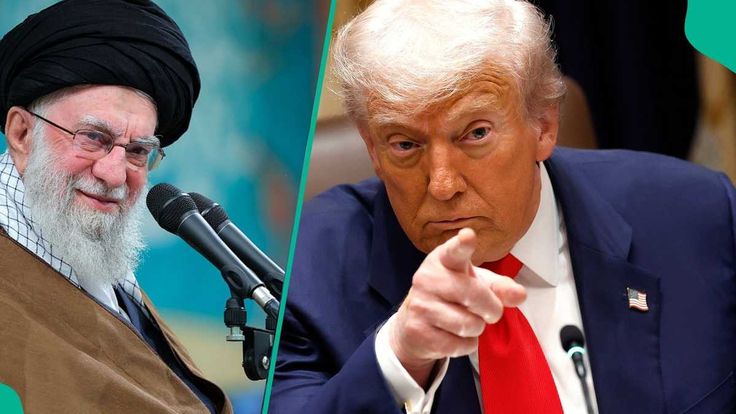
The seizure highlights the growing axis of cooperation among US-sanctioned nations. Venezuela and Iran, both founding members of OPEC and targets of severe US oil sanctions, have deepened their relationship out of mutual necessity. Iran has previously sent fuel tankers and refining components to help Venezuela overcome its severe domestic fuel shortages. The shipment in question, destined for Cuba, further underscores the solidarity among these anti-US governments, which view the seizures as an aggressive component of a coordinated economic war.
The Skipper operation serves as a warning not just to Caracas, but to Tehran and Havana, illustrating the US willingness to use force to disrupt this illicit cooperation.
Part V: Analysis and Future Trajectory
Journalistic Analysis: A Dangerous Precedent
The decision by the US Seizes Venezuela Oil Tanker operation, while legally defensible under US domestic statutes, establishes a dangerous precedent in international waters.
- Risk of Retaliation: The move drastically increases the risk of retaliation by Venezuela or its allies, either against commercial vessels in the region or US interests. Maduro’s rhetoric of “warriors” ready to “smash the teeth of the North American empire” suggests that the regime will not simply absorb the blow.
- Weaponization of Sanctions: For US adversaries, the kinetic seizure of a commercial vessel is perceived as the ultimate weaponization of US financial and military power. It confirms their belief that the US acts outside traditional international norms to enforce its unilateral domestic law globally, bolstering their arguments for seeking alternative, non-dollar-based trading systems.
- The Humanitarian Cost: The broader pressure campaign is being waged against a backdrop of severe humanitarian crisis in Venezuela. Critics argue that ramping up sanctions and military pressure only further punishes the Venezuelan people, whose quality of life has already been devastated by economic collapse and political mismanagement.
Conclusion: The Road Ahead After the US Seizes Venezuela Oil Tanker
The seizure of the Skipper is a landmark event in the US-Venezuela conflict. It represents the transition from economic strangulation to kinetic enforcement, turning the high seas into a new front line in a protracted geopolitical battle. The Trump administration has demonstrated its resolve to use its most powerful military assets to enforce its sanctions regime against the oil that fuels the Maduro-Iran-Hezbollah alliance.
The ultimate question remains whether this operation will achieve its stated goal: forcing a political transition in Venezuela. While the pressure is now immense, history suggests that authoritarian regimes often harden in the face of such external military threats. For the moment, the US holds the seized oil and the advantage, but Caracas holds the line, and the risk of a perilous escalation hangs heavily over the Caribbean.
The world watches closely to see if the maximum pressure campaign will finally achieve its objective, or if it will simply ignite a conflict that neither the US nor the region can afford.
🔗 External Sources and References
Treasury Tightens Sanctions on Iran’s Oil Network Supporting its Military – U.S. Department of the Treasury (OFAC) (Provides context on the sanctions against the ‘shadow fleet’ supporting IRGC-QF and Hezbollah, under which the Skipper was previously sanctioned).
Venezuela Accuses Trump Administration of ‘Piracy’ After Oil Tanker Seizure – TIME Magazine
US forces seize oil tanker in what Venezuela government calls ‘act of international piracy’– as it happened – The Guardian
Venezuela decries ‘act of piracy’ after US forces seize oil tanker off country’s coast – The Guardian
U.S. seizes ‘very large’ oil tanker off Venezuelan coast, Trump says – The Washington Post
Trump says the US has seized an oil tanker off the coast of Venezuela – Associated Press (AP)
Trump administration says it seized oil tanker off Venezuela coast – Al Jazeera
Tanker Seized By US Off Venezuela Was Part Of Iranian Shadow Fleet – Radio Free Europe/Radio Liberty (RFE/RL)
US says tanker it seized had shipped oil from Venezuela and Iran – Iran International
US seizes Venezuela oil tanker: How did the ship manage to keep its location hidden? Multiple trips to Iran reported – Times of India (Citing NYT, TankerTrackers)
The video below offers an insight into the broader US strategy of countering illicit maritime activity, which provides context for the tanker seizure.
One thought on “US Seizes Venezuela Oil Tanker: Piracy or Maximum Pressure? A Deep Dive into the Escalation of Tensions”