

The Boris Becker Wimbledon regret has become one of the most striking reflections in tennis history. While Becker’s victory as a 17-year-old at the 1985 Championships cemented him as a prodigy, the German legend now admits that the early success brought a level of pressure and expectation that shaped, and often burdened, his entire life and career.
Speaking to BBC Sport, the six-time Grand Slam champion revealed that being thrust into global fame as a teenager came at a personal cost — one that carried through his playing days, his post-retirement career, and even into his legal troubles decades later.
The making of the youngest Wimbledon champion
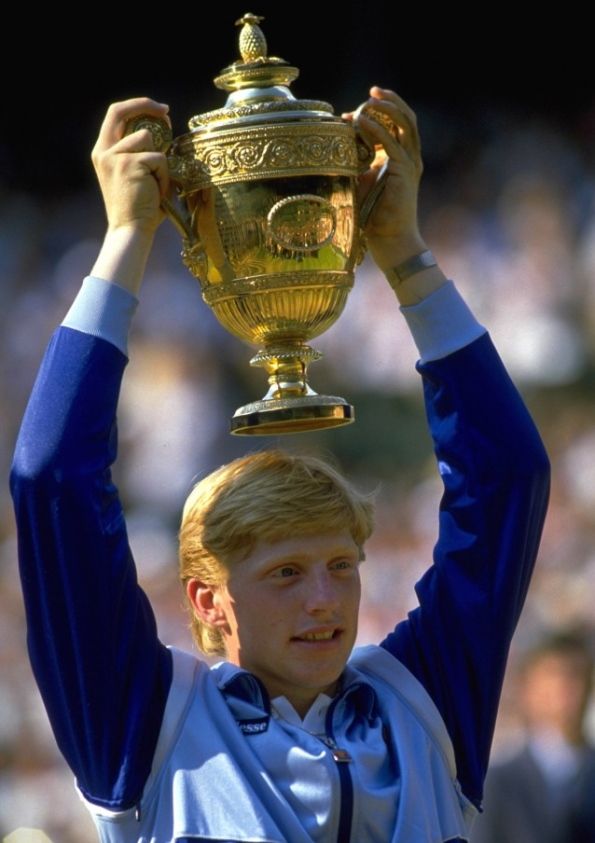
On July 7, 1985, Boris Becker defeated Kevin Curren in the Wimbledon final to become the youngest men’s singles champion in history at 17 years, seven months, and 15 days old.
Unseeded, raw, and full of fearless energy, Becker stormed through the draw with his powerful serve, booming volleys, and signature diving shots that captivated crowds. The victory was more than just a sporting triumph — it was a cultural moment. Becker instantly became a household name across the globe, a teenage wonderkid whose image graced newspapers and television screens far beyond the tennis world.
But as Becker himself now reflects, the triumph carried invisible baggage. “I was still a child,” he admitted. “Winning Wimbledon at 17 changed the road ahead tremendously.”
The double-edged sword of early fame
Becker’s admission highlights a common theme in sport: the overwhelming expectations placed on prodigies.
“Whatever you do, wherever you go, whoever you talk to, it becomes a world sensation,” Becker told BBC Sport. His rise to the top made him an instant superstar, but also stripped him of the privacy and gradual maturity most teenagers take for granted.
- Pressure to replicate success: Every match Becker played afterward was measured against his historic Wimbledon breakthrough.
- Constant media scrutiny: His private life, relationships, and lifestyle choices became tabloid fodder.
- The “wunderkind” curse: Becker himself pointed out that many young prodigies struggle to sustain long lives in the spotlight due to the mental and emotional strain.
While he went on to win five more Grand Slam titles — including two additional Wimbledon crowns — Becker concedes that his early win became both his greatest achievement and his heaviest burden.
A brilliant career overshadowed
Boris Becker retired in 1999 as one of the game’s greatest players. His achievements include:
- 6 Grand Slam titles (3 Wimbledon, 2 Australian Open, 1 US Open).
- 49 singles titles overall.
- A reputation for thrilling, all-out tennis that inspired generations of players.
Yet despite his brilliance on court, his off-court struggles became an inseparable part of his legacy.
- Financial troubles: Becker faced repeated financial crises, culminating in bankruptcy.
- Personal challenges: From high-profile relationships to media controversies, his private life often dominated headlines.
- Legal battles: In 2022, he was convicted in the UK for hiding assets worth £2.5m and sentenced to two and a half years in prison, of which he served eight months.
Looking back, Becker believes that his early fame and wealth played a role in these challenges. “I was too comfortable. I had too much money. Nobody told me ‘no’ — everything was possible. In hindsight, that’s the recipe for disaster,” he reflected.
Life in prison: watching Wimbledon from behind bars
Becker’s prison sentence was a dramatic fall from grace for the former champion. In his memoir, he describes prison life as one of the toughest periods he has ever faced. Yet even in confinement, tennis remained a lifeline.
In 2022, Becker found comfort in watching his former protégé, Novak Djokovic, win Wimbledon. Becker coached Djokovic between 2013 and 2016, helping him capture six Grand Slam titles. Seeing Djokovic triumph against Nick Kyrgios brought him unexpected solace.
“That was very inspirational for me and in the end very emotional for me,” Becker said. “My brother Novak is there and I’m in one of the worst prisons in the world. So it puts life into perspective.”
Becker’s second career: coach, pundit, survivor
After retiring from professional tennis, Becker transitioned into roles as a TV pundit and coach. His partnership with Novak Djokovic was one of the most successful coach-player collaborations of the past two decades. Djokovic credited Becker with helping him sharpen his mental game and close out tight matches at the highest level.
Beyond coaching, Becker has also become a reflective figure — writing books, giving interviews, and speaking about the pitfalls of fame, money, and decision-making. His willingness to take accountability for his past mistakes has made his recent reflections on Wimbledon even more poignant.
“You cannot change the past,” Becker said. “You can only change the future because you live in today.”
The shadow of Wimbledon 1985
For many fans, Wimbledon 1985 remains one of the most magical moments in tennis history. A teenager, unknown to most of the world, lifting the most prestigious trophy in the sport.
But for Becker, that same moment has become a shadow he could never quite escape. The expectations of greatness, the glare of fame, and the comparisons haunted every step of his journey.
His candid admission — that he might have been too young for such a victory — shines a new light on the burden of prodigious talent. It also raises broader questions:
- How should sports handle the rise of teenage superstars?
- What support systems exist for young athletes suddenly thrust into fame and wealth?
- Is early success truly a gift, or can it sometimes become a curse?
Becker’s legacy: triumph and turbulence
Today, Boris Becker’s legacy is a blend of triumph and turbulence. He remains one of the most exciting players ever to grace a tennis court, a pioneer who showed that boldness and youth could conquer Wimbledon.
At the same time, his struggles highlight the human side of sporting greatness. For every trophy lifted, there were lessons learned the hard way — about money, accountability, and resilience.
Becker may regret winning Wimbledon at 17, but that regret also reflects his maturity in acknowledging the complex costs of early fame. His story continues to serve as both inspiration and cautionary tale for the next generation of athletes.
Source: BBC Sport