The build-up to the 2026 T20 World Cup clash between India and Pakistan has been overshadowed by political strain, public controversy, and disciplinary action that have intensified India Pakistan T20 tensions beyond anything seen in recent years. What was once described as cricket’s fiercest sporting rivalry has now become deeply entangled with diplomatic conflict, national sentiment, and administrative standoffs.
The hostility traces back to the May 2025 cross-border conflict between the two nuclear-armed neighbors. Since then, cricket — the most passionately followed sport in South Asia — has increasingly mirrored the geopolitical climate.
Below is a detailed breakdown of the key incidents that have taken the rivalry from heated to historic crisis.
1️⃣ The Handshake Row That Sparked the Storm
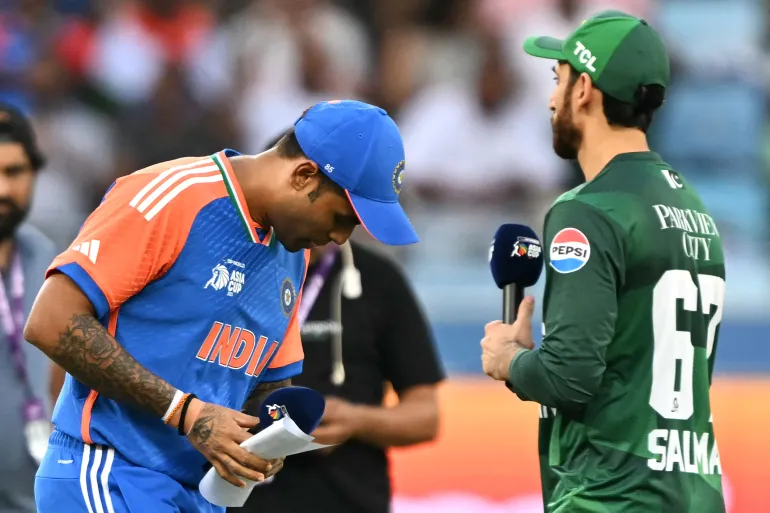
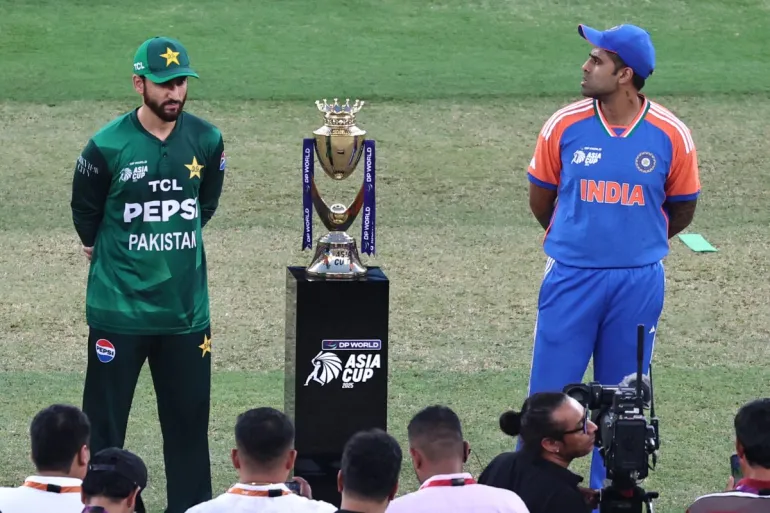
The first flashpoint came during the Asia Cup 2025 when India captain Suryakumar Yadav declined the customary pre-toss handshake with Pakistan captain Salman Ali Agha.
The controversy deepened after the match when Indian players walked off without participating in post-match handshakes. Pakistan’s squad reportedly waited on the field while the Indian team returned to the dressing room.
Yadav later confirmed the decision was deliberate, linking it to the April 2025 attack in Indian-administered Kashmir that preceded the May conflict. His comment — “A few things in life are above sportsman’s spirit” — immediately polarized public opinion.
For many, this moment marked the symbolic breakdown of cricketing diplomacy.
2️⃣ Pakistan’s Refusal to Take the Field
Just days later, the tension escalated. Pakistan refused to take the field against the UAE in protest against match referee Andy Pycroft, alleging he facilitated India’s no-handshake stance.
The match was delayed while negotiations occurred behind closed doors. Eventually, play resumed after clarification and apology, but the message was clear: cricketing protocol had become politically charged.
3️⃣ Verbal Spats and Gesture Controversy
When India and Pakistan met again in the Asia Cup, emotions spilled onto the pitch.
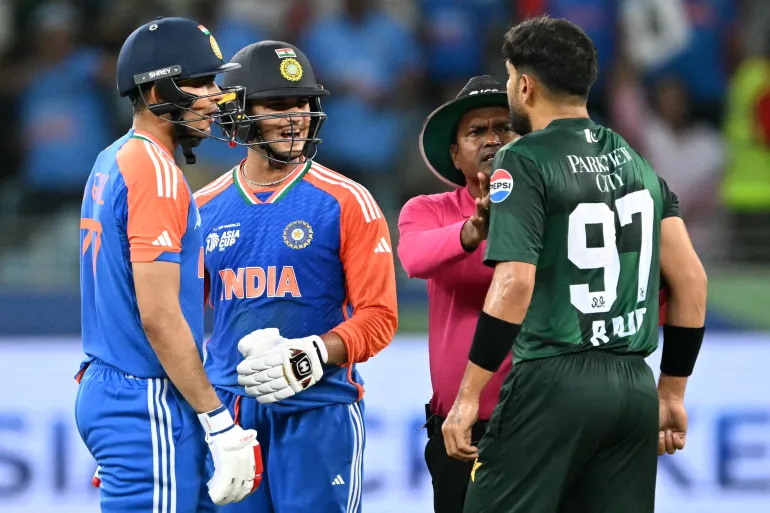
Fast bowler Haris Rauf exchanged heated words with Indian batter Abhishek Sharma. Sharma later stated he was motivated by the confrontational tone from Pakistani players.
Rauf also made gestures referencing military claims from the May conflict — actions that quickly drew international criticism.
Following the match, India’s cricket board lodged complaints with the International Cricket Council (ICC), while Pakistan filed counter-complaints regarding post-match comments from Yadav.
Cricket had officially crossed into symbolic battlefield territory.
4️⃣ Trophy Refusal in the Asia Cup Final
The controversy peaked in the Asia Cup final. After defeating Pakistan, India refused to receive the trophy because it was being presented by Mohsin Naqvi, who also serves as Asian Cricket Council president.
India celebrated symbolically without accepting the physical trophy.
The optics were dramatic — a championship decided on the field but contested at the podium.
5️⃣ Women’s Cricket Caught in the Crossfire
The ripple effects extended beyond men’s cricket. At the ICC Women’s Cricket World Cup 2025, India’s women’s team similarly avoided post-toss handshakes with Pakistan.
What had begun as an isolated decision now appeared institutional.
6️⃣ ICC Sanctions and Bans
Weeks later, the ICC announced sanctions.
- Yadav and Rauf were fined and given demerit points.
- Rauf later received a two-match ban.
- India pacer Jasprit Bumrah also received a demerit point for celebratory gestures referencing military imagery.
The ICC cited breaches of its code of conduct and actions “bringing the game into disrepute.”
Disciplinary action formalized what many feared — the rivalry had damaged cricket’s image globally.
7️⃣ Boycott Threat and Reversal Before T20 World Cup
In January 2026, Pakistan hinted at reconsidering participation in the T20 World Cup. On February 1, the government announced it would boycott the India match in solidarity with Bangladesh.
For the first time in a World Cup setting, a scheduled India-Pakistan match appeared at risk.
However, on February 9, Pakistan reversed its decision after diplomatic consultations involving other cricket boards. The match is now scheduled to proceed.
Why These India Pakistan T20 Tensions Matter
The India-Pakistan cricket rivalry has always been more than sport. Since partition in 1947, every encounter has carried symbolic weight. Yet historically, cricket often functioned as a bridge during diplomatic freezes.
The current phase represents something different.
Instead of easing tension, cricket is reflecting — and at times amplifying — political hostility.
Key concerns include:
- Tournament integrity: Boycott threats disrupt scheduling and competitive balance.
- Player safety: Heated atmospheres increase risks on and off the field.
- Commercial stakes: India-Pakistan matches are the highest-viewed cricket fixtures globally.
- ICC credibility: Governance bodies face pressure to remain neutral while maintaining discipline.
The Bigger Picture: Can Cricket Survive the Political Storm?
Despite the tension, there remains enormous anticipation for the upcoming T20 World Cup encounter.
Broadcasters expect record viewership. Sponsors remain invested. Fans on both sides continue to engage passionately — though often emotionally.
The question now is whether the match will serve as:
- A continuation of political messaging through sport
or - A reset moment where competition returns to the boundary ropes.
Historically, cricket between India and Pakistan has oscillated between diplomacy and disruption. The 2026 T20 World Cup may determine which direction it moves next.
The recent chain of events — handshake refusals, on-field gestures, trophy controversies, ICC sanctions, and boycott threats — has transformed this rivalry into one of the most politically sensitive chapters in cricket history.
As the teams prepare to meet in the T20 World Cup, the spotlight will not only be on runs and wickets — but on sportsmanship, diplomacy, and restraint.
Whether this match deepens the divide or begins healing it may define the future of India-Pakistan cricket relations for years to come.
This article is part of FFRNEWS Sports coverage analyzing geopolitical influences in global cricket. Reporting context adapted from coverage by Al Jazeera (12 February 2026) and ICC disciplinary updates.