
The Israel FIFA suspension debate is intensifying after the United Nations concluded that Israel committed genocide against Palestinians in Gaza. While international bodies, activists, and human rights experts are calling for FIFA and UEFA to suspend Israel’s football teams, FIFA’s main council has chosen not to place the matter on its official agenda. The decision has sparked anger, disappointment, and raised critical questions about the intersection of politics, human rights, and international sport.
FIFA Meeting Leaves Out Israel Sanctions
FIFA’s council meeting in Zurich this week was expected to be a key moment for discussing Israel’s role in international football. However, Israel’s suspension is not formally listed on the agenda. Officials noted that the matter could still be raised under “miscellaneous,” but the absence of a direct item signals FIFA’s reluctance to confront the issue.
This comes at a time when public pressure on FIFA has reached unprecedented levels. A UN commission of inquiry released last month concluded that Israel carried out four of the five genocidal acts defined under international law in Gaza since the outbreak of war in 2023. The findings triggered calls for accountability across all international platforms — including sports.
Amnesty International and UN Experts Demand Action
Amnesty International has formally urged FIFA and UEFA to suspend the Israeli Football Association (IFA), arguing that allowing Israel to compete in international tournaments is incompatible with human rights obligations. The UN Human Rights Council echoed these concerns, stating:
“Sports must reject the perception that it is business as usual.”
The Israel FIFA suspension debate underscores a long-running question: can football, the world’s most popular sport, ignore political realities when gross human rights violations are alleged?
FIFA Passes Responsibility to UEFA
FIFA Vice President Victor Montagliani has publicly stated that UEFA should take the lead in deciding whether to sanction Israel.
“First and foremost, [Israel] is a member of UEFA, no different than I have to deal with a member of my region for whatever reason. They have to deal with that,” Montagliani said.
This statement effectively shifts the burden away from FIFA, but critics argue it shows a lack of leadership. UEFA, meanwhile, is already under pressure as Israel continues to play in European competitions despite the ongoing genocide allegations.
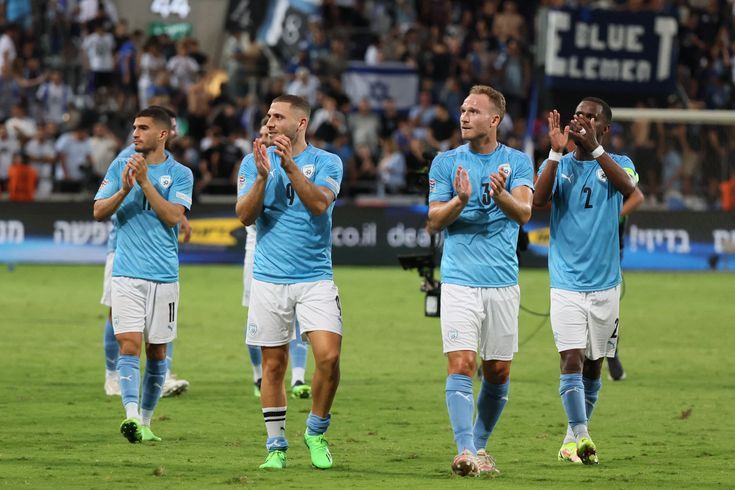
Currently, Israel’s national team sits third in their World Cup qualifying group, six points behind leaders Norway. Club side Maccabi Tel Aviv is actively competing in the Europa League, raising the stakes should sanctions be imposed.
Political Dimensions and U.S. Resistance
The Israel FIFA suspension debate is not limited to football governance. It has significant political implications, especially with the 2026 World Cup being co-hosted by the United States, Mexico, and Canada. The U.S. administration under Donald Trump has vowed to resist any attempt to block Israel from participating in the tournament.
This political backing complicates the situation further. Critics argue that FIFA risks appearing to bow to political pressure rather than upholding its own principles of neutrality and fairness.
Reebok Sponsorship Dispute Adds Fuel
The controversy has also spilled over into corporate sponsorship. Reports initially suggested that Reebok had demanded its logos be removed from Israel’s national team kits. However, both the company and the IFA denied the claims.
“We don’t do politics; we do sport,” Reebok stated, reaffirming its commitment to sponsor the Israeli team.
Nevertheless, the episode highlights how even global brands are being pulled into the Israel FIFA suspension debate, with reputational risks at play.
Can Sport Remain Neutral in the Face of Genocide?
The broader question looming over FIFA and UEFA is whether sport can ever truly remain neutral when allegations of genocide are involved. Human rights organizations argue that granting Israel continued participation effectively normalizes violations and undermines the values of fairness, equality, and justice.
The precedent exists: in the past, FIFA and other sports bodies have suspended nations such as South Africa during apartheid. For many campaigners, failing to act against Israel would expose a double standard and damage football’s credibility on the global stage.
Fans, Players, and Grassroots Voices
Supporters’ groups and grassroots football communities worldwide are beginning to weigh in on the Israel FIFA suspension debate. In several European cities, fans have staged protests calling for Israel’s removal from tournaments. Players, though more cautious, have privately expressed concerns that sport is being used to whitewash political realities.
The Palestinian Football Association, which has long campaigned against Israeli participation, argues that FIFA’s inaction directly undermines football’s stated mission to promote peace, inclusion, and human dignity.
What Lies Ahead
As FIFA’s council meeting progresses, the world is watching closely. Even if the suspension issue is not formally debated, the pressure on FIFA and UEFA will not go away. The Israel FIFA suspension controversy has already become a flashpoint in the broader conversation about human rights and global sport.
For FIFA, the question is no longer whether it can avoid the issue, but how long it can do so before credibility, legitimacy, and global trust in football governance are irreparably damaged.
Source: BBC Sport