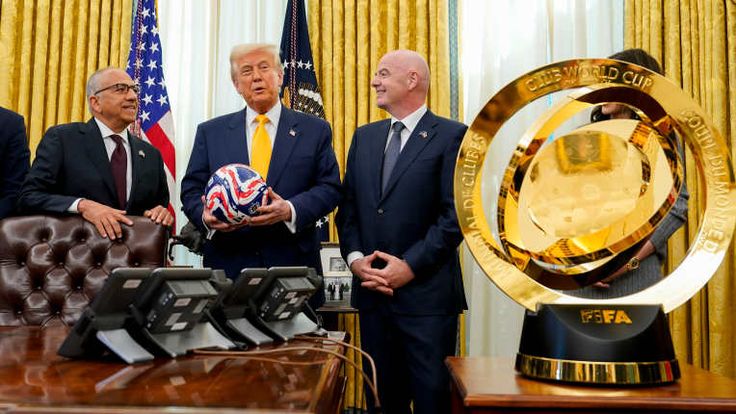
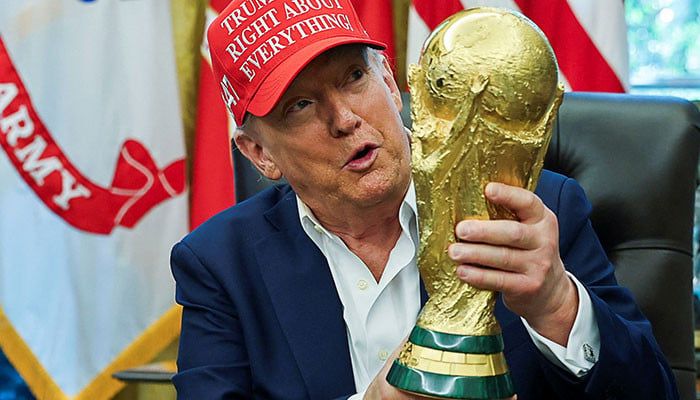
Trump World Cup move: President Donald Trump said on 26 September 2025 that he would consider moving 2026 FIFA World Cup matches away from U.S. host cities he believes are “unsafe,” singling out questions about Seattle and San Francisco. The comment — delivered to reporters in the Oval Office — escalates a sensitive intersection of sport, security and politics in the run-up to the largest soccer tournament ever staged in North America.
Trump’s remark is short on detail but long on implications. The 2026 World Cup will be co-hosted by the United States, Canada and Mexico across 16 U.S. cities (with the final in New Jersey). Matches already assigned to Seattle’s Lumen Field and Santa Clara’s Levi’s Stadium (near San Francisco) would be major logistical undertakings to move. Trump said his administration would “make sure they’re safe” and warned he would “move it out of that city” if he judged it necessary — a position that raises legal, practical and diplomatic questions about who can decide match venues and on what grounds.
Who actually decides World Cup venues?
Although the U.S. federal government can play a role in security coordination, FIFA — the sport’s governing body — is the official authority that sets tournament venues and match schedules. Any alteration to host-city allocations normally requires FIFA approval and extensive consultation with national and local organisers. Moving matches is therefore not a simple unilateral act by one actor, even a president, and would require negotiation among FIFA, local governments, the U.S. Soccer Federation, and other stakeholders.
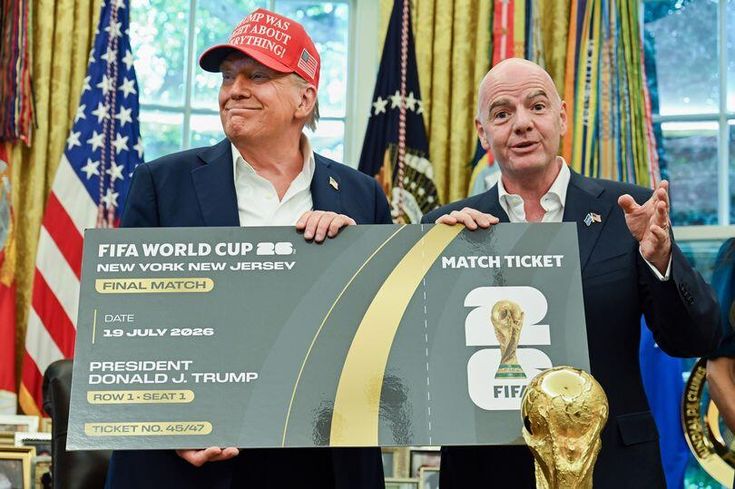
Trump’s close working relationship with FIFA President Gianni Infantino (referenced in his remarks) may give political theater added spice, but it doesn’t automatically translate into legal or procedural authority to reassign venues. In short: the optics of a president threatening to move matches are powerful; the on-paper mechanics are much more complicated.
Security vs. sovereignty: who calls the shots?
Trump framed the remark in security terms, pointing to actions like National Guard deployments in cities where he promised to “make it safe.” In the U.S., public safety is primarily a local and state responsibility — but the federal government can and does assist, especially for marquee international events. The Department of Homeland Security, FBI, and Secret Service can provide resources, intelligence, and coordination — but they typically work in concert with local law enforcement.
If the White House genuinely believed a city posed an unacceptable risk to fans, it could push for additional federal assistance or try to influence negotiations with FIFA. However, invoking safety to justify moving matches can be politically fraught: local officials, host city taxpayers and business owners would likely push back, and affected cities stand to lose millions in projected tourism and economic activity.
The logistical headache of moving matches
Relocating World Cup matches months (or even weeks) before kickoff is a major organizational challenge:
- Stadium availability: Alternate venues must meet FIFA’s technical standards and have availability during tight tournament schedules.
- Ticketing and travel: Already-sold tickets, travel plans, and accommodations for thousands of fans would be disrupted. Reallocating seats and reimbursing travelers is expensive and time-consuming.
- Broadcasting and sponsors: Broadcasters and commercial partners have contracts tied to specific markets; moving matches could trigger legal and commercial consequences.
- Security planning: Host-city security plans are multi-agency and months in the making. Recreating those plans elsewhere on short notice is difficult.
All these factors make abrupt venue changes costly and politically sensitive.
Political optics and domestic reaction
Trump’s comments explicitly framed certain cities as being run by “radical left lunatics,” language that is likely to inflame partisan tensions. Host cities and their governors — many of whom are from opposing political parties — would defend their records and push back if they felt the comments were politicizing sport or unfairly stigmatizing communities.
There’s also an international optics problem. The U.S. has emphasized that the 2026 World Cup will be a global festival welcoming fans from around the world. Threatening to relocate matches for political reasons would draw scrutiny from FIFA member associations, the international media, and host countries Canada and Mexico.
Economic fallout for affected cities
Host cities have already invested heavily in preparations: stadium upgrades, transport improvements, hospitality planning and security staffing. The expected economic windfall — tourist spending, global exposure, and legacy infrastructure — is substantial. Losing scheduled matches would directly reduce the economic benefits local governments and businesses were counting on. Even the perception of instability can dampen tourism and sponsor enthusiasm.
FIFA’s likely response
FIFA historically guards its authority over match assignments and tournament logistics. It’s likely to respond in a few ways:
- Reaffirm its control over the match schedule and insist on working through established processes.
- Request formal threat assessments and documentation before considering any change.
- Push back against ad hoc, politically motivated venue shifts to preserve tournament integrity and contractual obligations.
For FIFA, consistency and predictability are core to staging a successful global event. It will be wary of setting a precedent where political leaders can unilaterally force last-minute changes.
Precedents and legal footing
There are precedents for matches being moved for safety reasons — usually based on validated intelligence or on-the-ground assessments rather than political declarations. If the U.S. federal government genuinely assesses an imminent threat to public safety at a particular venue, that assessment could carry weight in FIFA deliberations. But “unsafe” is a broad term, and legal experts would scrutinize the basis for any forced relocation to guard against arbitrary or discriminatory decisions.
Fans, players and commercial partners caught in the middle
The groups most affected would be fans, players and commercial partners. Fans invest heavily in travel, tickets and time; moving matches would upend those plans and could generate intense backlash. Players and teams might also raise concerns about preparation and fairness, especially if moves alter travel schedules or rest days. Broadcasters and sponsors would expect compensation or renegotiation if the event changes in ways that affect audience reach or contractual deliverables.
What’s likely to happen
Realistically, an outcome that balances security concerns and tournament integrity is most probable. That could include:
- Enhanced federal support for cities Trump singled out (a boost in resources and visibility rather than relocation).
- Joint federal-local security assessments submitted to FIFA to demonstrate readiness.
- FIFA insistence on sticking to the approved schedule unless objective, independently verified intelligence justifies a shift.
In short: the political threat is headline-nabbing, but the path to actually moving matches would be administratively complex, legally fraught and diplomatically sensitive.
Bottom line
Trump World Cup move comments thrust an already high-stakes tournament further into political territory. While the president can pressure and coordinate, the authority to reassign sites rests primarily with FIFA and involves many stakeholders. For host cities, the immediate imperative will be to demonstrate robust safety plans and to work closely with federal partners — not only to protect fans, but also to preserve the economic and cultural benefits the World Cup promises.
Source: Al Jazeera