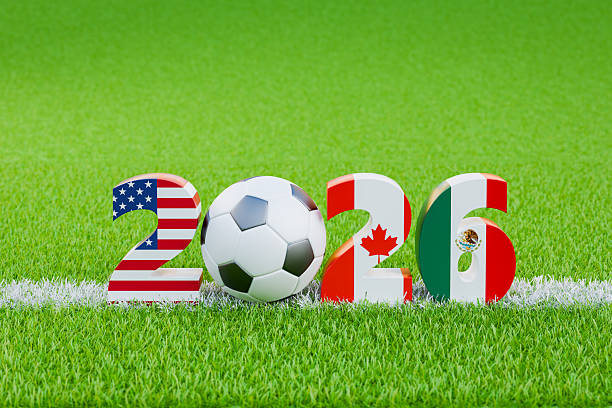
The FIFA World Cup 2026 is fast approaching, and excitement is building around the globe as continental qualifiers near their end. With the world’s biggest football tournament set to take place across the United States, Canada, and Mexico, fans and nations alike are preparing for what promises to be the largest World Cup in history — both in scale and in global participation.
Tournament Overview
For the first time ever, the FIFA World Cup will feature 48 teams instead of 32, making it the biggest edition since the tournament’s inception. This expansion means more nations will take part, new rivalries will form, and football fans will enjoy more matches spread over 39 days — the longest duration in World Cup history.
The opening match will take place on June 11, 2026, in Mexico City, while the grand final is scheduled for July 19, 2026, at MetLife Stadium in New Jersey, USA.
Qualification Update
As of now, 28 teams have secured their places for the FIFA World Cup 2026. Another 20 teams will qualify through ongoing continental competitions and intercontinental playoffs. These qualification campaigns have been intense, with big names like England, South Africa, and Qatar already booking their tickets to North America.
The European qualifying phase is still underway, while the intercontinental playoffs — the final opportunity for nations to secure a World Cup spot — will conclude on March 31, 2026, just a few months before kickoff.
Intercontinental Playoffs Explained
The intercontinental playoffs will involve six teams — one from each of FIFA’s six confederations that have not yet qualified. Two of these six teams will ultimately secure the last available World Cup berths. The playoffs promise dramatic showdowns and could feature nations from Africa, Asia, South America, Oceania, and CONCACAF.
The Draw Ceremony and Its Venue
Football fans won’t have to wait until all 48 teams are confirmed to experience the excitement. FIFA has announced that the official World Cup draw will be held on December 5, 2025, at the Kennedy Center in Washington, DC.
US President Donald Trump, flanked by Vice President JD Vance and FIFA President Gianni Infantino, confirmed the venue from the White House and hinted that he might personally oversee the event.
Host Nations and Stadiums
The 2026 World Cup is a truly continental affair, shared between three host countries — the United States, Canada, and Mexico.
- United States: The US will host matches in 11 cities — Atlanta, Boston, Dallas, Houston, Kansas City, Los Angeles, Miami, New Jersey/New York, Philadelphia, San Francisco Bay Area, and Seattle.
- Canada: Toronto and Vancouver will each host matches, totaling 13 games across the two cities.
- Mexico: Matches will be played in Mexico City, Guadalajara, and Monterrey, also accounting for 13 games in total.
Tournament Format: 48 Teams, 12 Groups
The new 48-team structure introduces 12 groups of four teams each. The top two teams from every group, along with the eight best third-placed teams, will advance to a newly added Round of 32 — marking an extra knockout round compared to previous editions.
This change effectively doubles the size of the knockout phase compared to the 1994 World Cup, which was last hosted by the US with only 24 teams.
Possible Venue Changes and Safety Remarks
President Trump has remained vocal about ensuring safety during the World Cup. He has suggested that games could be moved from certain US cities if deemed unsafe, naming Seattle and San Francisco as examples, labeling them as “run by radical left lunatics.” While controversial, the statement highlights the administration’s emphasis on security and logistics.
Weather and Stadium Conditions
The 2025 FIFA Club World Cup served as a test event for next summer’s tournament, revealing significant concerns about heat and thunderstorms during US summers. To mitigate these challenges, several stadiums — particularly in Arlington, Atlanta, and Houston — will utilize retractable roofs, while others, like those in Inglewood and Vancouver, feature fixed roofs to maintain stable playing conditions.
Defending Champions and the Road Ahead
Argentina, led by Lionel Messi, are the defending FIFA World Cup champions, having triumphed in Qatar 2022 by defeating France in a 4-2 penalty shootout after a thrilling 3-3 draw in extra time. The reigning champions will aim to retain their crown in 2026, but fierce competition from Brazil, England, and several emerging teams could make this one of the most unpredictable tournaments ever.
Confirmed Qualified Teams (as of October 2025)
Hosts:
- Canada
- Mexico
- USA
Asia:
- Australia
- Iran
- Japan
- Jordan
- Qatar
- Saudi Arabia
- South Korea
- Uzbekistan
Africa:
- Algeria
- Cape Verde
- Egypt
- Ghana
- Ivory Coast
- Morocco
- Senegal
- South Africa
- Tunisia
Europe:
- England
Oceania:
- New Zealand
South America:
- Argentina
- Brazil
- Colombia
- Ecuador
- Paraguay
- Uruguay
Teams Still in the Race
Africa:
Cameroon, the Democratic Republic of Congo, Gabon, and Nigeria will battle for one final intercontinental playoff spot in matches set for November 13 and 16, 2025.
Asia:
The UAE and Iraq will compete in a two-leg playoff on November 13 and 18, with the winner advancing to the intercontinental stage.
Europe:
Out of 54 European teams, 53 remain in contention for 16 World Cup berths, with matches running until March 2026. England has already qualified.
North, Central America and the Caribbean (CONCACAF):
While the hosts — USA, Mexico, and Canada — automatically qualified, three more direct qualification spots remain. Nations such as Costa Rica, Jamaica, Honduras, Panama, and Guatemala are still fighting through the final rounds, which conclude by November 18. The three group runners-up will contest for the region’s intercontinental playoff slot.
Oceania:
New Caledonia will represent the region in the intercontinental playoff round.
South America:
Bolivia has also earned a place in the intercontinental playoffs after narrowly missing out on the top six automatic qualifying positions.
Why This World Cup Will Be Historic
Beyond the record number of teams and matches, the 2026 World Cup represents a new era for football in North America. It’s the first time the tournament is jointly hosted by three nations, and it marks a major milestone in FIFA’s push to globalize the sport even further.
The economic impact across the host cities is projected to be massive, with billions expected to flow through tourism, broadcasting, and sponsorships. More importantly, this World Cup aims to leave behind a legacy of infrastructure development and football growth across the continent.
Looking Ahead
As the countdown continues, anticipation grows not only for the matches themselves but also for the cultural exchange that accompanies a tournament of this magnitude. Fans around the world will soon find out the full list of participating nations once all qualifiers conclude in early 2026.
From Mexico City’s Azteca Stadium to Vancouver’s BC Place and New York’s MetLife Stadium, the FIFA World Cup 2026 is poised to deliver a spectacular festival of football — one that celebrates the global spirit of the game like never before.
Source: Al-Jazeera