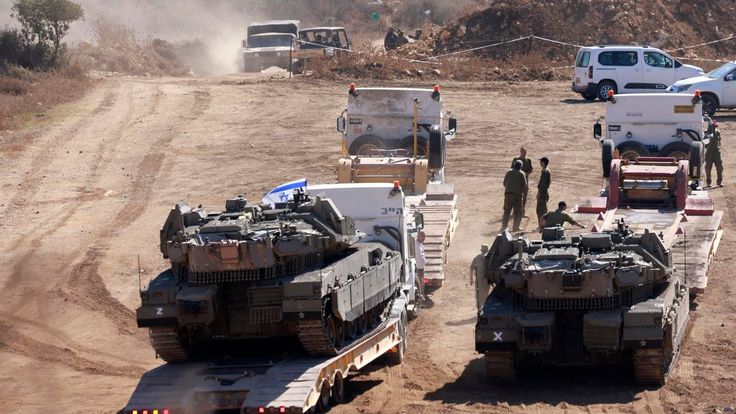
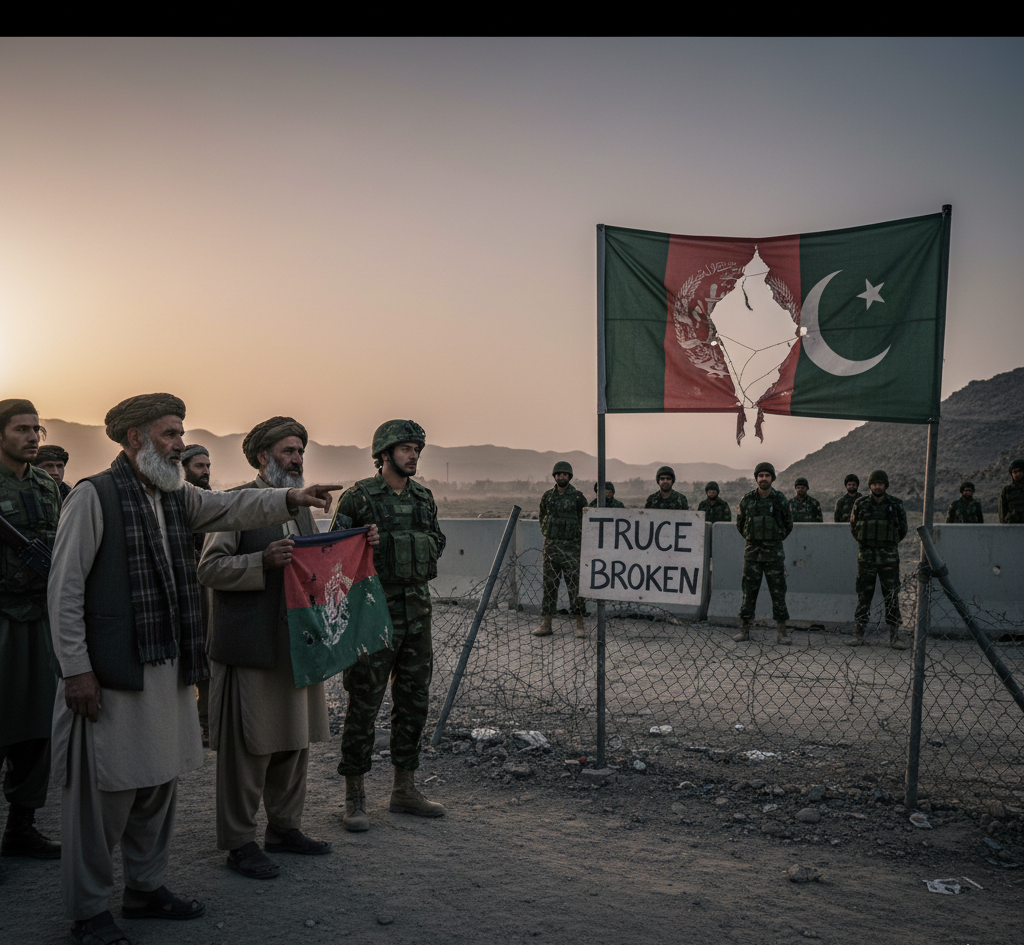
Afghanistan accuses Pakistan of breaking truce following a series of deadly airstrikes that shattered two days of relative calm along their tense border. The attacks, which Afghan officials say killed at least 10 civilians and wounded 12 more in the eastern province of Paktika, mark a major escalation between the two neighboring countries already on the brink of open conflict.
The ceasefire, which began on Wednesday and was meant to last 48 hours, had offered a brief pause after nearly a week of deadly border clashes. Dozens of soldiers and civilians had already lost their lives on both sides before the fragile truce was agreed upon. But as night fell on Friday, reports of explosions echoed through Paktika province, signaling that peace had once again been shattered.
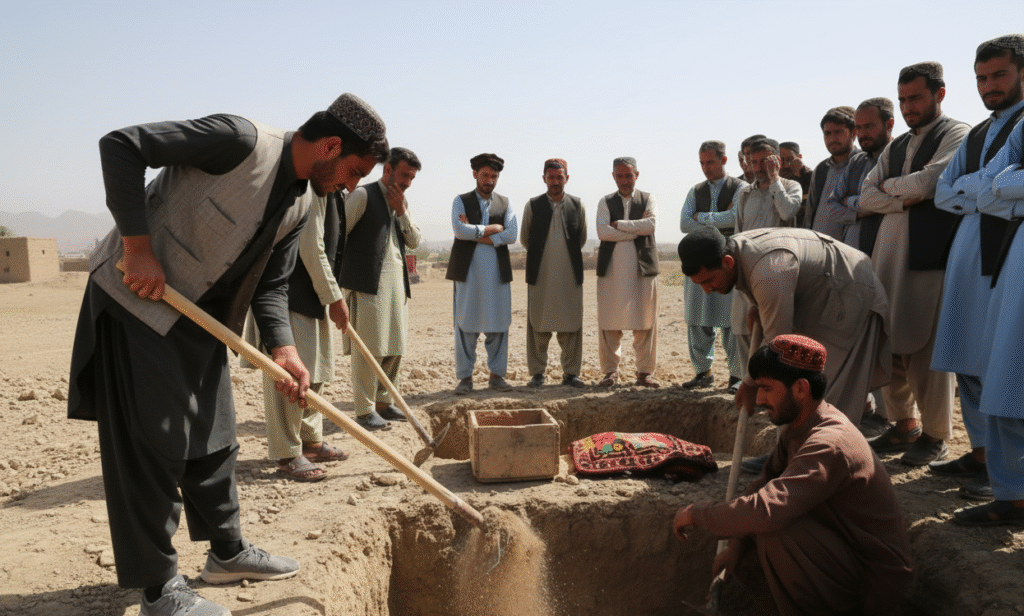
A senior Taliban official, speaking to AFP on condition of anonymity, confirmed, “Pakistan has broken the ceasefire and bombed three locations in Paktika. Afghanistan will retaliate.” Local health authorities said two children were among the dead, as families rushed to dig graves for the victims.
Images from the aftermath show men digging in the dusty ground, preparing graves for loved ones. “We only had two days of calm,” said one local villager. “Now we are back to fear and mourning.”
Crisis Talks in Doha Amid Rising Tensions
Afghan government spokesperson Zabihullah Mujahid confirmed that high-level negotiations between the two nations would take place on Saturday in Doha, Qatar. “As promised, negotiations with the Pakistani side will take place today in Doha,” Mujahid said in a statement.
Afghanistan’s delegation, led by Defence Minister Mullah Muhammad Yaqoob, departed for Doha early Saturday morning. Meanwhile, Pakistani officials confirmed that Defence Minister Khawaja Asif and intelligence chief General Asim Malik were also traveling to the Qatari capital for talks.
Despite these planned discussions, the atmosphere remains tense. Observers fear that the latest airstrikes could derail any prospects for peace, especially as both sides exchange blame for the escalating violence.
Cricket Board Confirms Deaths of Players in Airstrikes
Adding to the tragedy, the Afghanistan Cricket Board (ACB) confirmed that three of its players were among those killed in the attacks. According to an ACB statement, the athletes were “targeted during a gathering” in Urgun district when they returned home after a friendly match in Sharana, the capital of Paktika province.
“The ACB considers this a great loss for Afghanistan’s sports community, its athletes, and the cricketing family,” the board said. It also announced Afghanistan’s withdrawal from the upcoming Tri-Nation T20I Series with Pakistan, calling the decision “a protest against the unjust violence.”
Pakistan’s Response and Military Rationale
In response, a senior Pakistani security official told AFP that the strikes were “precision aerial operations” targeting the Hafiz Gul Bahadur Group, a faction linked to the Tehreek-e-Taliban Pakistan (TTP). The group, Islamabad claimed, was responsible for a suicide bombing and gun attack earlier this week on a Pakistani military camp that killed seven paramilitary soldiers.
Pakistan has repeatedly accused Afghanistan of harboring TTP fighters and providing them safe havens. The Afghan Taliban, however, strongly denies these allegations, saying Pakistan’s military operations are a violation of its sovereignty.
“The attacks were not counterterrorism operations—they were aggression,” said an Afghan security official. “Pakistan continues to use air power to send a message rather than seek peace.”
A Week of Escalating Violence
The latest attacks are part of an intensifying conflict that began earlier this month, following explosions in Kabul during the Taliban foreign minister’s visit to India. Pakistan’s military responded with heavy shelling along its southern border, while Taliban fighters launched retaliatory attacks in Spin Boldak and Khost provinces.
By midweek, dozens were reported dead, prompting both nations to agree on a temporary ceasefire. But before it could be extended, air raids reignited hostilities.
According to the United Nations Assistance Mission in Afghanistan (UNAMA), at least 37 people have been killed and more than 425 wounded on the Afghan side of the border since last Saturday. The UN called on both countries to “immediately de-escalate and protect civilian lives.”
Voices from the Ground: Fear and Fatigue
Residents in the border town of Spin Boldak described a mix of fear and resilience. “People have mixed feelings,” said Nematullah, a 42-year-old shopkeeper. “They fear that the fighting will resume, but they still go about their business.”
Another resident, Nani, 35, added, “Everything is fine now, but we don’t know for how long. Some families are sending their children away. We’ve lived through this too many times.”
The Road Ahead — Can Doha Deliver Peace?
The Doha talks mark the first high-level contact between the two governments since the recent escalation began. Analysts say both sides have much to lose if the conflict spirals further — Afghanistan risks economic and diplomatic isolation, while Pakistan faces instability in its already volatile border regions.
Regional experts suggest that mediation by Qatar or another neutral country may be necessary to prevent a full-scale border war. “This is not just a border issue; it’s about mistrust built over decades,” said political analyst Ahmad Khan. “The Doha meeting might be their last chance to pull back from the edge.”
As night falls again over Paktika, the mood remains grim. With more funerals planned and airstrikes still echoing near the frontier, many Afghans are left wondering whether peace will ever return — or if this fragile truce will only be remembered as another broken promise.
Source: Al Jazeera