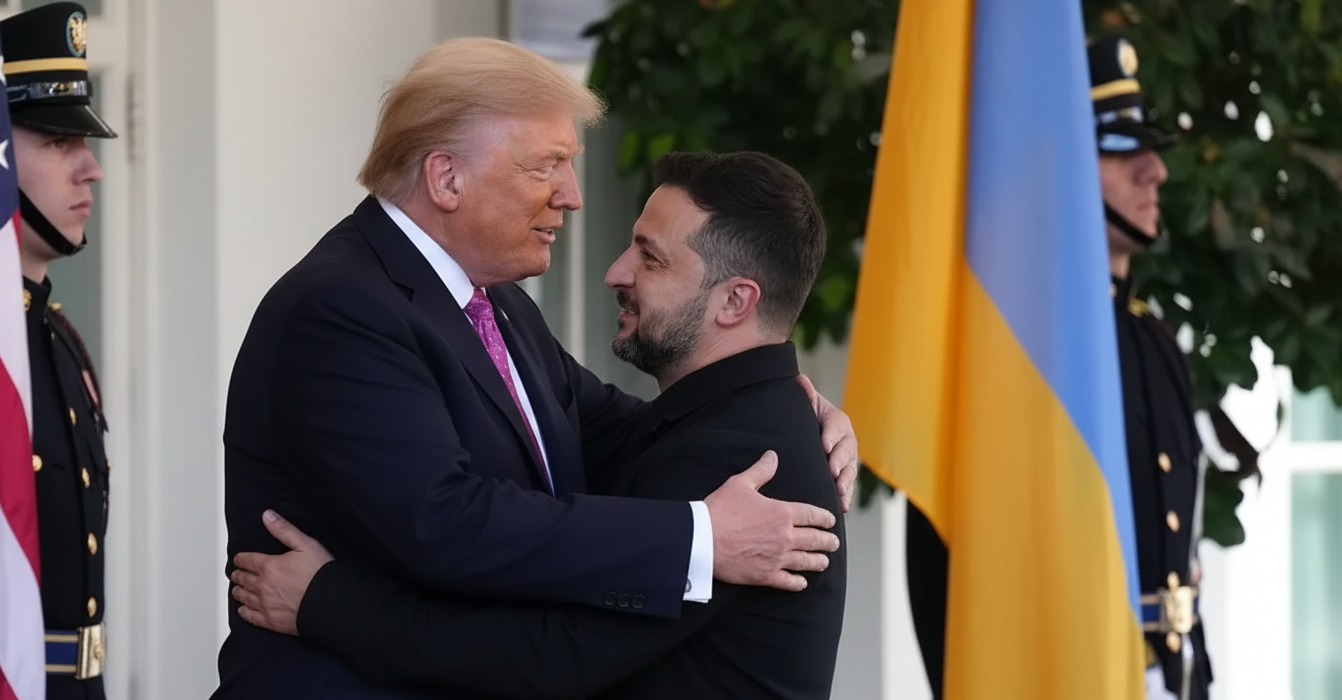
Zelensky fails to secure Tomahawk missiles in his latest attempt to gain stronger U.S. military support amid the ongoing war with Russia. The Ukrainian president met with Donald Trump at the White House on Friday, where the U.S. leader declined to commit to supplying long-range Tomahawk cruise missiles — a weapon Kyiv believes could significantly weaken Russia’s war economy by striking energy and oil infrastructure deep inside Russian territory.
Following the meeting, President Trump adopted a cautious tone, telling reporters that while discussions about supplying Tomahawks were ongoing, his administration did not want to take actions that could lead to further escalation. “Hopefully they won’t need it,” Trump said. “Hopefully, we’ll be able to get the war over without thinking about Tomahawks.”
He emphasized that the missiles were “a big deal” and that the U.S. needed to prioritize its own defense capabilities before providing such advanced weaponry to other nations. The president’s comments come just one day after his phone conversation with Russian President Vladimir Putin, during which both leaders agreed to meet soon in Hungary.
Trump’s Balancing Act Between Peace and Pressure
Trump’s recent diplomatic moves have been seen as part of a broader attempt to broker a new peace initiative between Russia and Ukraine. His call for both sides to “stop where they are” suggests a push for a temporary freeze along the current front lines rather than an immediate end to hostilities.
“Kyiv and Moscow should stop where they are,” Trump posted on social media shortly after the meeting. “It’s time to end the killing and start talking.”
This stance reflects Trump’s long-standing belief that negotiation — not escalation — is the path to resolving the war. However, it has also sparked criticism from some Western allies who fear that such a proposal could cement Russian territorial gains in Ukraine and undermine Kyiv’s sovereignty.
Zelensky’s Realistic Response
Zelensky described the meeting as “cordial and constructive,” though he admitted there had been no breakthroughs regarding missile supplies. “We talked about long-range missiles,” he said. “But we decided not to make public statements because the United States does not want an escalation.”
When asked if he believed Putin genuinely wanted peace or was merely stalling, Zelensky replied, “I don’t know. But I know that Russia fears the possibility of Ukraine having Tomahawks — it is a strong weapon.”
Pressed by reporters on whether he left Washington optimistic, Zelensky’s answer was simple: “I am realistic.”
His tone shifted when asked about Trump’s suggestion to stop the war along the existing front lines. “We have to stop where we are; he is right,” Zelensky said. “The next step is to speak.”

Drones for Missiles: A Proposal on the Table
In an unexpected moment during the meeting, Zelensky proposed that Ukraine could offer its advanced drone technology in exchange for Tomahawk missiles, an idea that reportedly drew smiles and nods from Trump.
Zelensky also praised Trump for his earlier diplomatic achievements, particularly the “first phase” of a peace deal in the Middle East, saying the U.S. president could use that momentum to mediate between Kyiv and Moscow.
Putin’s Warning and Trump’s Calculations
Russian President Vladimir Putin, meanwhile, has warned that any U.S. move to supply Tomahawk missiles to Ukraine would “further strain relations” with Washington. Despite this, Trump told reporters that his recent phone conversation with Putin was “very productive” and that both sides would send teams to continue talks next week.
The two leaders are expected to meet in Budapest, although no date has been finalized. When asked if he was worried Putin was simply “playing for time,” Trump replied, “I’ve been played all my life by the best of them, and I came out really well. So maybe he’s buying time, but I think he wants to make a deal.”
When questioned about whether Zelensky would be included in the Budapest talks, Trump acknowledged tensions between the two wartime leaders: “There’s bad blood between Putin and Zelensky,” he said. “We want to make it comfortable for everybody. We’ll be involved in threes, but it may be separated.”
European Reactions and Continued Support
After leaving Washington, Zelensky contacted several European leaders to brief them on his meeting with Trump. He wrote on X (formerly Twitter) that “the main priority now is to protect as many lives as possible, guarantee security for Ukraine, and strengthen all of us in Europe.”
UK Prime Minister Keir Starmer described his conversation with Zelensky as “productive,” reaffirming that Britain would “continue to send humanitarian aid and military support.”
While Europe remains firmly behind Ukraine, some officials in Brussels have expressed unease over Trump’s renewed dialogue with Putin, fearing that Washington’s shifting tone could undercut Western unity.
On the Ground in Ukraine: Hope and Heartbreak
Back in Kyiv, ordinary Ukrainians reacted to the news of the meeting with mixed emotions. The BBC interviewed Volodymyr, a small shop owner whose store was destroyed by Russian missile strikes last month.
“We appreciate all support,” he said, before tears filled his eyes. After composing himself, he added, “Truth and democracy will win, and all the terrorism and evil will disappear. We just want to live, we don’t want to give up, we just want them to leave us alone.”
For many Ukrainians, the failure to secure Tomahawk missiles represents not just a missed military opportunity, but a reminder of how fragile international support can be in wartime diplomacy. As Ukraine continues to resist Russian advances, the outcome of Trump’s forthcoming meeting with Putin in Hungary could prove decisive for the future of the conflict — and for Zelensky’s hopes of securing lasting peace.
Echoes of Uncertainty — The Future of U.S.-Ukraine Relations
The meeting between Trump and Zelensky highlights a delicate balancing act for the U.S. administration: supporting Ukraine’s defense while preventing escalation with Russia. Trump’s cautious approach underscores his belief that diplomacy, not firepower, will end the war — a strategy that may test Kyiv’s patience but could reshape the geopolitical landscape in Eastern Europe.
As the world watches and waits for the Budapest summit, one thing remains clear: the fate of Ukraine’s war effort may hinge not on missiles or drones, but on conversations behind closed doors — where diplomacy meets reality, and where the lines between peace and politics continue to blur.
Source: BBC News