The long-running standoff between Washington and Beijing over TikTok has reached a defining moment after the company confirmed it has finalised a deal to split its US operations from its global business, allowing the popular short-video app to continue operating in the United States.
The TikTok US deal ends years of political uncertainty that threatened to shut down the platform for nearly 200 million American users. The agreement restructures ownership, governance, data storage, and control of TikTok’s powerful recommendation algorithm — the core issue at the heart of US national security concerns.
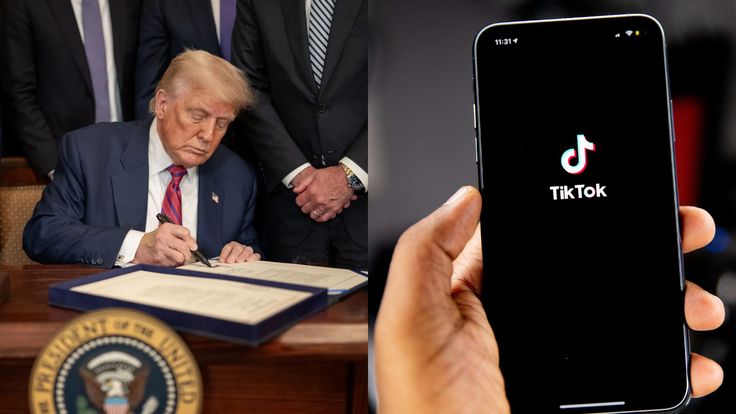
The announcement follows repeated delays by US President Donald Trump in enforcing legislation that would have banned TikTok unless its Chinese parent company, ByteDance, divested its American operations.
Why the TikTok US Deal Was Necessary
US scrutiny of TikTok dates back to Trump’s first term in 2020, when his administration attempted to ban the app over concerns that user data could be accessed by the Chinese government. While TikTok and ByteDance consistently denied those allegations, the issue gained bipartisan support in Washington.
Under President Joe Biden, pressure intensified. In 2024, Congress passed legislation requiring ByteDance to sell TikTok’s US business or face a nationwide ban. A prolonged legal battle followed, culminating in a brief blackout in January 2025 when the app went offline for American users for several hours.
The TikTok US deal ultimately emerged as a political compromise, preserving the platform while addressing data security and algorithm control concerns raised by lawmakers.
How the New TikTok US Structure Works
Under the agreement, TikTok’s American operations will now be run by a newly created entity called TikTok USDS Joint Venture LLC, which will function independently from ByteDance’s global business.
The company says the joint venture will be governed by a seven-member board of directors, with a majority of American members. Adam Presser, a former WarnerMedia executive, has been appointed chief executive of the US entity.
Ownership of the US business has been divided among several American and allied investors. Oracle, the US cloud computing giant chaired by Larry Ellison, holds a 15 percent stake and will play a central role in securing user data. Investment firm Silver Lake and Emirati technology investor MGX also each own 15 percent.
ByteDance will retain a minority stake of 19.9 percent, a figure designed to keep the Chinese parent company below thresholds that US lawmakers had flagged as unacceptable.
What Happens to TikTok’s Algorithm
The most sensitive issue in the TikTok US deal involves the app’s recommendation algorithm — often described as TikTok’s “secret sauce.” The algorithm determines which videos appear on users’ feeds and has been widely credited for the app’s explosive growth.
Under the agreement, ByteDance has licensed the algorithm to the US entity. TikTok says the system will now be trained exclusively on US user data, stored and secured within Oracle’s US-based cloud infrastructure.
The algorithm will no longer rely on global data pools, a shift designed to reassure US regulators that American user information remains insulated from foreign access.
Experts caution, however, that retraining the algorithm on US-only data could subtly alter the app’s performance. Some analysts predict changes in content discovery, engagement patterns, and the speed at which trends spread compared to TikTok’s global version.
What This Means for US TikTok Users
For everyday users, TikTok will continue to operate as normal in the short term. The app remains available on US app stores, creators can monetize content, and advertisers retain access to one of the largest digital audiences in the country.
Over time, users may notice differences in recommendations as the US-specific algorithm evolves. Industry specialists say the app could feel lighter or less globally interconnected, though TikTok insists the core experience will remain intact.
The company has framed the TikTok US deal as a long-term investment in stability, arguing that certainty will allow creators, advertisers, and businesses to plan without fear of sudden shutdowns.
Political Reactions in Washington and Beijing
President Trump praised the agreement on social media, calling it a victory that “saved TikTok” while protecting American interests. The White House has not issued a detailed policy statement, but administration officials have indicated that the deal satisfies national security requirements.
The Chinese government has historically resisted exporting sensitive algorithms, but signs of flexibility emerged last year when Beijing’s cybersecurity regulator suggested licensing arrangements could be permitted under certain conditions.
Neither the Chinese embassy in Washington nor ByteDance executives have publicly criticised the final deal, signaling quiet acceptance of the compromise.
Why the TikTok US Deal Matters Globally
Beyond the United States, the TikTok US deal sets a precedent for how governments may force technology companies to localise data, algorithms, and ownership structures.
Other countries have closely watched the case as debates intensify over digital sovereignty, data protection, and the power of global platforms. Analysts say the deal could encourage similar regulatory approaches in Europe, India, and parts of Southeast Asia.
At the same time, critics warn that fragmenting global platforms into country-specific versions risks undermining the open internet and creating uneven user experiences across regions.
Impact on TikTok’s Global Business Strategy
For TikTok’s global ambitions, the US deal represents both a relief and a constraint. While it preserves access to one of the company’s most valuable markets, it formalizes a split that could complicate product development and innovation.
ByteDance will continue operating TikTok internationally, but coordination between the US and global versions will now be more limited. Industry observers say this separation could reduce efficiency and slow the rollout of new features across regions.
Still, executives argue the alternative — losing the US market entirely — would have been far more damaging.
Broader Tech and Policy Implications
The TikTok US deal underscores a growing trend in global technology governance: platforms are increasingly expected to align with national political priorities rather than operate as borderless entities.
As governments tighten control over data flows and algorithms, tech companies may face rising compliance costs and structural fragmentation. TikTok’s experience could serve as a roadmap — or a warning — for other firms navigating geopolitical pressure.
This article is part of FFRNEWS Business coverage, based on reporting by the BBC, analysis of US technology policy developments, and broader discussions on platform regulation covered across FFRNEWS Innovation and FFRNEWS Business, examining how global tech companies adapt to evolving political and regulatory landscapes.