
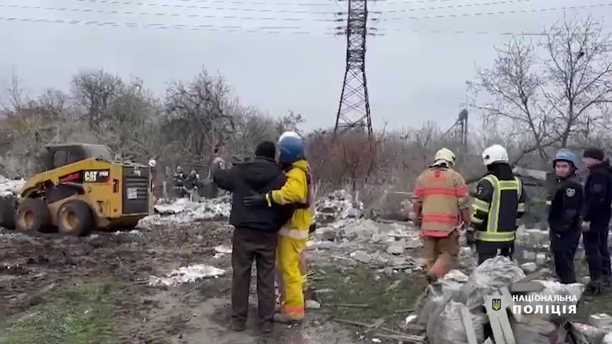
The latest Dnipro Strike Wave has marked a sharp escalation in the ongoing Russia-Ukraine conflict, as a massive overnight barrage of drones and missiles struck multiple cities across Ukraine. The coordinated attack killed at least seven people and caused widespread destruction, highlighting the increasing intensity of the war and its expanding regional implications.
Dnipro Strike Wave Hits Major Ukrainian Cities
The central city of Dnipro was the hardest hit during the Dnipro Strike Wave, where officials confirmed that at least five people were killed after a residential building was struck. Rescue teams worked through the night and into the morning, searching through collapsed structures for survivors.
Other regions also suffered significant damage. In Chernihiv, two people were killed, while strikes were also reported in Odesa and Kharkiv. Ukrainian authorities stated that civilian infrastructure—including homes, energy facilities, and businesses—was heavily targeted.
President Volodymyr Zelensky described the assault as lasting “practically all night,” emphasizing the scale and persistence of the attacks.
Scale and Strategy Behind the Dnipro Strike Wave
According to Ukrainian officials, more than 600 drones were launched during the Dnipro Strike Wave, making it one of the largest aerial assaults in recent days. While air defence systems intercepted the majority of incoming threats, the sheer volume allowed several strikes to reach their targets.
The attack combined drones, cruise missiles, and ballistic missiles—a tactic designed to overwhelm defence systems. This layered approach reflects evolving military strategies aimed at maximizing destruction and pressure on Ukrainian cities.
Russia, on the other hand, claimed it intercepted over 100 Ukrainian drones targeting its territory, suggesting that the conflict is increasingly becoming a two-sided aerial war.
Regional Tensions Rise Beyond Ukraine
The Dnipro Strike Wave also raised concerns beyond Ukraine’s borders. Romania reported that an unidentified object fell near its territory during the attack, triggering an official investigation.
In response, NATO scrambled British fighter jets, including Eurofighter Typhoon aircraft stationed in the region. Officials later confirmed that no drones entered Romanian airspace and no engagement was required.
Despite this, the incident highlights the growing risk of the war spilling into neighbouring countries, a scenario that could significantly escalate the conflict.
Ukraine’s Expanding Counterattacks
Ukraine has also stepped up its offensive capabilities. Reports indicate that Ukrainian drones struck deep inside Russian territory, targeting cities such as Yekaterinburg and Chelyabinsk—locations far from the frontline.
These long-range strikes injured civilians and hit infrastructure, demonstrating Ukraine’s increasing ability to project power beyond its borders. This development adds another layer to the Dnipro Strike Wave, turning the conflict into a broader strategic battle involving deep strikes on both sides.
Ground Conflict Continues Alongside Air War
While aerial warfare intensifies, ground operations remain active. Russia’s defence ministry claimed it had taken control of a village in the Kharkiv region, near Ukraine’s northern border. Ukrainian officials have not confirmed this claim, and independent verification remains unclear.
If confirmed, it would indicate that the Dnipro Strike Wave is part of a wider military push combining air assaults with territorial advances on the ground.
Diplomatic Efforts Remain Stalled
The escalation comes at a time when peace talks between Russia and Ukraine remain at a standstill. Despite international efforts to broker a ceasefire, no significant progress has been made.
President Volodymyr Zelensky has been actively seeking international support, including discussions with Mohammed bin Salman to strengthen defence cooperation. These talks reflect Ukraine’s push to secure advanced air defence systems and expand military partnerships.
Meanwhile, global interest in drone warfare capabilities has increased, particularly among countries looking to strengthen their own defence strategies in an increasingly unstable geopolitical environment.
Human Cost
Beyond military strategy and geopolitics, the human cost of the Dnipro Strike Wave remains devastating. Civilians continue to suffer the consequences of prolonged conflict, with homes destroyed, infrastructure damaged, and communities displaced.
In cities like Dnipro, emergency services are still searching for survivors, while many families face uncertainty about their future. The psychological toll of repeated overnight attacks adds to the already severe humanitarian crisis.
What the Dnipro Strike Wave Means Going Forward
The Dnipro Strike Wave represents a dangerous escalation in both scale and intensity. With both Russia and Ukraine expanding their offensive capabilities, the conflict is becoming more complex and unpredictable.
The involvement of neighbouring countries, increased NATO alertness, and the rise of long-range drone warfare all point toward a broader regional risk. As diplomatic efforts remain stalled, the likelihood of further escalation continues to grow.
For global leaders and analysts, the key challenge will be managing the risks associated with this evolving conflict while seeking pathways to de-escalation.
This report is based on updates from BBC News and is further supported by global conflict coverage from FFRNEWS and international security reporting.