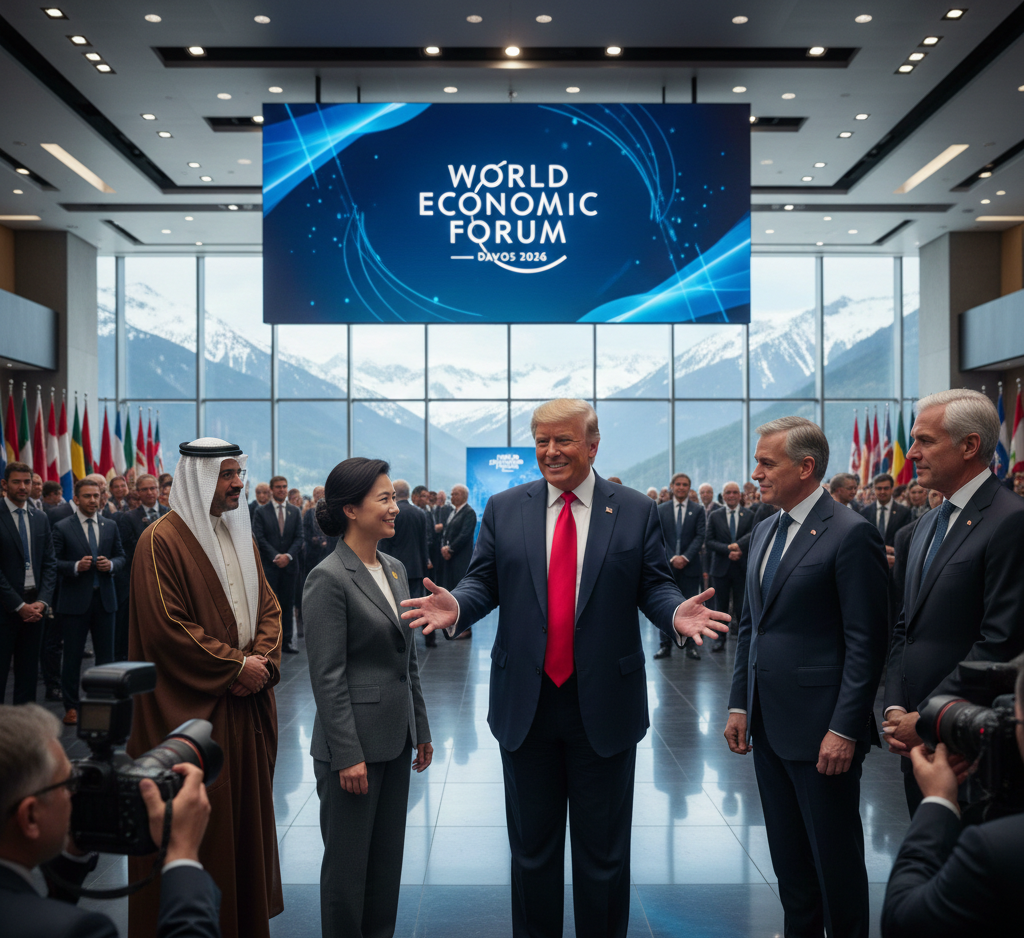
The Davos 2026 summit has officially begun in Switzerland, marking one of the largest gatherings of world leaders, policymakers, and corporate executives in the history of the World Economic Forum (WEF). Under the theme “A Spirit of Dialogue,” the meeting aims to foster collaboration on global economic growth, technological innovation, and the pressing geopolitical risks shaping 2026.
This year’s summit sees participation from nearly 65 heads of state and government, alongside 850 top corporate executives and almost 3,000 delegates from more than 130 countries, reflecting the event’s significance as a platform for global decision-making and policy coordination.
Global Economic Cooperation at the Core of Davos 2026
One of the primary objectives of the Davos 2026 summit is to strengthen economic cooperation between nations amid a rapidly shifting global landscape. Leaders are discussing strategies to stabilize international markets, address trade imbalances, and support sustainable growth following recent disruptions in energy, supply chains, and finance.
The forum emphasizes the importance of multilateral collaboration, with policymakers exploring frameworks that encourage equitable economic development while mitigating risks associated with inflation, currency volatility, and regional economic disparities.
Technology and Innovation on the Davos Agenda
Technology and innovation remain central to discussions at Davos 2026. Delegates are exploring how emerging technologies — including artificial intelligence, quantum computing, and green tech solutions — can drive economic development and solve global challenges.
Industry leaders and CEOs are presenting their visions for responsible AI deployment, sustainable infrastructure, and digital trade solutions, aiming to balance technological advancement with ethical and social responsibility. These discussions are particularly timely as the world navigates post-pandemic recovery, cyber threats, and the digital transformation of traditional industries.
Geopolitical Risks and International Collaboration
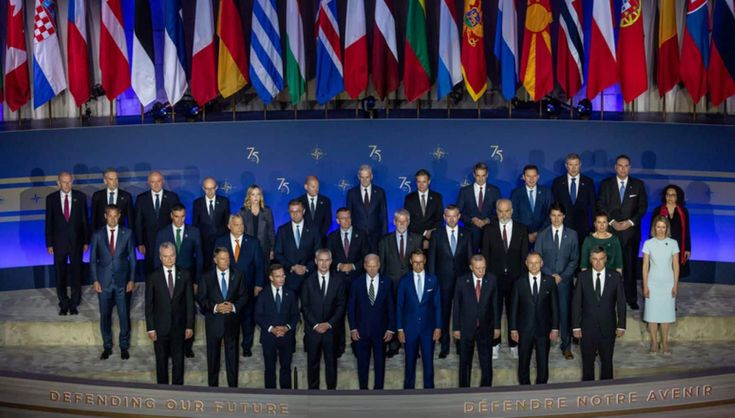
Global security and geopolitical tensions are also a focal point of the Davos 2026 summit. Leaders are addressing challenges ranging from trade conflicts to regional disputes and the potential erosion of international norms.
High-profile speeches, including interventions by key European leaders, stress the need for unity in maintaining global rules and cooperative structures that ensure peace and economic stability. Delegates are debating strategies to prevent further fragmentation in global governance while ensuring that technology, trade, and security policies align with shared international standards.
This article is based on a careful review of reports from multiple reliable sources covering the Davos 2026 summit. The World Economic Forum officially confirmed participation of over 65 heads of state and nearly 3,000 delegates, providing the framework for discussions on global economic and technological cooperation. Coverage by Al Jazeera highlighted the dates, location, and expected agenda, emphasizing the international importance of the gathering. Reuters and the Economic Times reported on statements from European leaders about geopolitical risks and the need for multilateral solutions, underscoring how the summit is shaping global dialogue. These combined sources ensure that the reporting reflects both official WEF announcements and independent journalistic analysis, giving a complete picture of the event’s significance. (FFR news)
Why Davos 2026 Matters
The Davos 2026 summit is not just a meeting of elite leaders; it is a strategic platform that can influence global economic policies, international collaboration, and technological development for the coming year. The discussions taking place in Switzerland this January will ripple through markets, businesses, and governments worldwide, making the insights and decisions emerging from Davos 2026 critical for 2026 and beyond.