A new NATO rift shock has emerged after reports claimed that the United States considered possible measures against Spain over its stance in the ongoing Iran war. The controversy began after a leaked internal Pentagon email suggested that Washington was exploring ways to pressure allies it believed were not fully supporting its military operations.
However, the North Atlantic Treaty Organization has firmly clarified that there is no legal mechanism to suspend or expel any member state. Officials emphasized that under the founding treaty of NATO, all member countries remain permanently part of the alliance regardless of political disagreements.
The report, first cited by Reuters, sparked widespread debate about unity within NATO at a time when global tensions are already elevated due to the Iran conflict and shifting geopolitical alliances.
Spain Rejects Claims as NATO Rift Shock Deepens
The NATO rift shock intensified after suggestions that the United States could target Spain for refusing to allow its military bases to be used in strikes related to the Iran war. Spain has consistently maintained that its territory will not be used for offensive operations without strict adherence to international law.
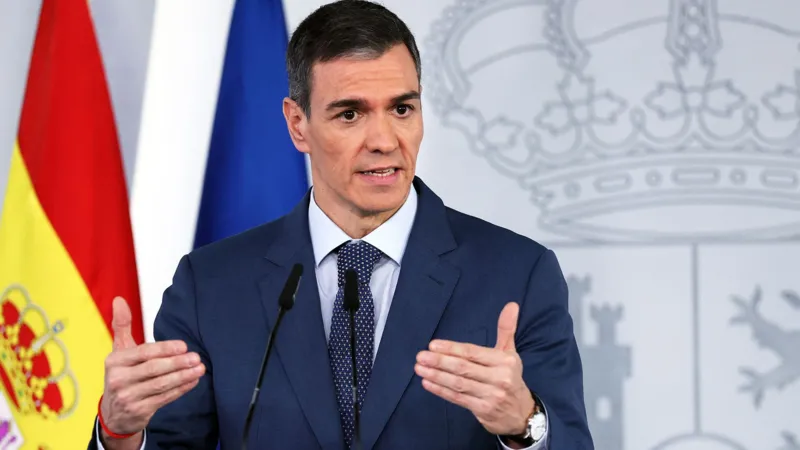
Spanish Prime Minister Pedro Sánchez dismissed the report, stating that his government operates only on official communications, not leaked internal discussions. He reaffirmed that Spain supports cooperation with allies but strictly within legal frameworks.
Spain’s position highlights a growing divide within NATO over the extent of involvement in the Iran conflict, with some members supporting direct engagement and others advocating restraint.
US Criticism Fuels NATO Rift Shock Narrative
The NATO rift shock narrative has also been fueled by repeated criticism from US officials regarding European allies’ level of support. US Defence Secretary Pete Hegseth publicly stated that Europe must take greater responsibility for security operations linked to the Iran war and the strategic Strait of Hormuz.
He argued that European nations have long benefited from American protection but are not contributing equally to current military demands. These remarks have added pressure on already strained transatlantic relations.
Former US President Donald Trump has also previously described NATO as a “one-way street,” reinforcing concerns that Washington may reconsider how it engages with allies during ongoing conflicts.
NATO Rules Leave No Room for Expulsion
Despite rising tensions, officials reiterated that NATO membership is permanent. According to alliance rules, there is no provision for suspension or expulsion of any member state, regardless of political disagreements or policy disputes.
This clarification was reinforced by NATO officials responding directly to the NATO rift shock reports, stating that the alliance’s structure is built on collective security commitments rather than conditional membership.
Even amid internal disagreements, NATO continues to function as a unified military alliance, with shared obligations under its founding treaty.
Broader Geopolitical Impact of NATO Rift Shock
The NATO rift shock comes at a sensitive moment in global politics, as tensions surrounding the Iran war continue to influence international alliances. Countries within NATO remain divided over levels of military involvement, access to bases, and strategic responsibilities.
Some European leaders, including Italy’s Prime Minister Giorgia Meloni, have called for unity and stronger coordination within the alliance, emphasizing that NATO remains a critical source of collective strength.
Meanwhile, Germany and other members have reaffirmed Spain’s continued role in the alliance, rejecting any suggestion that its membership could be questioned.
Falklands Mention Adds Diplomatic Sensitivity
Adding further complexity to the NATO rift shock situation, reports also suggested that internal US discussions briefly referenced reassessing diplomatic positions on long-standing territorial disputes such as the Falkland Islands, claimed by both United Kingdom and Argentina.
While officials clarified that such ideas were not formal policy proposals, the mention highlighted the wide-ranging nature of internal strategic debates within US defense circles.
This report is based on official statements from NATO and government responses from Spain, along with reporting from BBC News and Reuters. Additional context from US defence officials and European allies was used to reflect ongoing NATO debates linked to the Iran conflict. This article is published in line with FFRNEWS global coverage standards for verified international reporting.