

Updated by FFRNews on November 4, 2025
Typhoon Kalmaegi Flooding Kills More Than 40 in the Philippines as relentless rainfall and high winds battered the central islands, triggering flash floods, landslides, and a tragic military helicopter crash. The catastrophic weather event has left communities submerged, rescue operations overwhelmed, and at least 46 people confirmed dead.
Massive Flooding Submerges Cebu and Surrounding Provinces
Floodwaters engulfed entire neighborhoods on Cebu Island, trapping residents on rooftops and submerging vehicles overnight. Local authorities reported that at least 39 deaths occurred in Cebu alone, while one fatality was recorded on nearby Bohol Island.
Witnesses described scenes of panic as rivers burst their banks and streets turned into raging torrents.
“The water rose so fast,” said Don del Rosario, a 28-year-old resident of Cebu City. “By 4:00 a.m., it was already uncontrollable — people couldn’t get out of their houses. This is the worst flood we’ve ever experienced.”
Provincial Governor Pamela Baricuatro declared the situation “unprecedented,” saying the province had not anticipated such extreme flooding despite storm warnings. “We were expecting the winds to be the dangerous part,” she said on Facebook. “But the floodwaters are just devastating.”
Tragic Helicopter Crash Kills Six Rescuers
Adding to the tragedy, a Philippine Air Force Huey helicopter crashed during a humanitarian mission in Agusan del Sur, Mindanao. All six people on board — part of a disaster relief and rescue team — were killed.
Military officials confirmed that the helicopter was delivering emergency supplies to flooded communities when communication was lost. Search teams later recovered the bodies and debris in a mountainous area.
“They were heroes in every sense,” said Defense Secretary Gilbert Teodoro, expressing condolences to the families of the crew. “They gave their lives trying to save others.”
Torrential Rains and Record Flooding
Meteorologists reported that 183 millimeters (7 inches) of rain fell within 24 hours before Kalmaegi made landfall, surpassing the monthly average of 131 millimeters. The deluge overwhelmed drainage systems and caused rivers to overflow in several towns.
According to Charmagne Varilla, a state weather specialist from PAGASA, the national weather agency, “Kalmaegi’s intensity combined with saturated soil created perfect conditions for widespread flooding and landslides.”
Evacuations and Ongoing Rescue Efforts
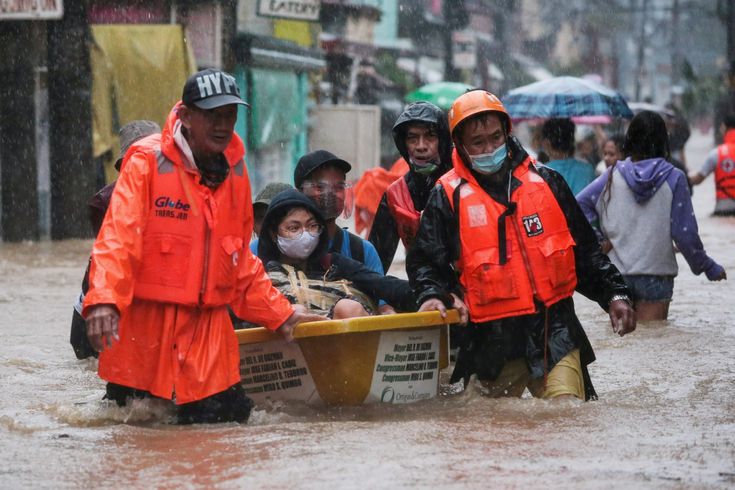
The Philippine Coast Guard and Red Cross have deployed rescue boats to evacuate stranded families from inundated homes across the Visayas region, including parts of southern Luzon and northern Mindanao. Tens of thousands have been forced to flee to temporary shelters.
Images released by the Philippine Coast Guard showed emergency responders carrying residents through waist-deep floodwaters in Talamban, Cebu City. Red Cross volunteers also distributed food and water to families trapped for more than 12 hours without power or communication.
Typhoon Weakens but Continues to Lash the Region
Although Typhoon Kalmaegi — locally named Tino — has weakened slightly, it continues to lash the Philippines with sustained winds of 120 km/h (75 mph) and gusts reaching 165 km/h (102 mph). PAGASA forecasts the storm will move westward across the Visayas before exiting into the South China Sea late Wednesday or early Thursday.
“Due to interaction with the terrain, Tino may slightly weaken while crossing the Visayas,” PAGASA said in its latest bulletin. “However, it is expected to remain at typhoon intensity throughout its passage.”
Previous Storms Highlight Philippines’ Climate Vulnerability
The Philippines experiences an average of 20 typhoons annually, many of which hit the same regions repeatedly. In September, Super Typhoon Ragasa killed at least three people and forced thousands to evacuate from Northern Luzon.
Experts say that climate change is making storms like Kalmaegi more unpredictable and destructive, particularly for low-lying and densely populated provinces.
“We are witnessing a pattern of stronger storms forming faster,” said a climatologist from FFRNews Climate Desk. “It’s a clear warning that infrastructure and emergency response systems need urgent modernization.”
Government Declares State of Calamity
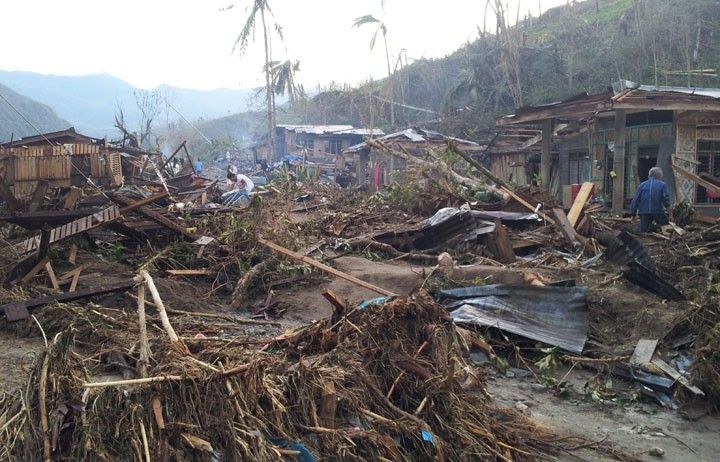
Local governments in Cebu and neighboring provinces have declared a state of calamity, allowing emergency funds to be used for rescue, recovery, and rehabilitation efforts. Schools, airports, and ports remain closed as authorities continue to assess the damage.
President Ferdinand Marcos Jr. expressed his condolences to the victims and directed the Department of Social Welfare and Development (DSWD) to expedite relief operations. “We will ensure that no family is left behind during this difficult time,” he said in a televised statement.
Regional Impact and Future Path of the Typhoon
Meteorologists predict Typhoon Kalmaegi will make landfall in Vietnam’s central provinces late Thursday, where floods have already killed at least 40 people and left six missing. The storm’s remnants could bring heavy rainfall to Laos and southern China.
The ASEAN Humanitarian Coordination Centre has issued a regional warning, urging neighboring countries to prepare for potential after-effects, including landslides and river flooding.
Lessons from Kalmaegi
Environmental experts warn that the Philippines’ vulnerability to storms will continue unless long-term adaptation strategies are implemented. These include stronger flood defenses, early-warning systems, and strict zoning laws to prevent construction in high-risk flood zones.
“Typhoon Kalmaegi Flooding Kills More Than 40 in the Philippines is not just a headline — it’s another reminder that resilience must be built now,” said an official from the National Disaster Risk Reduction and Management Council (NDRRMC).
For further coverage of disaster response, climate impacts, and global resilience efforts, visit the FFRNews Politics Section.
Read the original report and detailed coverage at Al Jazeera.