
Brazil has been left reeling after a massive Brazil Rio favela police raid resulted in the deaths of 132 people in Rio de Janeiro’s impoverished neighborhoods. The operation, the deadliest in the country’s history, has ignited widespread outrage, protests, and international condemnation — with residents calling the event a “slaughter” and human rights groups demanding accountability.
The predawn assault, which took place on Tuesday, was described by officials as a long-planned effort targeting the powerful Comando Vermelho (Red Command) gang, one of Brazil’s oldest and most organized criminal factions. But what authorities called a “success” has instead become a humanitarian and political crisis, exposing Brazil’s enduring struggle with violence, inequality, and unchecked police power.
A Predawn Ambush Turns to Massacre
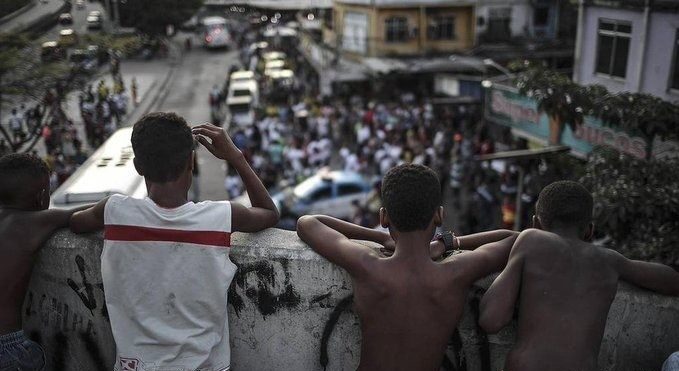
According to state police, the operation was months in the making. Officers launched the Brazil Rio favela police raid before sunrise, arriving on foot and in armored vehicles to storm the densely populated Penha Complex and Alemão Complex neighborhoods. These areas have long been under the control of Red Command, whose influence stretches from Rio’s prisons to the Amazon region.
The plan, police said, was to drive gang members into a forested hillside where special operations units lay in wait. However, what followed was an explosion of gunfire that lasted hours. Residents awoke to chaos — helicopters overhead, armored cars blocking exits, and homes riddled with bullets.
By morning, hundreds of residents gathered to collect the bodies of their neighbors. Videos circulating online showed families weeping over victims laid out in streets and alleys. “This wasn’t a raid. It was a slaughter,” one witness told reporters.
Authorities initially reported fewer than 60 deaths, including four police officers. But Brazil’s public defender’s office, which represents low-income citizens, later revealed the true toll: 132 fatalities. The office called for an immediate investigation into what it described as “a massacre unprecedented in modern Brazilian history.”
President Lula ‘Horrified’ by Death Toll
The shocking scale of the Brazil Rio favela police raid caught even Brazil’s top officials off guard. President Luiz Inácio Lula da Silva reportedly learned of the operation only after it had concluded. According to Justice Minister Ricardo Lewandowski, the president was “astonished” and “horrified” that the federal government had not been informed or asked to cooperate beforehand.
On social media, Lula condemned the violence, writing: “Organized crime continues to destroy families, oppress residents, and spread drugs and fear. But security operations must protect, not massacre, our citizens.”
Justice Minister Lewandowski, visiting the northeastern state of Ceará, called the raid “very bloody” and offered condolences to the families of “innocent people” who lost their lives.
Governor Defends the Operation
Despite the growing outcry, Rio de Janeiro Governor Claudio Castro, a right-wing ally of former President Jair Bolsonaro, praised the operation as a “historic success.” In a video posted on X (formerly Twitter), Castro said the raid was “a victory in the fight against crime in Rio de Janeiro.”
However, his statement triggered further anger. Protesters gathered outside the state government headquarters, holding signs reading: “Assassins!” and “Castro, terrorist!”
Brazil’s Supreme Court Justice Alexandre de Moraes has since ordered Governor Castro to provide a detailed report of the operation. A hearing involving the governor, the heads of the military and civil police, and federal officials is scheduled for Monday in Rio.
Bodies in the Streets and Protests Across Rio
The aftermath of the Brazil Rio favela police raid has been devastating. On Wednesday, residents of the Penha Complex laid dozens of bodies in a city square as an act of protest. They shouted “justice!” while waiting for forensic authorities to retrieve the remains.
Schools in the affected districts were closed, local universities canceled classes, and several roads were blocked off due to ongoing unrest. Many small businesses also shut down in solidarity with the victims’ families.
Journalist Rafael Soares, who has covered Rio’s criminal networks for years, said the Red Command has been regaining power in recent months after losing ground to its rival, the First Capital Command (PCC). “What happened in Penha is a reflection of a deeper territorial war — and civilians are caught in the crossfire,” Soares told the BBC.
Weapons, Drugs, and Disputed Numbers
Governor Castro’s office stated that the operation resulted in the seizure of 118 weapons and more than one tonne of drugs. However, human rights organizations and local journalists have questioned the accuracy of those claims, suggesting the state is exaggerating to justify the extreme level of force.
Eyewitnesses allege that police executed unarmed suspects and tampered with evidence. Several survivors said they saw officers transporting bodies away from the scene in trucks before forensic teams arrived — a violation of Brazilian law.
“These numbers don’t match the reality we’re seeing,” said a local community leader. “Most of the people killed were residents, not gang members.”
A Bloody Pattern in Brazil’s Policing
This is not the first time that Rio’s police have been accused of excessive force. Brazil has a long and painful history of deadly raids in favelas.
- In 2021, police killed 29 people in a raid on the Jacarezinho neighborhood.
- In 2022, another large-scale operation in the Alemão Complex left 19 dead.
- In 1992, 111 prisoners were killed in the infamous Carandiru Penitentiary massacre in São Paulo.
According to the Brazilian Public Security Forum, police in Rio de Janeiro alone were responsible for nearly 20% of all homicides in the state last year.
Global Condemnation and Calls for Accountability
The United Nations High Commissioner for Human Rights condemned the Brazil Rio favela police raid, with spokesperson Marta Hurtado urging Brazil to end its “cycle of extreme brutality.”
“We fully understand the challenges of confronting violent, well-organized groups such as Red Command,” Hurtado said. “But law enforcement operations must comply with international standards regarding the use of force.”
Similarly, Human Rights Watch director Cesar Muñoz called the deaths a “tragedy” and criticized Brazil’s recurring pattern of lethal policing. “These repeated operations don’t make the population safer — they create more insecurity and fear,” he said.
A Nation Divided Ahead of Elections
The timing of the Brazil Rio favela police raid has intensified political tensions ahead of Brazil’s 2026 national elections. Security remains one of the country’s most polarizing issues.
A recent survey by Paraná Pesquisas, a national polling agency, found that nearly 50% of Brazilians believe public safety has deteriorated under Lula’s presidency. Opposition lawmakers seized on the massacre to attack the president, accusing him of being sympathetic to criminals.
Right-wing deputy Gilvan da Federal mocked Lula in Congress, saying: “The traffickers’ president must be upset — he lost voters in Rio.”
Meanwhile, social movements, clergy members, and community organizations are calling for international observers to monitor police activity in Brazil’s urban areas.
What Happens Next?
As outrage grows, Brazil’s Supreme Court and federal prosecutors are preparing to investigate the operation. Legal experts expect potential charges of abuse of authority, negligent homicide, and cover-up of evidence against those involved.
For residents of Penha and Alemão, however, justice feels far away. “We’ve seen this before,” said one local teacher. “Every time police kill dozens, they call it a victory. Then they come again next month.”
The Brazil Rio favela police raid has once again exposed the deadly intersection of inequality, crime, and politics in Latin America’s largest nation — a grim reminder that for millions living in Rio’s favelas, the line between protection and persecution is perilously thin.
Source: Al Jazeera