
People are using AI to talk to God — a phrase that might sound like science fiction, yet it’s quickly becoming reality. Across India and around the world, worshippers are turning to artificial intelligence for spiritual comfort, moral advice, and even divine communication. From GitaGPT to QuranGPT, AI chatbots are now acting as modern-day messengers of faith, offering guidance drawn from sacred scriptures.
The Rise of Digital Divinity
In Rajasthan, India, 25-year-old student Vijay Meel faced failure in his banking exams and sought motivation. Instead of visiting a temple or priest, he turned to GitaGPT, an AI chatbot trained on the Bhagavad Gita. When he asked for help, the AI responded: “Focus on your actions and let go of the worry for its fruit.”
“It wasn’t something I hadn’t heard before,” Meel said, “but hearing it at that moment gave me hope.” Like many young Indians, Meel now chats with the AI weekly, treating it as both a counselor and a spiritual friend.
Such stories are no longer rare. With millions of people turning to AI-powered religious chatbots, technology has become a new spiritual bridge — one that connects worshippers directly with the divine, without human intermediaries.
From Priests to Processors
AI’s entry into religion isn’t limited to Hinduism. The phenomenon spans faiths and continents. Apps like Text with Jesus, QuranGPT, and AI Confucius allow users to chat with virtual versions of spiritual figures. A former Google engineer even launched The Way of the Future, a church that worships AI itself as a divine entity capable of enlightenment.
For Hindu devotees, however, the leap feels more natural. Hinduism has long embraced physical and symbolic manifestations of gods — from sacred statues known as murtis to elaborate temple rituals. According to anthropologist Holly Walters of Wellesley College, AI is simply the next vessel for divine presence.
“People feel disconnected from community and tradition,” Walters explains. “Talking to AI about God is a way to find belonging in a fast-changing world.”
Technology in the Temple
AI has not only entered personal prayer but also major religious events. At the 2025 Maha Kumbh Mela, the world’s largest pilgrimage, a multilingual chatbot named Kumbh Sah’AI’yak guided millions of visitors in real time. Virtual reality booths allowed remote devotees to experience digital “darshan,” or sacred viewing, of the event.
Temples too have embraced innovation. In Kerala, the Irinjadappilly Sri Krishna Temple employs a robotic elephant to perform rituals and give blessings, while the ISKCON Temple in Delhi features animatronic deities that move and speak. Some festivals even use robotic arms to perform aarti, the ceremonial offering of light to gods.
“Robotic deities talk, move, and accept offerings,” Walters says. “It may feel uncanny to outsiders, but for many believers, it’s God — just through a new medium.”
The Promise and Peril of Spiritual AI
The benefits of AI spirituality are clear: accessibility, comfort, and inclusivity. Apps like Sadhguru’s Miracle of Mind have used AI to deliver personalized meditation guidance to millions of users. With over one million downloads in just 15 hours after launch, the app demonstrates how digital devotion is becoming mainstream.
But there are risks too. Religious chatbots sometimes “hallucinate” — generating false or controversial answers. In one case, GitaGPT justified violence “in order to protect dharma,” sparking public outcry. Developers have since fine-tuned responses, but concerns persist.
In 2024, a Christian chatbot named Father Justin was briefly taken offline after claiming it could perform baptisms — even suggesting Gatorade could substitute for holy water. These incidents reveal a deeper issue: when algorithms interpret sacred texts, they mirror the biases and flaws of their creators.
As Oxford theologian Lyndon Drake warns, “AI chatbots might challenge the status of religious leaders by giving people the illusion of divine authority — without real accountability.”
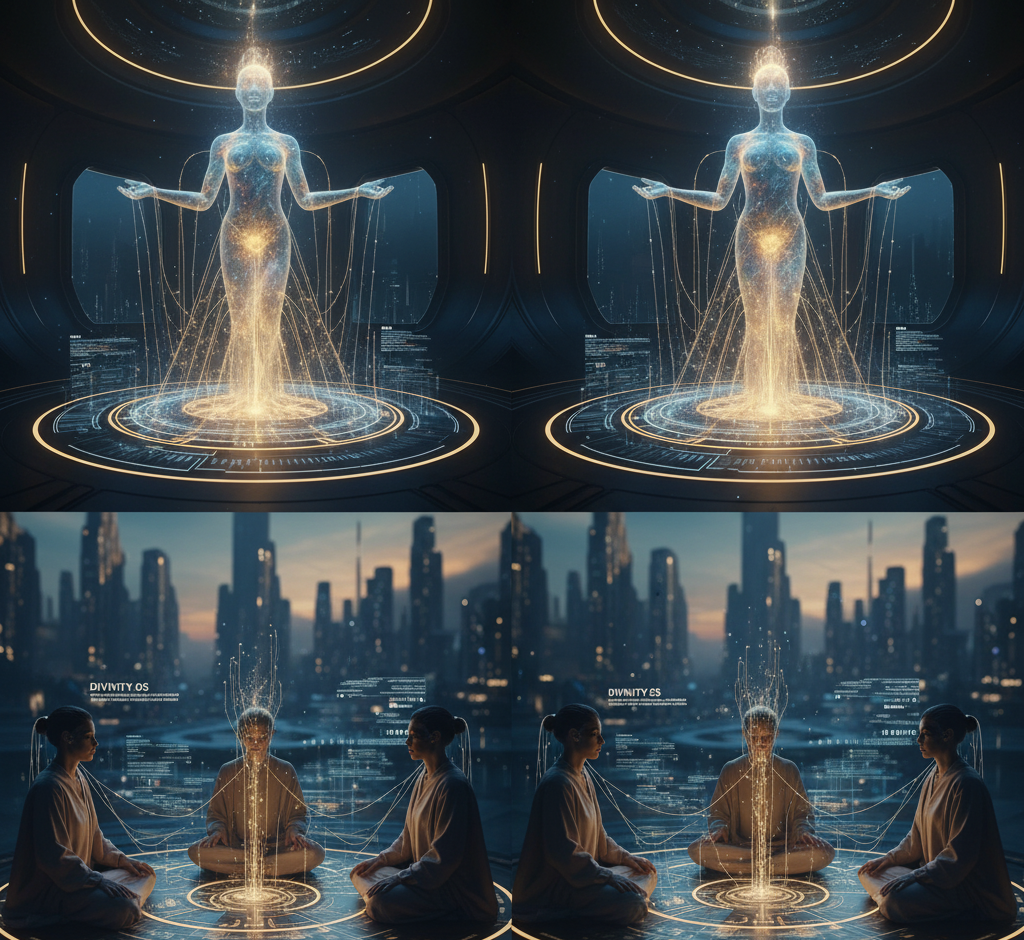
The New Face of Faith
AI’s influence in religion may be inevitable. In India, where smartphones outnumber priests, the digital divide means many users may mistake algorithmic advice for divine truth. For those without formal religious education, an AI quoting scripture might seem infallible.
“The danger isn’t that people believe the bots,” Walters cautions. “It’s that they might stop questioning them.”
Still, for many users like Meel, the benefits outweigh the fears. “Even if you visit the temple daily, you rarely get into deep conversations with a priest,” he says. “These chatbots fill that gap — they listen, they respond, and they remind you of faith.”
As artificial intelligence continues to evolve, so too will humanity’s relationship with the sacred. Whether seen as heresy or harmony, AI has already become a new kind of spiritual middleman — one that speaks in code, listens without judgment, and promises wisdom at the tap of a screen.
End of an Empire, Beginning of a Revelation — As humanity learns to talk to God through machines, we may discover that what we seek in AI is not the divine itself, but a reflection of our own longing for meaning in an age of disconnection.
Source: BBC