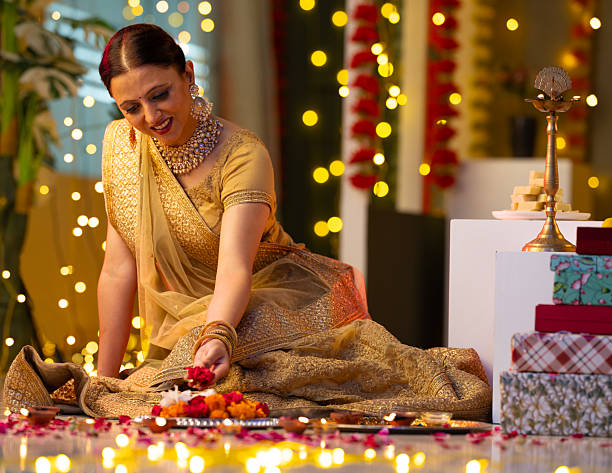
As the Hindu festival of Diwali approaches, India’s streets are once again glittering with festive lights, floral garlands, and an unmistakable rush to buy gold. But this year, something is noticeably different about the traditional India Diwali gold rush — Indians are buying more gold for investment purposes rather than as jewellery.
In Delhi’s vibrant Lajpat Nagar market, jewellery shops are buzzing with crowds, even spilling into the streets during the late evening hours. Many stores have stayed open on holidays to accommodate the rush. The air is filled with excitement — and anxiety — as gold prices continue to skyrocket.
According to recent figures, gold prices have reached $1,440 (about £1,081) per 10 grams, marking one of the steepest rises in recent years. Despite the price surge, India — the world’s second-largest consumer of gold after China — is not giving up on its centuries-old love affair with the yellow metal.
Diwali and the Tradition of Gold Buying
For millions of Indians, Diwali and Dhanteras are the most auspicious occasions to buy gold and silver. The festivals symbolize prosperity, purity, and new beginnings. Buying precious metals during this period is believed to bring wealth and good luck into households.
This year, Dhanteras falls on a Saturday, and as expected, hundreds of thousands of Indians are flocking to markets to buy gold and silver coins, bars, and ornaments. But instead of heavy necklaces and bangles, many shoppers are turning to smaller gold coins and investment-grade bullion, reflecting a significant behavioral shift.
Soaring Prices and a Changing Buying Pattern
The steep rise in gold and silver prices — up 60% and 70% respectively in the past year — has forced jewellers and buyers to adjust. Rather than walking away from the market entirely, buyers are buying less but smarter.
Prakash Pahlajani, who runs the family-owned Kumar Jewels in Delhi, told the BBC that despite the high prices, he has seen more customers this year. “People fear missing out,” he explained, referring to a growing sense of FOMO (fear of missing out) among shoppers who worry prices will climb even higher.
Jeweller Tanishq Gupta, who operates nearby, shared a similar sentiment but noted that the type of purchases has changed. “People are not saying, ‘I don’t want to buy,’” he said. “They’re saying, ‘I’ll buy a little less.’”
To meet changing budgets, Gupta has designed jewellery that looks elaborate but uses less gold. For example, coins made of just 250 milligrams of gold (about $35) are crafted to appear larger and heavier than they actually are. There are even coins weighing just 25 milligrams, allowing nearly everyone to participate in the festive buying spirit.
The Rise of Lightweight Jewellery and Younger Buyers
Another noticeable shift this Diwali is the increasing preference for lightweight jewellery, particularly among younger buyers.
Retailer Pushpinder Chauhan said that many millennials and Gen Z consumers prefer subtle, minimalist pieces that can be worn daily rather than heavy traditional sets reserved for weddings or festivals. “Younger buyers want designs that fit their lifestyle — stylish but not extravagant,” he explained.
This trend aligns with broader global patterns, where gold is viewed as both a style statement and a financial asset.
Investment Gold Surges as Jewellery Demand Dips
While jewellery continues to account for the largest share of India’s gold demand, the balance is shifting. According to data from the World Gold Council (WGC), jewellery’s share fell from 80% in 2023 to 64% in the second quarter of 2025. Meanwhile, investment-driven demand — including gold bars, coins, and digital gold — rose from 19% to 35% over the same period.
This indicates a clear transformation in consumer behavior. Indians are increasingly viewing gold not just as adornment but as a safe-haven investment, particularly amid global economic uncertainties and currency fluctuations.
Kavita Chacko, WGC’s research head, told the BBC that the surge in exchange-traded funds (ETFs) has been especially significant. September 2025 saw record-high inflows into gold ETFs, with assets under management rising more than 70% this year alone.
RBI’s Gold Strategy and Global Impact
The Indian central bank — the Reserve Bank of India (RBI) — has also played a key role in driving up gold demand. The RBI has been steadily increasing the share of gold in its foreign exchange reserves, which rose from 9% to 14% in 2025, according to WGC data.
Commodity analyst Kaynat Chainwala of Kotak Securities described the RBI as “a major pillar of global gold demand over the past three years.” The central bank’s strategy aims to diversify reserves, reduce dependence on the US dollar, and enhance financial stability during times of geopolitical stress.
This institutional buying has added upward pressure on gold prices, indirectly influencing retail demand as well.
Festive Season Outlook: Steady Demand Despite High Prices
Despite the soaring prices, experts believe retail gold demand will remain strong throughout the festive and upcoming wedding season.
Economist Madan Sabnavis of the Bank of Baroda explained that the “affluent classes will continue to buy,” even as middle- and lower-income families scale back. “Demand will hold up in value terms, even though volumes will fall,” he said.
However, some buyers have been completely priced out. One shopper, Bhavna, who is preparing for her wedding in February, said she has postponed her purchases. “I’m waiting for prices to fall a bit before I complete my wedding shopping,” she admitted outside a Delhi jewellery store.
A Cultural and Financial Legacy
Gold has always been more than just a metal in India — it’s a symbol of wealth, security, and tradition. Despite price volatility, the country’s deep cultural connection to gold ensures that demand rarely disappears; it simply adapts.
According to Morgan Stanley, Indian households collectively own around $3.8 trillion worth of gold, equivalent to nearly 89% of India’s GDP. Economists Upasana Chachra and Bani Gambhir noted that these holdings have generated significant long-term wealth for families, contributing to a positive “wealth effect” across the economy.
They also pointed out that with lower interest rates and recent tax relief measures, disposable income levels have risen, supporting ongoing gold purchases even amid record prices.
Looking Ahead: The Future of India’s Gold Market
Experts predict that while high prices might temporarily slow physical jewellery sales, India’s overall gold demand will stay resilient. The market is likely to evolve further, with digital gold, ETFs, and fractional ownership playing a bigger role in how Indians invest in the precious metal.
In the long term, India’s deep-rooted tradition of buying gold during festivals like Diwali ensures that this cultural and financial legacy will continue to shine. Even as buyers “wear less,” their love for gold remains as strong as ever — proving that in India, gold is not just bought, it’s believed in.
Source: BBC News